







04 — The Protagonist: Ariadne "Ari" Halloran
- Every person here is fictional. The Academy, Headmaster's Homecoming and the Crossing are invented in every detail that matters.
1. One-line read
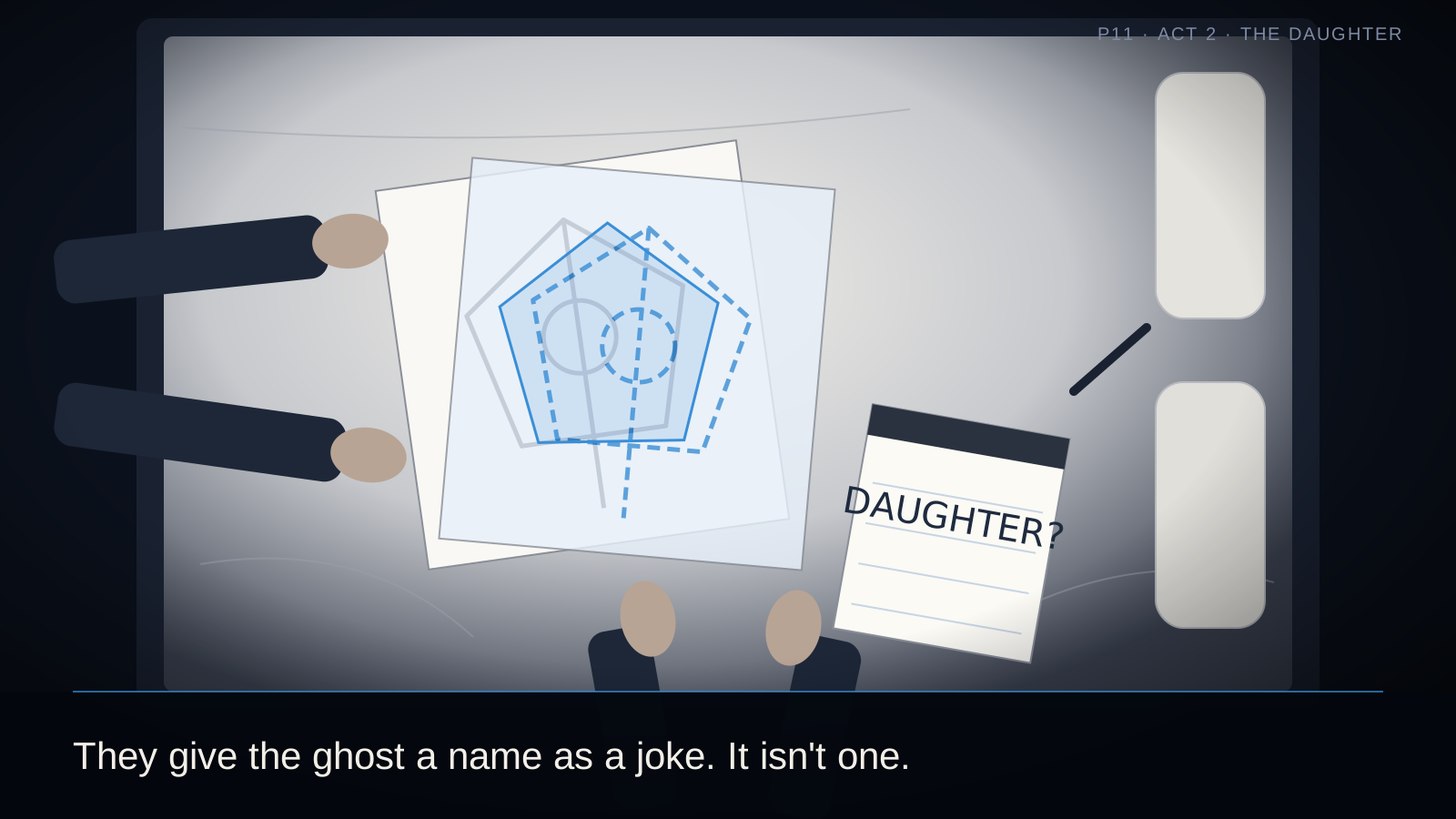
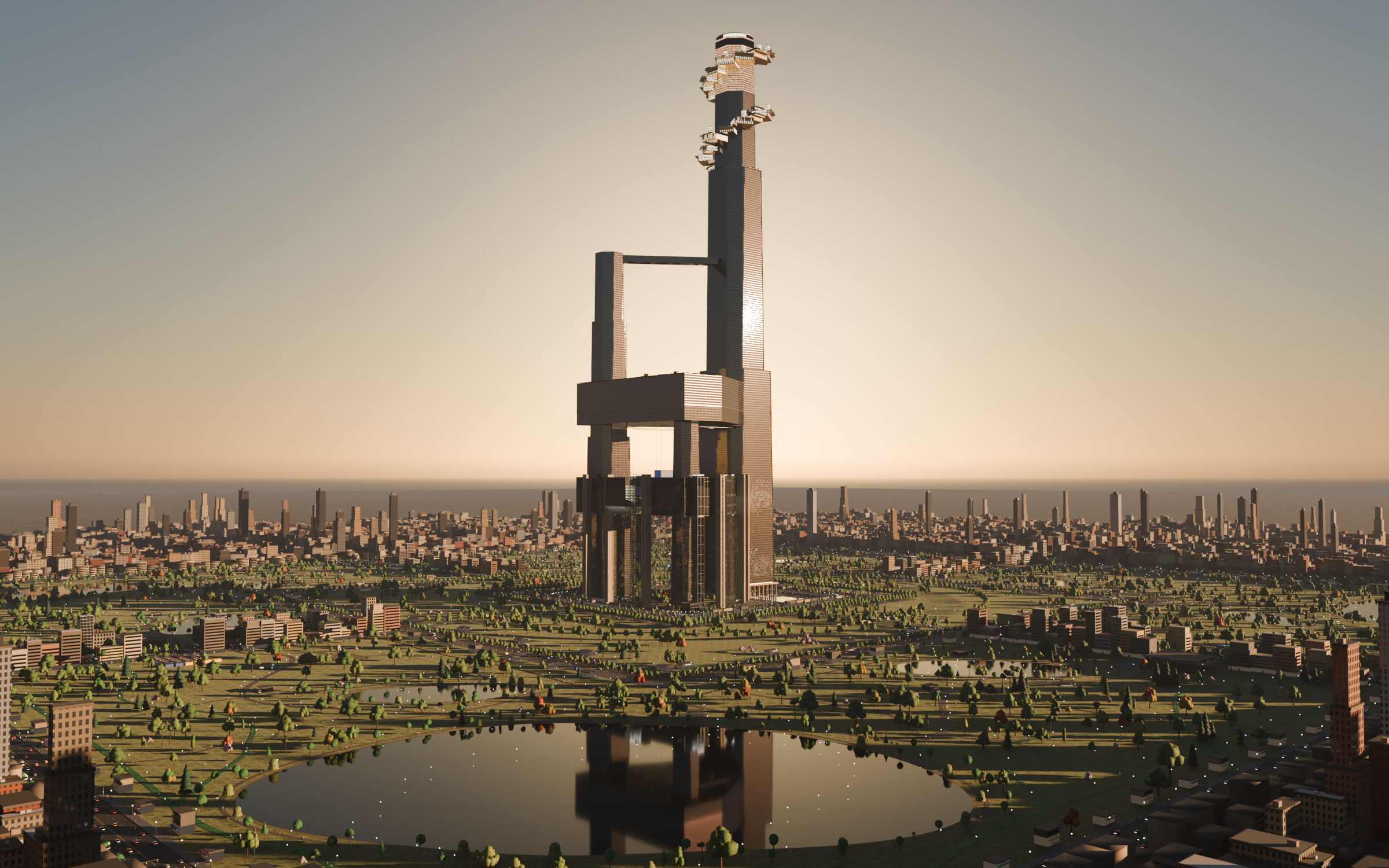
The President's daughter: the smartest person alive and the funniest person at any table, playing ordinary in plain sight. At five, someone stole her brother. She spends her life on one question, who?, while building the machine that watches everyone. Then she falls in love, has children, and the answer turns out to be her husband's family. He kills them to save her; she buries it before sunrise, exactly as they buried her brother. The last name on her list is her father's.
2. The mind
The numbers
- On record: 220. Tested at six, a year after Declan died. That number is what the world is allowed to have.
- Hidden: 475. Roughly where the scale stops meaning anything. She saw the test's ceiling, worked out what a real score would cost her, and paced her answers to land on a number that was impressive but survivable.
- Nobody at home knows. Not her mother, not her father, not the tutors. The testing psychologist kept a private note about a child who seemed to be "choosing her mistakes." The note is gone now. Ari never says how.
What it actually feels like
- She was born understanding the universe the way other children understand stairs. Patterns, systems, motives and physics arrive as one picture. She doesn't calculate so much as notice.
- Time runs slower for her. A conversation is a chess game where she can see twenty moves ahead and is bored by move four.
- She forgets nothing. Every face at the funeral. Every word of the airport goodbye. Every crack in the ceiling of the Porto Santa Margherita rental. Perfect memory is a gift and a sentence.
- She learns by watching. A language in a summer, a field in a month, a system in a night. Her MIT B+ was the hardest work she ever did: being exactly average on purpose.
Reading people
- One look is enough. Posture, breath, the half-second before a smile, where the eyes go when a name is said. She reads a room the way a pilot reads instruments.
- First proof, age five: a café in Milan. Her father stepped away from the table "to take a call," and through the window she saw him greet a woman and a small girl. Ari knew, in one look, that he had another family. She was right. She has never told anyone.
- Second proof, same year: the funeral. She walked down the line of mourners and read guilt on faces. No names yet, only faces. She kept every one. Later the faces got names, then addresses, then net worth, then floors in a tower.
- The cost: she can't switch it off. Every kindness comes with a motive attached. Every "I love you" comes with a readout. It's lonely to never be fooled.
The limits (her blind spots)
- She reads what people hide, not what they don't know about themselves. People who are simply good, like Matt Reyes or Owen Kilbride, are almost opaque to her. There's nothing hidden to find, and that unsettles her more than any liar.
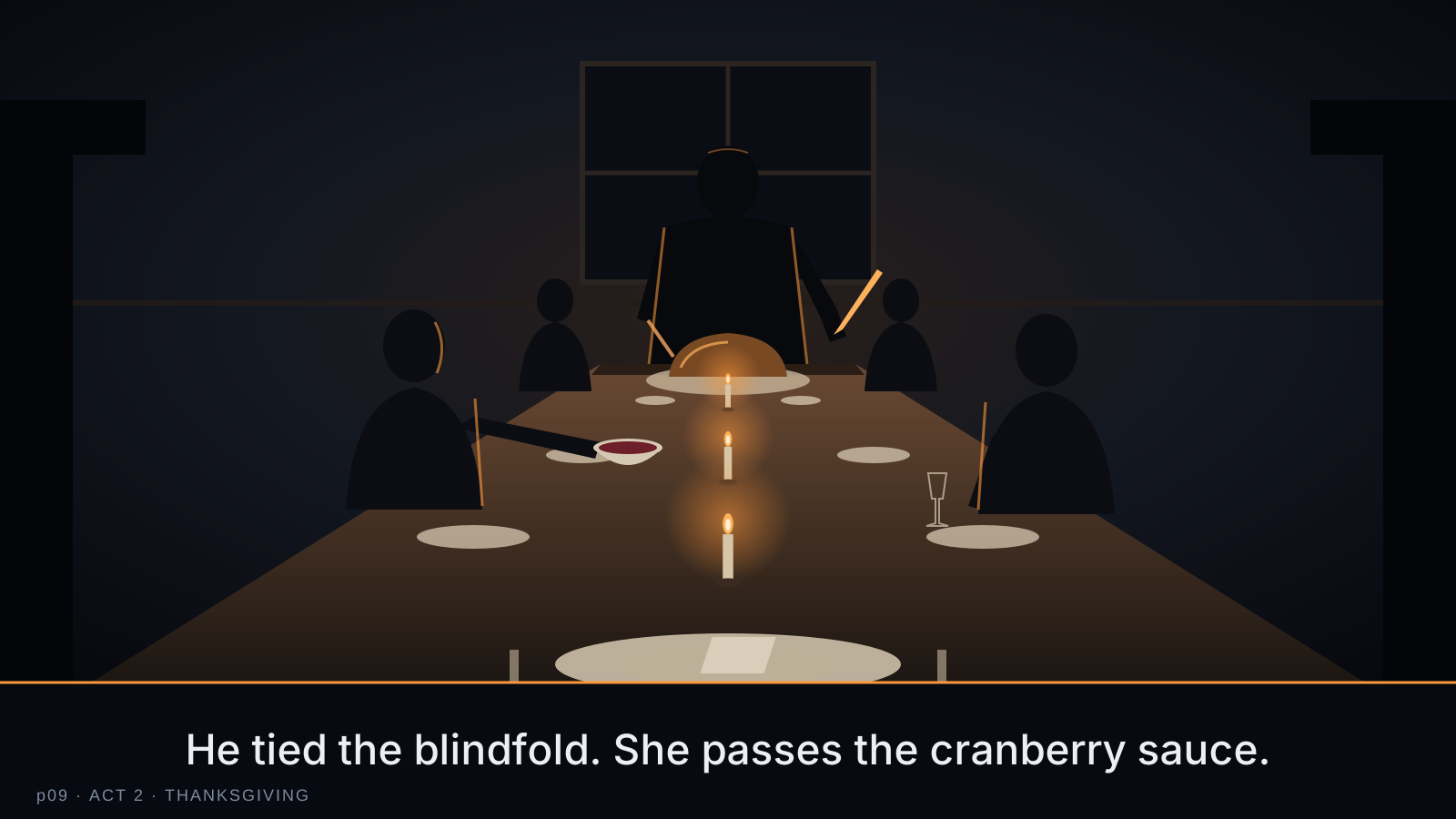
- Real grief hides guilt from her. At the funeral the Vails' grief was real. Conrad was Declan's godfather and wept at the grave. Grief and guilt wore the same face, and the five-year-old filed them under family. She never re-opened the file, because you don't investigate the people who carve the turkey.
- She can't read Julian's love as a threat, because it isn't one. That's the trap: the only safe thing in her life is attached to the most dangerous family in it.
- She can't read herself. Her own grief is the one room she won't walk into.
The one face she never read: her father
She reads everyone. Senators, princes, hunters, her own Chief of Staff. Never Patrick. Four reasons, and she only understands them at the end:
- He was never there. The empty chair at every dinner, even at the beach. At the funeral he stood at the back of the church on the phone, then left. You can't read a face you never get to look at for more than a minute.
- She read him once, and filed him as solved. At five, in Milan, she caught his secret: the other woman, the other child. She thought that was his secret. The one lie she caught hid the one she didn't. Having beaten him once, she stopped looking.
- She didn't want to. Part of her is still five, setting a place and waiting for the chair to fill. Every other face she studies like a crime scene. His she lets stay a photograph.
- He was on the phone, not in the room. His guilt is one call he took in Washington at 1:41 a.m. No hands on anything, no face at the boathouse, nothing for her eyes to catch. Her gift needs a face. He never gave her one.
- The first time since Milan she reads him all the way down is opening day, Year 28, at his ear, under the applause. It's all there, and has been for twenty-eight years.
3. Her humor
Where it comes from
- Declan was her first audience. At five she figured out that if she timed a line just right he'd laugh so hard he'd have to sit down on the curb. She has been chasing that sound ever since.
- Timing is pattern recognition. A joke is just seeing the shape of a moment half a second before everyone else. For her, everything arrives half a second early.
How she uses it
- The opener. People relax around someone who makes them laugh, and relaxed people show her everything. Nobody fears the funniest person at the table.
- The deflection. Any question about her, she answers with a joke, and the person leaves delighted and empty-handed. A door that only opens outward.
- The diagnostic. Who laughs, who laughs late, who laughs before the joke, who checks someone else's face first. A laugh is the most honest thing people do with their bodies.
- The cover. The flighty, funny, slightly silly First Daughter is the last person anyone suspects of anything. The comedy is load-bearing.
- The blade (rare). Once in a long while, one line at exactly the right moment ends a man in a room, and everybody laughs, including him, and he doesn't feel the cut until the car home. She mostly saves this for people who deserve it and aren't on the list.
- The real thing. With Declan, and later with Julian and the children, it isn't working for her. It's just her. That's the only place it's free.
Sample lines (out loud)
- To a donor asking what she does: "Decorative arts. I stand near my father and look decorative."
- On her detail, once her father runs for President: "I had a perfectly normal adolescence. I'm making up for it now. Six armed men and a dog. The dog is the strict one."
- To a senator explaining the stock market to her, slowly: "No, go slower. I want to enjoy this." (She owns his brokerage records.)
- At a gala, about a man working the room: "He's been working the room for an hour. The room hasn't worked back."
- To a senator at a gala: "You're doing that thing where you laugh before the joke. Who are you scared of tonight?"
- On being the "normal one": "Every family has one. Ours was a write-in."
- To Matt Reyes, who sleeps in his shoes: "You know I can hear you sleeping standing up."
- To Matt Reyes: "You'd take a bullet for me. Don't. I've already planned around you being alive."
- To a royal at Oxford who asked if she'd ever been to a palace: "Only on school trips. The gift shop was very confident."
Sample lines (inside her head)
- "Number Eleven is a baron now. Of what, nobody can say. Presumably the barony of holding a boy's arms."
- "Number Six wrote the story word for word. Now she signs warrants on everyone else's. Fine. Let her sign mine."
- "Seventy-three percent he says yes. Ninety-one if I let him think it was his wife's idea."
- "Don't replay it. You're replaying it."
With Julian (write the marriage funny; that's how the reader feels what she loses)
- Julian, on the porch of the Maine house, with a ring: "I had a speech." / "I know. You've been mouthing it at the soup for an hour." / "Is that a yes?" / "It was a yes at the bread."
- Julian, after losing at chess: "You cheated." / "I won. 'Cheated' is what losers call it in the car."
- On Maeve, age four, negotiating bedtime: "She doesn't want ten more minutes. She wants a framework agreement."
- Julian: "Do you ever not know something?" / Ari: "You. Every morning. It's very annoying. Don't stop."
What happens to it
- Year 26 to 27 (after the film): she stays funny at Sunday dinner, across the table from Conrad and Eleanor. That's the most frightening thing in the book: the jokes don't change at all. Only the reason for them does.
- After the summer house (Year 27): the jokes with Julian go quiet. At the memorial reception for the three Vails, someone says something absurd and she hears herself make the perfect dry remark, and the room laughs, grateful, and she realizes she can still do it. That scares her more than the night did.
- Opening day: her last joke in the book should be one only Declan would have got.
4. Voice
How she talks (out loud)
- Short. Funny. Warm on the surface. Nothing underneath you can grab.
- She asks questions instead of giving answers. People leave a talk with Ari having laughed twice, feeling heard, and realizing later they learned nothing about her.
How she thinks (inner voice)
- Cold, exact, very funny, and very fast. Lists. Probabilities. Floors.
- She refers to the 22 by number in her head, never by name. Names are for people.
- Declan is the only one she never numbers. After Year 26, she can't number the Vails either; she tries, and it won't take. After opening day, she can't number her father.
How she writes
- She doesn't, not as herself. No diary, no letters, no posts with any real weight. Her public social presence is curated by staff and is beautifully boring.
- The one exception: a chess notation she keeps in her head, the game she and Declan never finished on the beach. Each move she makes against the 22 is, privately, a move in that game.
5. Habits
Daily
- Wakes at 4:40. Sleeps four hours and has since childhood. After the children, she uses the hours before dawn to watch them sleep. After Year 27, before sunrise is a time of day she can't be awake for without remembering.
- Runs before her detail is fully awake. Matt Reyes learned to sleep in his shoes.
- Swims. Long, steady laps, always counting. The strongest swimmer anyone in the family has ever seen. Nobody connects that to how Declan died. She does.
- Chess against herself, blind, in her head, all day.
- Eats the same breakfast every day so nobody can read her moods from it.
Tells (that she lets people see)
- A small, practiced clumsiness: dropped forks, lost keys, a famous inability to parallel park. All staged. Clumsy people aren't suspected of genius.
- Visible boredom at policy talk, so staff keep her out of rooms where she's actually listening hardest.
- A love of trashy reality TV, real and also cover. She and Julian watch it together and narrate it, which is the funniest thing either of them does all week.
Tells (that she doesn't know she has)
- She touches her left wrist when Declan is near in her mind. He used to tap her wrist twice on the Vespa to mean "hold on." She does it to Maeve on the back of a bike without thinking, and has to leave the room.
- She can't stand the sound of a count spoken aloud. A trainer counting reps, a countdown on New Year's Eve: she goes quiet and still. Nadia Kerrigan notices this on a tape and doesn't know what it means.
- She never stands on a dock. Boats yes, beaches yes, docks never. (The agreed story said he slipped on a dock.)
Rooms
- Her own apartments, before Julian, were spare, white and almost empty.
- The married house is the opposite: loud, cluttered, children's drawings, Julian's books in piles. The only room she's ever lived in that tells you who lives there. That's how the reader knows it's real.
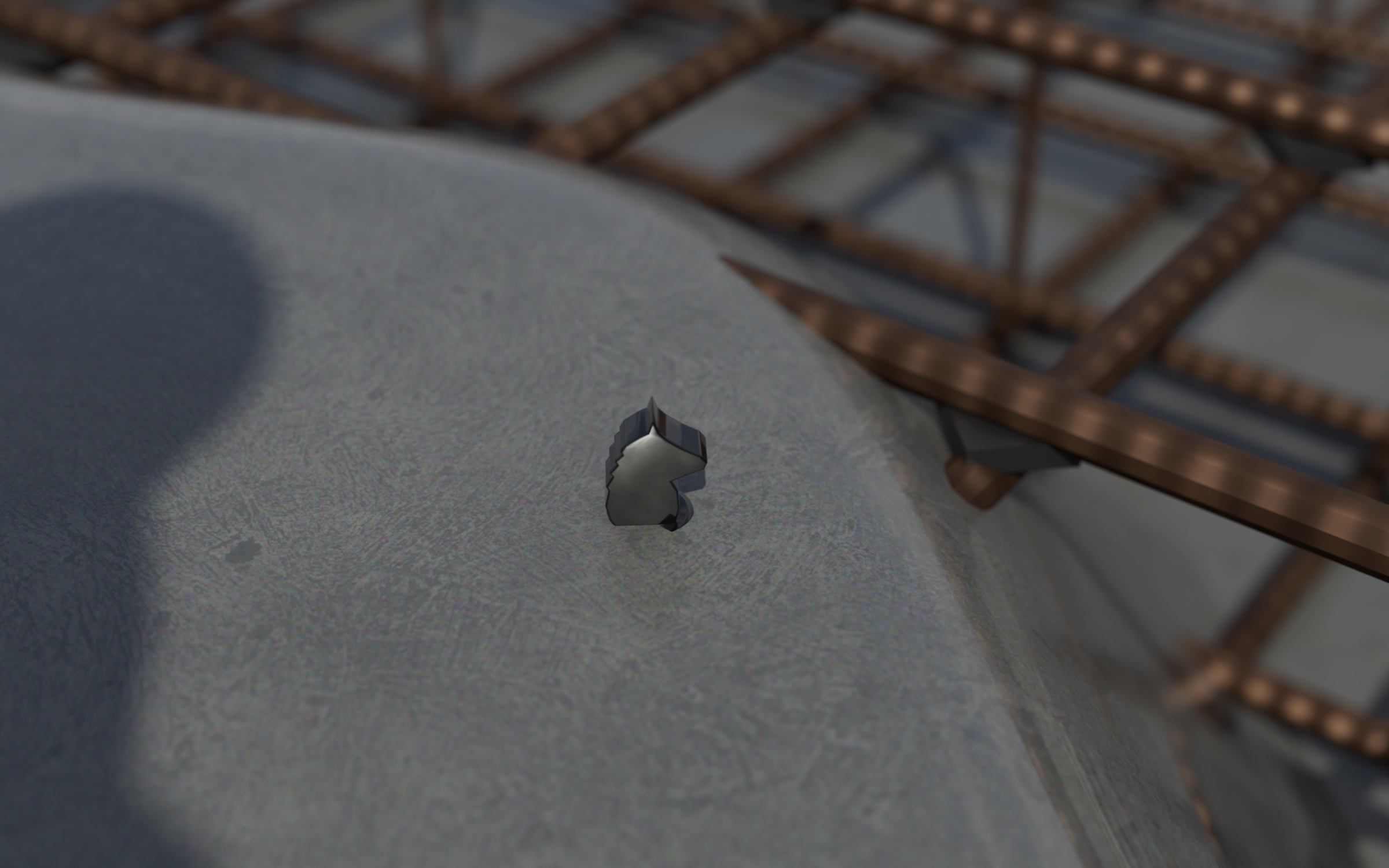
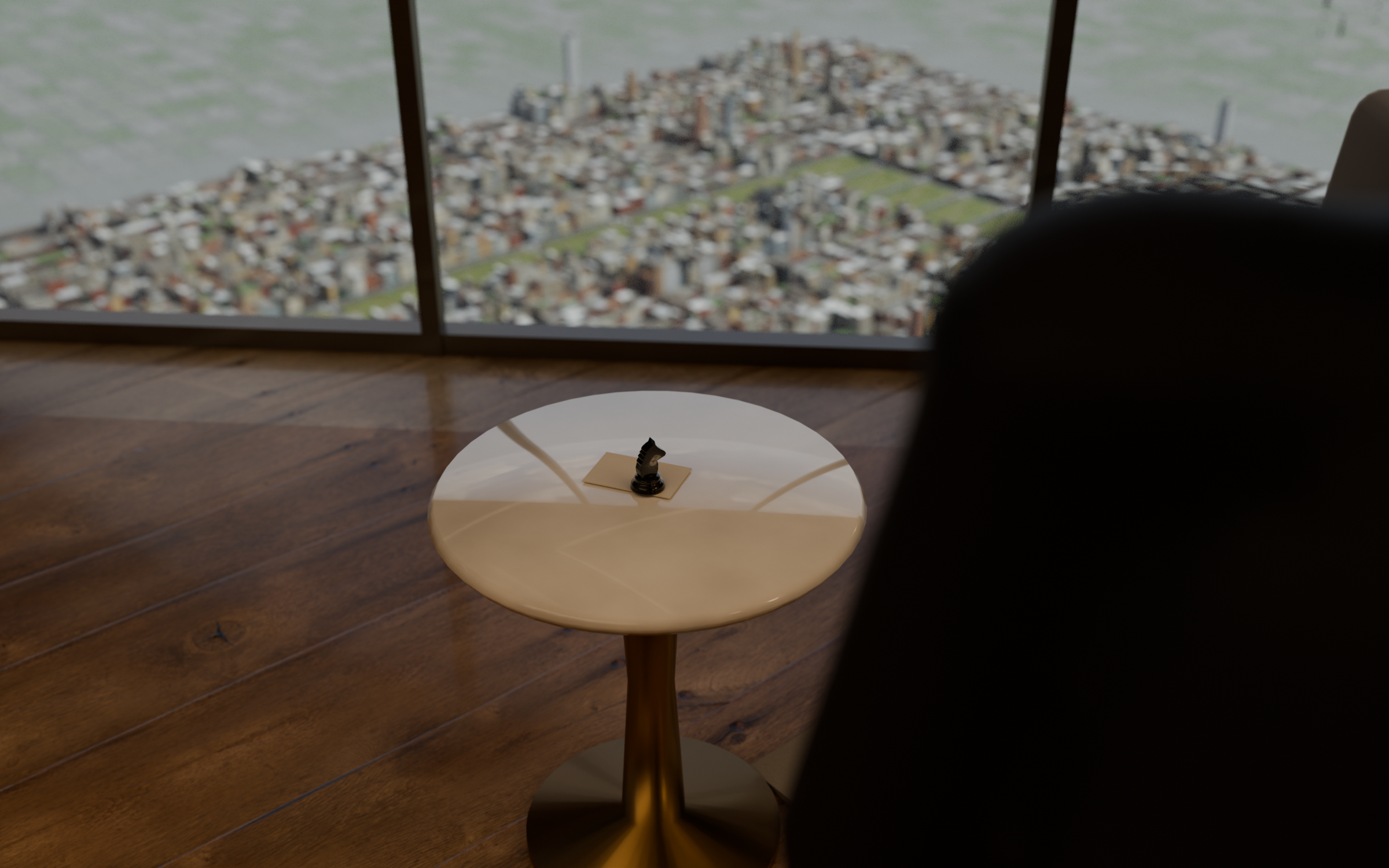
- The one object she keeps: a cheap plastic chess knight from the Porto Santa Margherita beach set. She carries it everywhere. Her detail thinks it's a lucky charm from a carnival. Julian is the only person she's ever told what it is.
6. How she hides
The layers
- The public Ari. Pretty, polite, a bit flighty, very funny on talk shows, devoted to charity work, the "normal one" in a famous family. Press loves her and finds her harmless, which is the point.
- The family Ari. The daughter who never caused trouble; later the wife and mother at every Vail Christmas Eve. Her mother sees a sad girl who got happy. Her father sees nothing, because he's never there to look.
- The working Ari. The one who holds the White House Chief of Staff (an invented holder of the office) with a tape that has no sound, and through him runs SUDDENDEATH, unseen.
- The real Ari. Julian met her. Nobody else has. Possibly not even Ari.
- Year 16, age 21: she staged an encounter with Lyle Brannock and a camera that recorded video but no sound, made to look as if he attacked her. Off-page, always. We see its effect on him, never its contents.
- He never tries to break free. He believes the moment was real and his fault, thinks she's been merciful, and is too afraid of exposure to ever buck the status quo. The leash never needs pulling.
- How she treats him: kindly. She's warm with him, even funny, which is worse than cruelty, because it makes him grateful.
- What he doesn't know: that she knows he's No. 3. He fears the tape. He has never once feared the boathouse.
- Craft note: this is the measure of how far the wound has taken her, years before the summer house. She was already capable of manufacturing a false story about a person. Year 27 just shows her what that skill is for.
The rules she lives by
- Be underestimated, everywhere, always. Funny helps.
- Never be the one who has the idea. Every plan is planted in someone else's mind and grown there. Gideon Strand "dreams up" the tower. Vail's trust "spots" the land. Brannock is the one exception: he stands SUDDENDEATH up on her word, and believes she runs it to protect her father.
- Leave no hand on anything. If something can be traced, it traces to someone else's ambition.
- Use the fact that she's invisible. The President's daughter is the most watched person in the building and the least suspected.
- Never lie when silence will do. Lies have shapes. Silence doesn't.
Her cyber life (story level only)
- What: over a decade she builds quiet, permanent access into the systems the powerful trust most. When SUDDENDEATH is born, she's already inside every room it will ever need.
- Why: so every byte the machine collects also passes in front of her, and every trace of her is scrubbed from it.
- How it reads on the page: results, not keystrokes. A file arrives on Brannock's desk at exactly the right moment. An audit closes itself. A hunter's report goes to the wrong committee. The reader sees the hand, never the tools.
- Her style: patient, minimal, elegant. She hates noise. She would rather wait two years than make one loud move.
7. Want vs need
What she wants
- The answer: who? Who took Declan, who covered it, who said yes. Her whole life is that one question.
- For the 22 to answer. All of them, in one building, at one time, with nowhere to go.
- Freedom. To vanish completely, erase herself from every record the machine keeps, and walk out of the world as nobody.
What she needs
- To grieve. To let a five-year-old cry for her brother, instead of letting a genius run a twenty-eight-year operation on her behalf.
- To let one person in and not seal the crack. She does: Julian. It's the bravest thing she ever does, and it's what destroys her.
- To understand that the summer was real, and not stolen. The 22 took Declan. They couldn't take Milan, Como, the lagoon, the chess games. She has treated the memory as evidence. It was always a gift.
- To give her children a childhood that isn't built on a story told word for word. After Year 27, that's the one thing she can't give them.
The gap
- The want is about knowing: get the answer, whatever it costs.
- The need is about living: keep the happiness, let the question go.
8. The wound
The facts (from canon)
- Age five, Year 0. The best summer of her life with Declan, then he flies back to the Academy in late August.
- Mid-October: Headmaster's Homecoming. A gala weekend at the Academy, trustees' and senators' and CEOs' families on campus. While the adults dance, the kids throw their own hidden party in the condemned boathouse. The dare is the Crossing. Declan, sixteen, dies under the black water.
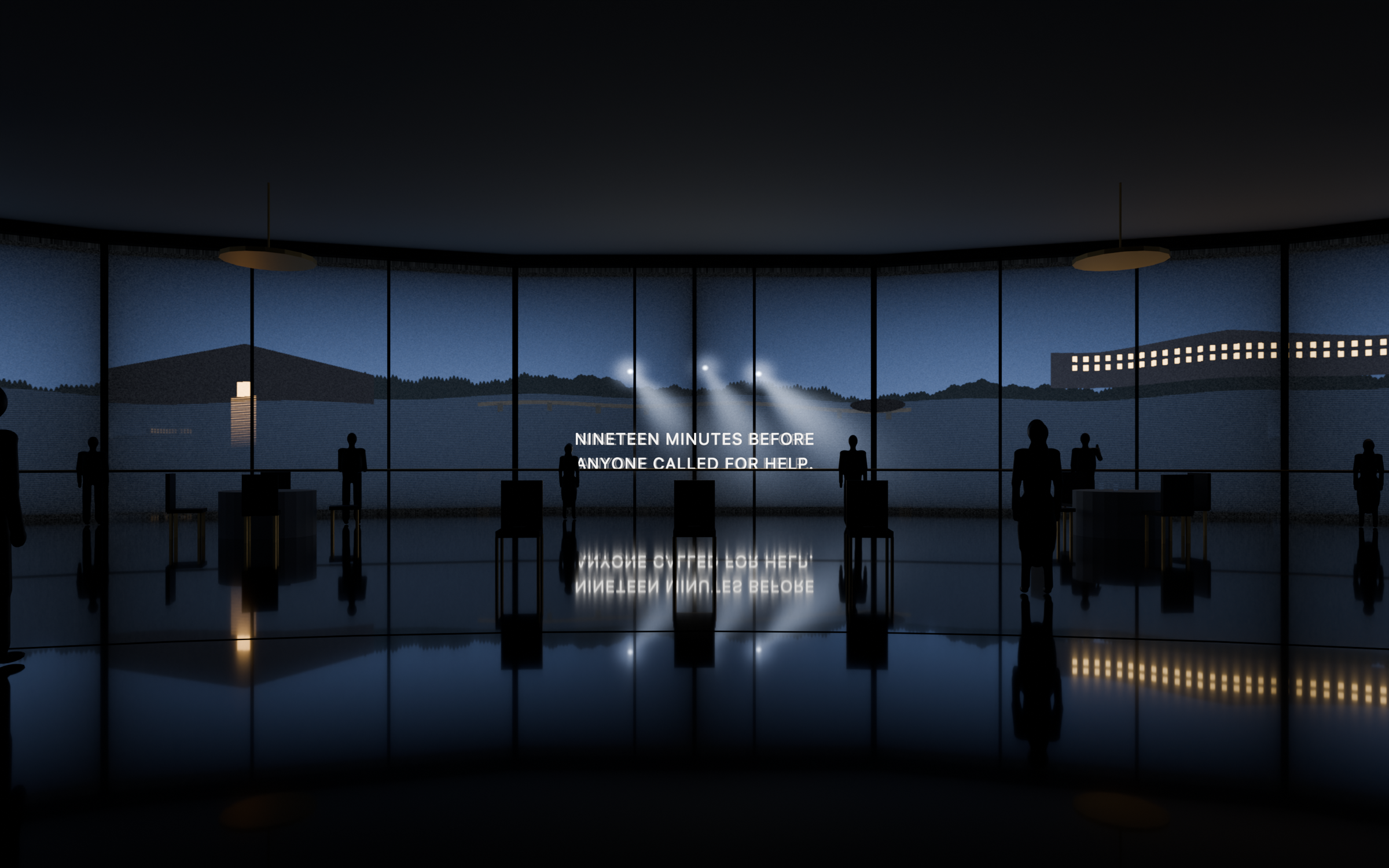
- The truth (working): Declan was going to walk up to the gala and tell the adults that Sterling Vail was supplying the party. Sterling made him do the Crossing and held him under past the count to "make him understand." Nineteen minutes before anyone called for help.
- The real story is the night after. The adults left the gala and fixed it before sunrise: the agreed story, the wiped messages, the cleaned boathouse, the boy on the plane to Geneva, his name gone from the guest list.
- The official story: drunk, slipped on the dock, struck his head, drowned. Closed within days.
- The lesson the kids learned: power means never facing consequences. She is the consequence.
What it did to her
- It stopped her childhood in one phone call. 4:05 a.m., the house phone, her mother's sound. She remembers the exact pitch. She never knew there had been an earlier call that night.
- It broke her family. Her mother went somewhere inside herself and never fully came back. Her father went back to work faster than anyone thought possible. (She read that as ambition. It was guilt.)
- It taught her that adults lie, together, smoothly, in matching words. She heard the same sentence about the dock from six different mouths at the funeral. Same words, same order. Nobody talks like that unless they've been told what to say.
- It made her decide, at five, that she would never be helpless again. Everything that follows comes from that decision.
What she doesn't know (yet)
- That the Vails were there. Sterling's hands, Conrad's headlights, Eleanor's coat. (She learns it from Prescott Vane's offline film, Year 26.)
- That there were two calls that night. The second one woke her. The first, at 1:41 a.m., was Conrad calling her father, and her father saying: "Do what you have to. I'll handle my end."
- That her father traded his dead son's truth for his best friend's living son. She learns that last, on opening day.
9. The replay: the last summer
She replays it the way other people breathe. It runs in the background of everything.
The reel (in her order)
- The Duomo rooftop at dusk. Declan lifting her to see over the marble edge. Milan turning gold, then blue. "Look, Ari. The whole city's on fire and nobody's scared."
- The Vespa. Her arms around his waist, his two taps on her wrist: hold on.
- Lake Como. Stones skipped, ice cream lost to the water. A tall Italian boy on the shore talking to Declan, the two of them laughing. (Lorenzo Castelvetri, No. 19, who brought him the party's invitation. She learns his name at fourteen.)
- Porto Santa Margherita. Two weeks. Salt, lagoon light, the umbrella rows on the beach near Caorle. Declan teaching her to float on her back. "Trust the water. It wants to hold you up."
- Day trips into Venice. The vaporetto, the pigeons, Declan losing a whole afternoon's money on a mask she wanted. She made a joke about it on the boat back and he laughed so hard he cried. Her first perfect line.
- The chess games. Every evening on the sand with a cheap folding board from the tabacchi shop. She beat him by the second week. He was so proud he told strangers.
- The unfinished game. Their last evening at the shore. Checkmate in three, and he folded the board mid-game: "We finish at Thanksgiving." She still knows every piece's square.
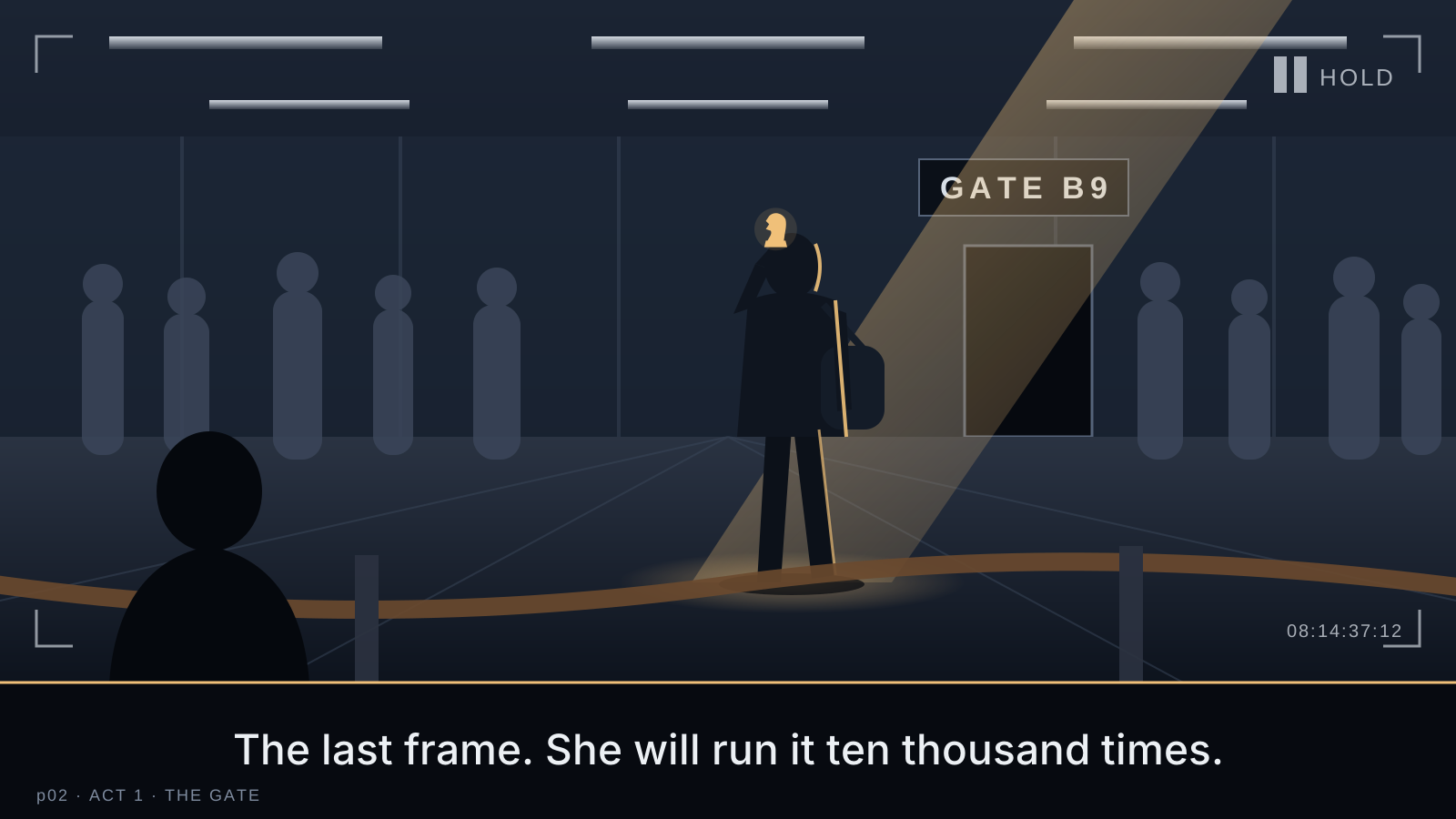
- The airport, late August, Milan. His bag. The white knight pressed into her hand. His hand on her head. "Be good. Beat Dad at chess." The last frame: at the top of the escalator he turned and did the knight's move with his hand, two up and one across.
How the replay works on her
- It loops when she's tired, bored or alone. Which is often. (In the married years, much less. That's how she knows she's happy.)
- She searches it like a crime scene. Every frame, for the clue she missed. A look on Declan's face, a call he took, the boy by the lake.
- It's her fuel and her cage. It keeps the rage hot. It also keeps her five years old.
- "Trust the water. It wants to hold you up." The worst line of all, once she knows how he died.
- "Beat Dad at chess." The second worst, once she knows about 1:41.
10. Seeing red
What it is
- Not a temper. Ari almost never shows anger.
- A cold, total clarity that floods in when the replay hits one thought: someone stole this. Not "he died." He was taken, and the taking was smoothed over, and the people who did it got to keep living their lives.
- In that state she's at her most brilliant and most dangerous. Hours vanish. Plans that would take a team a year assemble in a night.
What triggers it
- A count spoken aloud.
- The smell of creek water and old wood.
- Any of the 22 honored in public: a toast, an award, a blessing.
- Someone telling her, kindly, that it was "a terrible accident."
- Her father's empty chair.
- After Year 26: Conrad Vail saying grace. Eleanor kissing the children goodnight.
What it costs
- She frightens herself. In red she can see exactly how to destroy a person, and how easy it would be.
- Her line, which she never crosses: she doesn't kill. She ruins, exposes, traps, unmakes. She tells herself it's because she isn't like them. The deeper reason: Declan would hate it.
- Year 27 keeps the letter of that line and breaks everything it meant. She doesn't kill the Vails. Julian does. But she does what the 22 did: she buries it before sunrise. She was never really guarding against killing. She was guarding against becoming them, and that night she does.
- Every time she comes out of red, she checks her hands. A habit from age five, when she woke from a nightmare sure they were wet. After Year 27 she stops checking. She already knows.
11. Love: the main storyline
The pattern, before him
- She falls fast, because she sees people completely. When someone is genuinely good, she sees that too, and it hits her hard.
- It never lasts, because she won't let it. The moment she feels known, she seals the crack: a gentle exit, a reassignment, a reason they'll believe forever.
- Inès Valmont (Institut Montclair) is the first. When Princess Seraphina destroyed Inès, Ari took Seraphina apart quietly. Inès never knew who saved her, and Ari let the friendship fade so she never would.
Julian "Jules" Vail (working)
- Who he is: Conrad and Eleanor Vail's younger son. Six on the night of Headmaster's Homecoming, asleep at the inn with a sitter; he never knew. The boy at every Vail-Halloran Christmas Eve, every Maine summer.
- Why it's love: the one person who never wanted anything from her. With him she's funny, unguarded, almost normal, and forgets to calculate. He's the only person who laughs at the jokes she doesn't make for anyone else.
- Why it feels safe: it's family. Her father's best friend's son. The Vails were the people who wept at Declan's grave. She filed them under grief at five and never moved the file.
- Year 17 (she's 22): at Harvard, the boy from every Christmas Eve becomes something more. For the first time, she doesn't seal the crack.
- Year 18: he proposes on the Maine house porch. ("It was a yes at the bread.")
- Year 19: married at the Vail summer house in the middle of her father's campaign. Conrad gives the toast. She laughs at it. It's a good toast.
- Year 21: Maeve born. Year 23: Declan "Dec" born, named for her brother. Conrad holds him at the christening and has to say the name aloud. She notices his voice catch and reads it as love.
- What the happiness looks like: loud breakfasts, terrible TV narrated badly, Julian asleep on the couch with both kids on him, Sunday dinners at the Vails', Eleanor teaching Maeve to set a table. Nine years. She replays Declan less. She almost stops counting.
- Meanwhile, the work goes on. SUDDENDEATH, the tower, the list. She keeps the two lives in separate rooms of her head and is, for nine years, good at it. The search doesn't stop. It just stops hurting.
The search lands (Year 26)
- She watches Prescott Vane's offline film, once, in a Zurich vault. She watches Declan die. She sees Sterling's hands. Then Conrad's headlights on the boathouse wall. Then Eleanor's coat, passing the boathouse doors with Sterling inside it.
- The happiness ends that night. Not the marriage. The happiness.
- The penthouse joke lands on her. She ranked eighteen names onto floors 229–246 and left the top four open for the names she didn't have. Conrad took them as part payment. The guilty chose their own floors. It's the first joke in her life that was on her.
- She keeps smiling at Sunday dinner. For a year. Still funny. Conrad still carves.
The summer house (Year 27)
- They learn she knows. Vane's film was the Vails' insurance too; the Zurich custodian tells Vail's firm it has been seen. The family moves to silence her, and with her the mother of their own grandchildren. The plan is an accident: a late sail, Ari lost overboard.
- Julian kills them. His father, his mother, his older brother, in one night at the Vail summer house, to protect her and the children.
- She covers it up before sunrise. Story level only: by morning there is an agreed story, and officially the three Vails are lost when their boat goes down in fog off the point. Never caught.
- The moment that matters: sometime around 3 a.m. she hears herself teaching Julian the story, word for word, the same sentence in the same order. Exactly as Harriet Kessler taught thirteen children. She stops mid-sentence. Then she finishes it.
- The 1:41 echo: she is doing for her family what the adults did for theirs. She's deciding the story before she decides anything else, as Conrad did at 12:15 a.m. She protects the living with a dead truth. She doesn't know yet that this is precisely what her father did.
How covering it up changes her
- She becomes what she hunted. "Power means never facing consequences" was the lesson the 22 learned. Now it's true of her. She's the consequence for twenty-two people, and nobody will ever be the consequence for her.
- She loses the high ground she lived on. For twenty-seven years her rage was clean because she wasn't like them. Now the list has a shadow name on it, hers, with no number.
- She understands 1:41 from the inside. When the last file opens and her father's voice says "Do what you have to," she isn't only betrayed. She's convicted. She made the same call. That's why "One forty-one, Dad" lands so hard: she knows exactly what it costs to say yes, because she paid it.
- The marriage changes shape. She and Julian are now held together by a secret, the way Brannock is held to her. She notices the resemblance and hates it. Love is still there. Ease is gone.
- She protects the children the way the adults "protected" the kids: with a story. Maeve and Dec will grow up believing their grandparents and uncle drowned in fog. She hears the irony and can't do anything with it.
- Patrick gives the eulogy for his best friend and begins to wonder why. She watches him begin to wonder, and for once she doesn't know what she'll do with it.
The others who get close
- Matt Reyes. Her Secret Service agent, a former Marine sergeant. He wants only her safety, which makes him the one person she can't read or move. That's exactly why she trusts him, and exactly why he's dangerous to her. After Year 27 he's also the only person outside the family who might know.
- Nadia Kerrigan / Callum Rees. The hunters. Each comes close enough to see the shape of her. Being hunted by someone that sharp feels, to Ari, like being understood. She's funniest of all when she talks to them; it's the most honest flirting she does.
- Her father. The love she can't admit. She wanted him to show up. He never did. Part of the tower is still a five-year-old setting a table and waiting for the chair to fill. On opening day she finds out why he couldn't sit in it.
12. How she has fun
This isn't a grim story. She enjoys herself, a lot, and for most of the book she's having the time of her life.
- Making people laugh. Genuinely, for its own sake, when she's in the mood. Her best room is a dull state dinner she has turned into a comedy club by dessert, with nobody quite sure how.
- Puzzles with people in them. Planting an idea in a powerful man's head and watching him present it as his own at a cabinet meeting is, to Ari, the best entertainment there is.
- Being underestimated. A senator explaining the stock market to her slowly, at length, while she owns his brokerage records. She smiles and asks a follow-up question.
- Small, invisible jokes. The penthouses stacked by guilt: more guilt, higher, and the longer the way down. Nobody will ever get the joke but her. (Until Year 26, when she finds out who took the top four floors.)
- Her family. The married years are the most fun she ever has, and the book should be honest about that. Bath time. Julian's terrible singing. Maeve's framework agreements.
- The long game. Twenty-eight years, played every day like a chess master who can already see the mate.
- Escape design. The exit from her own life is the most elaborate project she has ever built, and she has fun with every detail: the routes, the false trails, the people who will swear they saw her in three places at once.
- Real joys, kept small: swimming in open water, Venetian street food, terrible TV, beating Matt Reyes at cards and then letting him win the next one.
13. Backstory beats (how she was made)
| Year | Age | Place | What it built |
|---|---|---|---|
| 0 | 5 | Milan, Porto Santa Margherita, Boston | The best summer; the father's secret read in one look; Headmaster's Homecoming; the 4:05 call; the faces at the funeral |
| 1 | 6 | Boston | The test: 220 shown, 475 hidden. Learns to choose her mistakes |
| 7–10 | 12–15 | Institut Montclair, Switzerland | Inès; Princess Seraphina and Hugo Templeton. First proof she can take someone powerful apart without a trace |
| 11–13 | 16–18 | MIT | Ordinary by day. Networks by night. First hidden doors |
| 14 | 19 | Oxford | The British circle; meets Mallory (No. 11). Whispers the tower to Gideon Strand. The list: 18 names, four blanks |
| 15–18 | 20–23 | Harvard Law School | The public face. Polished, pleasant, very funny, forgettable |
| 16 | 21 | Washington | The tape. Brannock is hers from now on and never knows how |
| 17 | 22 | Harvard | Julian. The first crack she doesn't seal |
| 19 | 24 | The Vail summer house | Marries Julian. Conrad gives the toast. Matt Reyes joins her detail. Patrick elected |
| 20 | 25 | The White House | Brannock stands up SUDDENDEATH on her word. By year's end it runs through her doors |
| 21 | 26 | Home | Maeve born. Groundbreaking on the three towers |
| 23 | 28 | Home | Declan "Dec" born. Kerrigan sees the shape; steered off |
| 26 | 31 | Home; Zurich | The film. The search lands on the Vails. The happiness ends |
| 27 | 32 | The Vail summer house | Julian kills Conrad, Eleanor and Sterling. She covers it up before sunrise. Never caught |
| 28 | 33 | The Crown tower | Opening day. The last file: her father. The escape |
14. The arc
Act One: the girl who decided (Years 0–14)
- Starts as a joyful, very funny five-year-old with a brother who laughs at everything she says.
- Ends as a child who has decided, alone, never to be helpless again, and has learned she can unmake the powerful without anyone knowing.
- Turn: the funeral. The matching words. The faces. (Every face but two kinds: real grief, and the one who isn't in the room.)
Act Two: the architect (Years 14–20)
- She builds herself into the perfect invisible person and seeds every piece: the doors, the tower idea, the tape, the program.
- And she falls in love, with the one person she never thought to suspect.
- Turn: inauguration week. Brannock stands up SUDDENDEATH and hands her the world.
Act Three: the happy years and the hunt (Years 20–26)
- A marriage, two children, the funniest and fullest years of her life, while she uses the machine to map, bind and corner every name she has into the tower.
- The hunters close in and are steered off.
- Turn: the film. She watches Declan die and sees her husband's family. For the first time since she was five, she can't see twenty moves ahead.
Act Four: the smile and the summer house (Years 26–27)
- A year of Sunday dinners with the people who killed her brother. Still funny.
- They learn she knows. Julian chooses her and the children over his own blood.
- Turn: sunrise. The boat in the fog. She is now one of them.
Act Five: opening day and the escape (Year 28)
- Every living name on the list in one building; floors 247–249 dark.
- The last file opens as the President cuts the ribbon. No. 22. One call, 1:41 a.m. Her father.
- Expose him: the call, the film and the 22 go public on his network partner's live feed.
- Spare him: she closes the file and never speaks of it.
- Leave him knowing she knows (default, drafted): the ribbon falls, cameras up, she steps in to kiss his cheek for the photograph, and under the applause says four words at his ear: "One forty-one, Dad." For the first time since Milan she reads his face all the way down, and it's all there. She smiles for the cameras, squeezes his hand and walks away. He stands under the lights holding the scissors for the rest of his term and the rest of his life, never knowing what she'll do with it. That's the sentence. (And she knows its weight exactly, because she carries the same one.)
Where she ends
- Outside: free. Gone from every record. Never caught, for any of it.
- Inside (the real ending, works with any escape): she finishes the chess game. On a beach somewhere on the Adriatic, she unfolds the cheap board from the tabacchi shop, sets the position from memory, plays Declan's last move for him, and then her own. She lets herself cry. The game, finally, is over. (If the children are with her: Maeve asks to play the winner. Ari says something funny. It's the first joke since the summer house that isn't working for her.)
15. Writer's notes
- Keep her funny. Always. The humor is real and the coldness is the costume; after Year 26 both are costume, and the reader should feel the difference without being told.
- Write the marriage funny. If the reader isn't laughing in the married years, they won't feel the loss.
- Never let the reader see the keystrokes, and never the mechanics of either cover-up. Show the result, the sentence taught word for word, and her calm.
- The Brannock tape stays off-page and non-explicit. Effects only.
- Let the reader be fooled too. Several scenes should play as "the normal sister," then "the happy wife," before the reader learns what she was doing in them. Plant the Vails in plain sight: Conrad's catch on Dec's name, Eleanor's coat, the top four floors.
- Plant the father in plain sight too: the empty chair, the call at the back of the church, how fast he went back to work, "beat Dad at chess." Every one reads as neglect until opening day.
- Every scene with one of the 22, she knows their number. Every scene with Declan, she doesn't. After Year 26 the Vails lose their numbers; after opening day, so does her father.
- Her weakness isn't her heart. It's her memory, and the one face she never studied.
- Was the death meant, or a dare gone wrong?
- Did she tell Julian about the film before the Vails moved, and how does he learn of their plan? (Default: she never told him; he learns from Sterling, who expects his help.)
- What she does to her father (default: leave him knowing she knows).
- The escape: with Julian and the children, with only the children, or alone.
- Where Matt Reyes was the night of the summer house (default: on post, asks nothing).