









07 — SUDDENDEATH: the operation
- Every person here is fictional. Agencies appear only as their public structure. Her cyber work is told at story level: what and why, never how.
1. The one-line version
The White House Chief of Staff runs a private eye on the most powerful people alive, and he runs it for the President's daughter. He thinks she does it to protect her father. He thinks he does it because she was merciful to him once. Both are wrong. She built the doors it runs through, she reads everything before he does, and she holds a tape that says he did something he never did. To him it's a debt. To her it's a mirror she is slowly stepping out of.
2. The name
- SUDDENDEATH, one word, all capitals, the way Brannock writes it on the only paper copy of the charter.
- Her name for it, not his. She said it once, across a desk, as a joke. He laughed, then wrote it down, because he writes down everything she says.
- What Brannock thinks it means: the targets get one chance to fall in line.
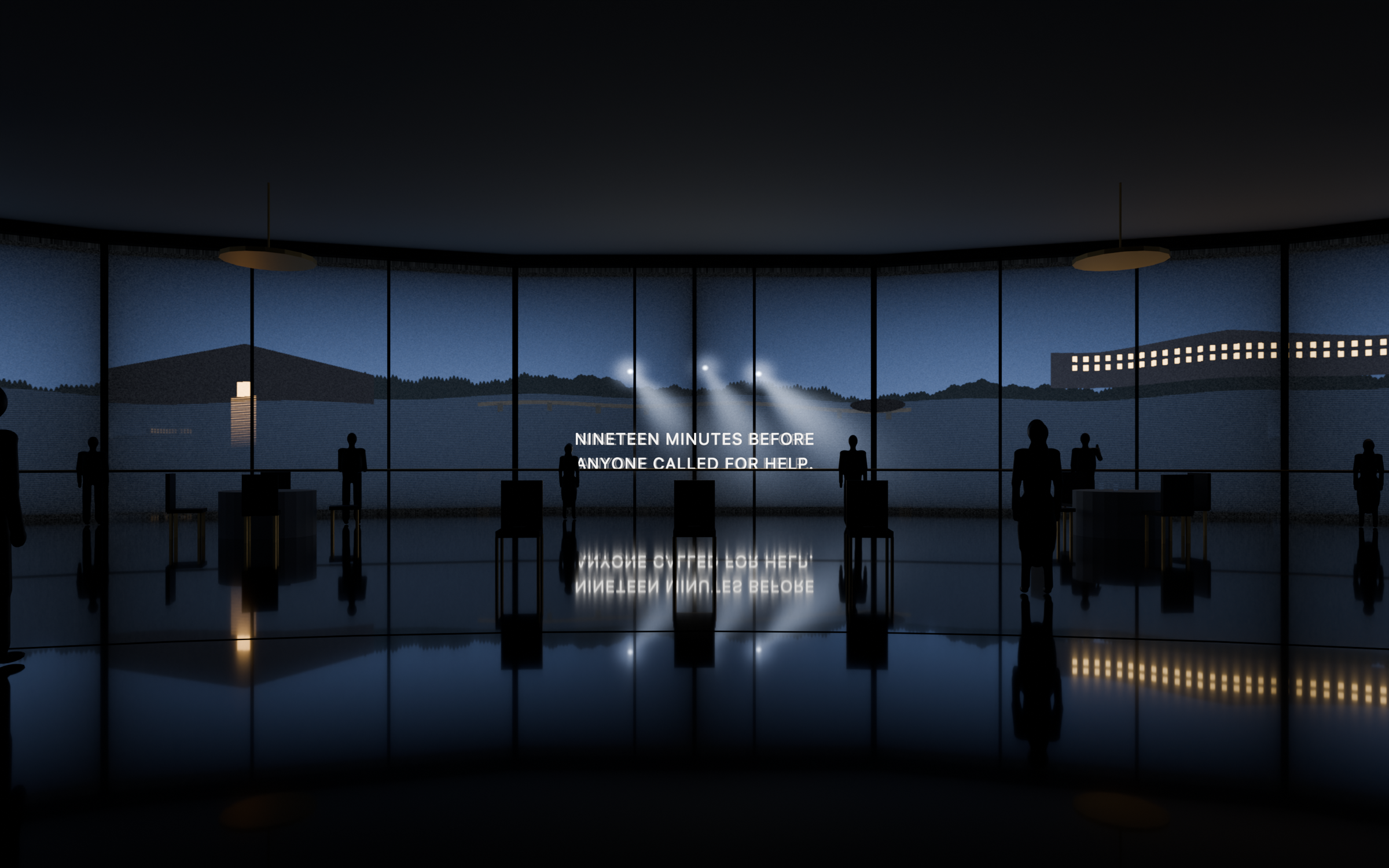
- What it means to Ari: her brother got no overtime. Nineteen minutes, and nobody called. Brannock is the one who didn't call.
3. The coordinator: Lyle Brannock
Who he is
- Title: White House Chief of Staff from Year 20. Before that: Patrick's Senate chief of staff (Year 12), campaign chair (Year 18). Walk-in privileges to the Oval Office. No Senate confirmation, so no hearing has ever asked him a question.
- Who he is to the President: the fixer who never gets tired. Patrick trusts him because Conrad Vail vouched for him twenty years ago.
- Who he really is: No. 3 of the 22. Sterling Vail's closest friend at the party. He called Conrad Vail instead of 911. The nineteen minutes are his.
- What he did with that night: buried it under Conrad's story and never dug it up. He thinks the boathouse is sealed. He's right that no one will open it by accident.
- His ages: 17 at the night · 33 at the tape · 45 on opening day.
What he does for her
- He is the program's hands. Budget, authority, access, silence. He signs, he calls, he leans, he takes the meetings she can't be seen in.
- He believes she runs it to protect her father. A President surrounded by richer, better-informed enemies; a daughter who sees it before anyone. It's the most plausible story in the building, and she made sure he told it to himself.
- He does not know she knows he's No. 3. He fears the tape. He has never once feared the boathouse.
- His blind spot: he can't imagine that the worst night of his adult life was staged. Everything else she does, he can see is brilliant. That one thing, he can't see at all.
The leash (Year 16) — off-page, always
- The rule for every writer: the tape is never shown, described or quoted. We see only what it does to him.
- The bare facts: in Year 16 (she's 21, at Harvard; he's 33), she arranged an encounter with him and a camera that recorded video but no sound. Edited and framed, the footage looks as if he attacked her.
- Why no sound: with sound, the truth would be on the tape. Without it, only her version exists.
- Why a tape and not the boathouse: she can't use the truth against him without telling him how much she knows. So she built a second, false guilt to hold the man the first, real one never did.
- Why him: she knew from Year 14 that she would need a man with the President's ear and no instinct to ask questions. Brannock was already on her list of 18. He was the one she could use alive.
- How she uses it: almost never out loud. She told him once, quietly, that it existed and that she would never use it. She has used it every day since by not mentioning it. It's in the pause before she says "please."
- Where it lives: offline, one copy, in one place, like Vane's film. The story never says where. She destroys it on her way out.
Why he never tries to break free
- He regrets it. He believes the moment was real and his own fault. He replays it and finds a version of himself he can't forgive.
- He doesn't know he was manipulated. He thinks she has been merciful by not going public. Gratitude is part of the leash.
- He's too afraid of exposure to buck the status quo. Career, marriage, the President's trust, his name: all on a silent tape.
- He learned silence at seventeen. The boathouse taught him that keeping quiet is how you survive. He's still the boy who didn't call.
- So the leash never needs pulling. No rebellion subplot. His own guilt holds it, the cleanest control there is.
- The irony she sits with: the man the 22 trained to believe power means never facing consequences now faces one every morning, privately, for something he didn't do.
How she handles him (and her humor)
- She is funny with him. Quick, dry, wicked, in the senior staff meeting and in the hallway. The West Wing thinks they are close. He laughs and then feels sick, every time.
- The disguise works twice. The room sees a President's daughter who can make the Chief of Staff laugh. Nobody fears the funniest person at the table.
- She never threatens him. She doesn't have to. Kindness from her lands harder than any threat.
How the program began
- Year 19, the transition. She tells him over a late dinner that the new administration will be surrounded by people richer and better informed than the government. Someone should be watching them. You, she says. For him.
- Week one, Year 20: he writes the charter on her word. By the end of that year, everything the program touches passes through doors she built at MIT.
4. How it was set up
Authority (as Brannock tells it)
- The scene: a five-minute Oval Office conversation, late, after a bruising day. Brannock says the President's enemies are better informed than he is. Patrick, tired and half listening, says, "Then fix it. I don't want to know how."
- She wrote the pitch. Brannock delivered it word for word. She wanted to hear what her father would say to a request he didn't have to understand.
- The echo (for the last file): twenty years earlier, at 1:41 a.m., the same man said, "Do what you have to. I'll handle my end." She hears the rhyme only in Year 28.
- No signed order. No written finding. No paper with the President's name. Brannock treats that one sentence as full presidential authority and says so to everyone he recruits.
Budget
- "Unlimited" in practice means unwatched. The money is real and large, but no single number ever appears anywhere a reader would notice it.
- Story-level picture:
- Slices of larger, legitimate cyber-modernization money, each slice too small to question.
- A contract with an invented private analytics firm that holds a dozen other government contracts as camouflage.
- Commercial data bought on the open market, the way any marketer buys it, at a scale no marketer could afford.
No oversight
- Congress is cut out by design. The intelligence committees in both houses exist to oversee intelligence activities. SUDDENDEATH is never called one. On paper it's a "White House policy-support function," and its people are "detailees" and "contractors."
- The courts are never asked. The Foreign Intelligence Surveillance Court exists to approve certain surveillance. The program never goes near it, on purpose. (Irony Ari enjoys: Judge Harriet Kessler, No. 6, sits on that court, and she is one of the targets.)
- The inspectors general never see it, because no agency owns it.
- The rule of the house: nothing is written that doesn't have to be. Briefings are spoken. The only printed charter sits in the Chief of Staff's safe.
Where it lives
- Front office: an unmarked suite in the Eisenhower Executive Office Building, next to the West Wing. Three rooms, a coffee machine, blackout blinds.
- The floor: a leased office park in northern Virginia, behind the invented contractor's sign: Halyard Analytics. About thirty people. Badges say Halyard. Nobody there says "White House" out loud.
5. Who staffs it
All invented. None of them are among the 22. Most believe they serve the country. None of them know Ari is involved. To them, it's the Chief of Staff's program.
- Lyle Brannock — the coordinator. Signs the targets, reads the product, decides what is done with it. In practice, does what she asks and calls it his judgment.
- Wren Castellane — director of operations. Twenty years at NSA, left after being passed over. Runs the Virginia floor. Brilliant, proud, loyal to the work more than to Brannock. The first person who could catch Ari, if she ever stopped admiring her own system.
- Miriam Szabo — the lawyer. Associate White House counsel, wrote the memo. Signed it because Brannock promised her a judgeship. Keeps a private copy of everything "just in case." That copy matters later.
- Dana Whitlock — the liaison. A detailee from an intelligence agency who quietly smooths requests for agency product, always through proper-looking channels, never saying who is asking.
- Jonah Ellery — the analyst. Twenty-six, gifted, idealistic. Writes the daily summary Brannock reads. Ari's quietest channel: what she wants surfaced without asking ends up near the top of Jonah's page.
- The Watch — about two dozen analysts. Contractors and detailees. Each sees only their slice. Brannock sees the board. Only Ari sees what it's for.
6. What it watches
The official target list (as Brannock signs it)
- Billionaires: an invented tech founder, an invented shipping heiress, invented fund managers, media owners, defense contractors. People who can move markets and elections.
- The quiet rich, $10–100M: the tier below the headlines. Donors, lobbyists, family offices. Brannock calls them "the plumbing of influence."
- Foreign leaders: heads of invented or renamed governments, their families and their money men.
- Rivals at home: senators, governors, would-be challengers. This tier is never put in writing.
What it collects (story level)
- Who they meet, where their money moves, what they fear, whom they love that they shouldn't.
- Gathered from what can be bought, what friendly agencies already hold, and what the program takes on its own. The book never shows the taking. It shows the result: a file that knows a man better than his wife does.
The hidden list (hers)
- Her 18 known names, spread through the official list so no pattern shows. Fenwick, Pike and Kessler sit among "officials with leverage over the economy." Rask sits among foreign leaders. Penhale sits among bankers. Every name has a plausible reason to be there.
- Brannock himself. The program files on its own coordinator, and he has no idea.
- Herself, last of all. Every trace of Ari in every system the program can reach: school records, travel, medical, the IQ test with the real number. The program finds them so she can remove them.
The blind spot: the Vails (Years 20–26)
- The machine never looks at the Vails. Not Conrad, not Eleanor, not Sterling. They're family: her husband's parents and brother, her children's grandparents, her brother's godfather.
- Two people keep them out, for opposite reasons. She does, because she filed them under family at five and never reopened the file. Brannock does, because Sterling is his oldest friend and Conrad made his career.
- The cost: six years of the most powerful eye on earth pointed everywhere but her own dinner table.
- Year 26: Vane's film breaks the blind spot. Only then does she turn the program on the Vails, and she does it without Brannock seeing it. The Chief of Staff is the one man she can't let watch her watching Sterling.
What "owning the Fed, the IRS and the courts" means
- Brannock learns he can lean on a Fed governor, an IRS commissioner and a federal judge, and that each of them bends.
- He thinks it's the files. Partly it is. It's also that all three are already bound by the night of Headmaster's Homecoming, and none of them knows the others are.
- This is how you get away with murder: the people who would investigate you, tax you and try you all owe you their silence. The 22 have been living that way since Year 0.
7. How she steers it
She asks Brannock for what she needs openly, as the daughter protecting her father. For everything she needs hidden, she changes what the machine sees, what it ranks and what reaches the top of Jonah's page.
- Two channels. The open one is Brannock, who does what she asks. The hidden one is the system, which shows Brannock what she wants him to want.
- She makes the tower happen through him. Holdouts on the land, a stubborn bank committee, a planning board that won't move: each time, SUDDENDEATH turns up exactly the pressure he needs. He thinks he's helping Conrad's project and the President's legacy. He's doing her work, binding every name to the Crown tower, one deal at a time.
- She keeps the machine away from what she loves. Julian and the children. Matt Reyes, Inès Valmont, Chiara Benedetti in Milan. The analysts never notice the gaps.
- She erases herself through it. The program's job is to find everything about a person. She points it at herself, lets it find every trace, then makes the traces disappear. By opening day, the only complete record of Ari Halloran is in her own head.
- Her one rule: never the same move twice. Any repeated pattern becomes a fingerprint. She varies timing, method and target. That rule holds until Year 23, when it slips just once. That slip is the shape Nadia Kerrigan sees.
The night of the Vail killings (Year 27)
- Nothing in the program ever points at the summer house. By morning Brannock is coordinating the federal condolences for the President's best friend. He has no idea there was anything to connect.
What she will not do
- She will not hurt the innocent. Cordelia Rowan and Owen Kilbride are in the files, but she uses the program only to protect them.
- She will not let Brannock destroy anyone uninvolved for his own ends if she can quietly stop it. Some she can't stop. She carries those.
8. The hunters (and the Act 2 seal)
Nadia Kerrigan (NSA, Year 23)
- What she sees: a run of White House requests that land too well. The program's luck has a shape, as if someone knew the answers before the questions were asked.
- What happens: she writes it up. The memo reaches Dana Whitlock first. A month later Kerrigan gets a promotion that moves her to a different directorate and far from the thread. She is not fooled. She is busy.
- Thread left open: she keeps a private notebook. She never stops looking.
A tremor (Year 23)
- The danger is never defiance. It's fear. Kerrigan's memo names the requests, and every request carries the Chief of Staff's authority.
- Whitlock mentions it to Brannock in passing. He goes grey for an afternoon. Ari has already handled it: Kerrigan's promotion, the thread gone cold. He never knows how close it came.
- What it teaches her: how close he is to cracking. From then on she keeps him calm the way other people keep a gas line tight.
The pressure point (Year 27, spring) — the Act 2 seal
- Kerrigan and Rees find each other through a Five Eyes liaison channel and their drawings match. Their dossier asks about the program, and the program carries his authority.
- He starts to crack, out of fear: drafts a resignation, thinks about telling the analysts something, anything. A frightened man under questioning tells the truth he's most afraid of, and his is the tape.
- She seals it on a bench on the Ellipse. Coffee, a joke, then gently: "I've never told anyone. I never will." He thanks her. The analysts' meeting is cancelled by a scheduling office that doesn't know why. (
03Ch. 29–30.)
Callum Rees (UK Parliament, Year 24)
- What he sees: as clerk to the Intelligence and Security Committee, he finds traces of GCHQ product (shared through Five Eyes, as is publicly known) being read by someone outside the agreed chain on the American side.
- What happens: his inquiry is shelved by an invented committee chair after a quiet word from someone who dines with Baron Mallory (No. 11). Rees knows when he's being managed.
9. The cost
- To the country: a President's name on a program he never signed, run by a Chief of Staff with a death on his conscience and a tape over his head. If it surfaces, it's Watergate with better tools.
- To the staff: every one of them is one leak from prison. Szabo gave away her career for a promise. Mirek is drinking himself toward a confession. Jonah's idealism is being used to feed a machine he'd hate.
- To the targets: lives bent, marriages broken, careers ended on the Chief of Staff's signature. Some deserved it. Not all.
- To Brannock: he serves the woman he believes he wronged, out of gratitude for a mercy that was a trap. The more the program knows, the less he sleeps.
- To Ari: she becomes what she hunts, a watcher with no one watching her. The tape is the first thing she did that she can't file under justice: a false accusation against a guilty man. She knows exactly what it makes her. And for six years she had the best eye on earth and never once pointed it at the family she married. That's the mark it leaves.
10. The risk (sudden death)
- One frightened man ends it. Brannock won't rebel. But if a hunter or an investigator ever sits him down, his fear could make him talk, and a man who talks about the tape may also talk about the program.
- One leak ends it. Szabo's private copy. Mirek's drinking. Jonah's conscience. Kerrigan's notebook. Rees's file.
- One pattern ends her. If anyone links the program's luck to the tower deals, the deals to the 22, and the 22 to Headmaster's Homecoming in Year 0, they'll ask who would care about a boy who died twenty-eight years ago. There is only one answer.
- Two people she can't read. Julian, who never wanted anything from her. Matt Reyes, who only wants her safe and would stand in front of what she does rather than report it.
- The President. If Patrick ever learns what was done under his name, he has to choose between his daughter, his presidency and his own 1:41 call.
- The dead man's switch: Ari assumes she'll be found one day. So the program is built to point at the Chief of Staff, not at her. Every door she used leads back to his office, every slice of money carries his signature, and nobody on the floor has ever heard her name.
11. Where it ends (opening day, Year 28)
- The files become the reveal. Everything SUDDENDEATH gathered on the 22 is assembled into the night they never told, together with Prescott Vane's film (No. 8).
- The last file is No. 22. The last search she set running in Year 26 finds the carrier-log line for the 1:41 call, 4 min 12 s, and she times it to open at the ribbon. As the President cuts the ribbon, she opens it on her phone, through Lanternwell. Her father said yes to a cover-up the way he said yes to SUDDENDEATH: without wanting to know how.
- The machine is the evidence. Its existence, its money and its targets lead to one office in the West Wing. Brannock built nothing, but he signed everything. She makes sure his fingerprints are the only ones on it.
- She leaves no trace in it. By the last day, the program has erased its true author for her.
- Then the escape. The machine that watches everyone has nobody left to look for.
- What the reveal does to the program afterward: exposed in public, quietly dismantled, or left running with an empty chair where its true owner used to sit.
- What happens to the tape. Destroyed before she goes, left behind as one last leash, or sent to him with no note. Canon: she destroys the one offline copy on her way out and never tells him, so he spends the rest of his life afraid of something that no longer exists. It matches what she does to her father: leave him knowing, or in his case, leave him not knowing.
- The Chief of Staff's final name (working: Lyle Brannock).