






21 — The Escape
- Covers: Beats 37–40 · Chapters 26 and 32 · Year 27 winter, Year 28 opening night, and the weeks after
- Every person here is fictional. The school is only "the Academy". Agencies appear only as public structure. Her cyber work stays at story level: what she does and why, never how.
0. The shape of it
The reveal is loud. The escape is quiet.
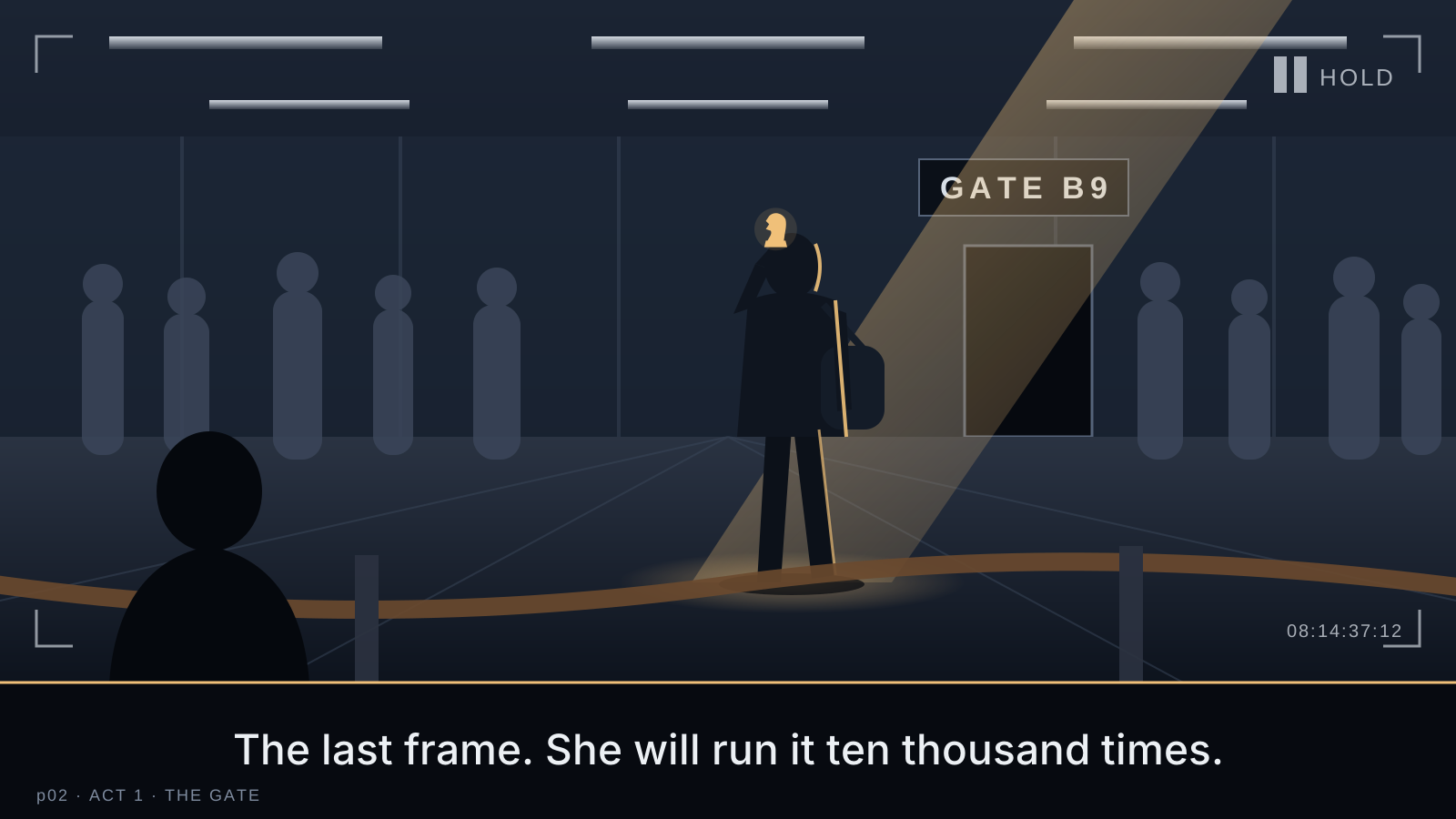
For the whole of opening day the world watches the 22. Nobody watches the President's daughter, because she has spent 28 years teaching the world she's not worth watching. When the noise peaks, she steps out of the frame and keeps walking.
- What it is: a woman leaving the machine that watches everyone, through a door she built into it on the first day.
- What it isn't: a chase. Nobody runs. Nobody shoots. No car on fire.
- The tone: play, with a hole in the middle. She enjoys every step: the jokes are hers and they're very good. Underneath every joke is the thing she lost the night she watched Vane's film. The reader should laugh and then feel the cold.
- The title, paid off: sudden death, as in overtime. The first mistake ends it. Hers would be getting caught, twice over: for the 22, and for the boat. She makes none.
1. Her rules for leaving
She wrote these at nineteen, at Oxford, and burned the page. In the winter of Year 27 she wrote them again, on the beach at Porto Santa Margherita, and added two.
- Nobody innocent pays. Not Reyes, not her mother, not Kilbride or Rowan, not one junior agent on the night shift. Not Maeve. Not Dec. (The one exception she chooses, knowingly: the film runs in a lobby where her mother is standing. See
15Scene 8.) - Nobody gets blamed for losing her. Losing her has to look like nobody's fault, or like nobody lost her at all.
- Nothing is taken that isn't hers. Her own money, her own new name, one chess set.
- No goodbyes that can be traced. Every message deniable, each meaningful to one reader only.
- Never come back for anything. Not for the father, not for the applause.
- Enjoy it. She has earned exactly one thing purely for herself. This is it.
- (Added, Year 27) The boat stays sunk. Nothing she does on the way out can give anyone a reason to look at the summer house again. Julian's night stays the fog's.
- (Added, Year 27) The children never learn what their parents did. Whatever else she chooses, that holds.
2. The long plan (Years 14–28)
The escape was the first piece of the revenge, and everything else was built around it. Then she fell in love, and the plan had to grow.
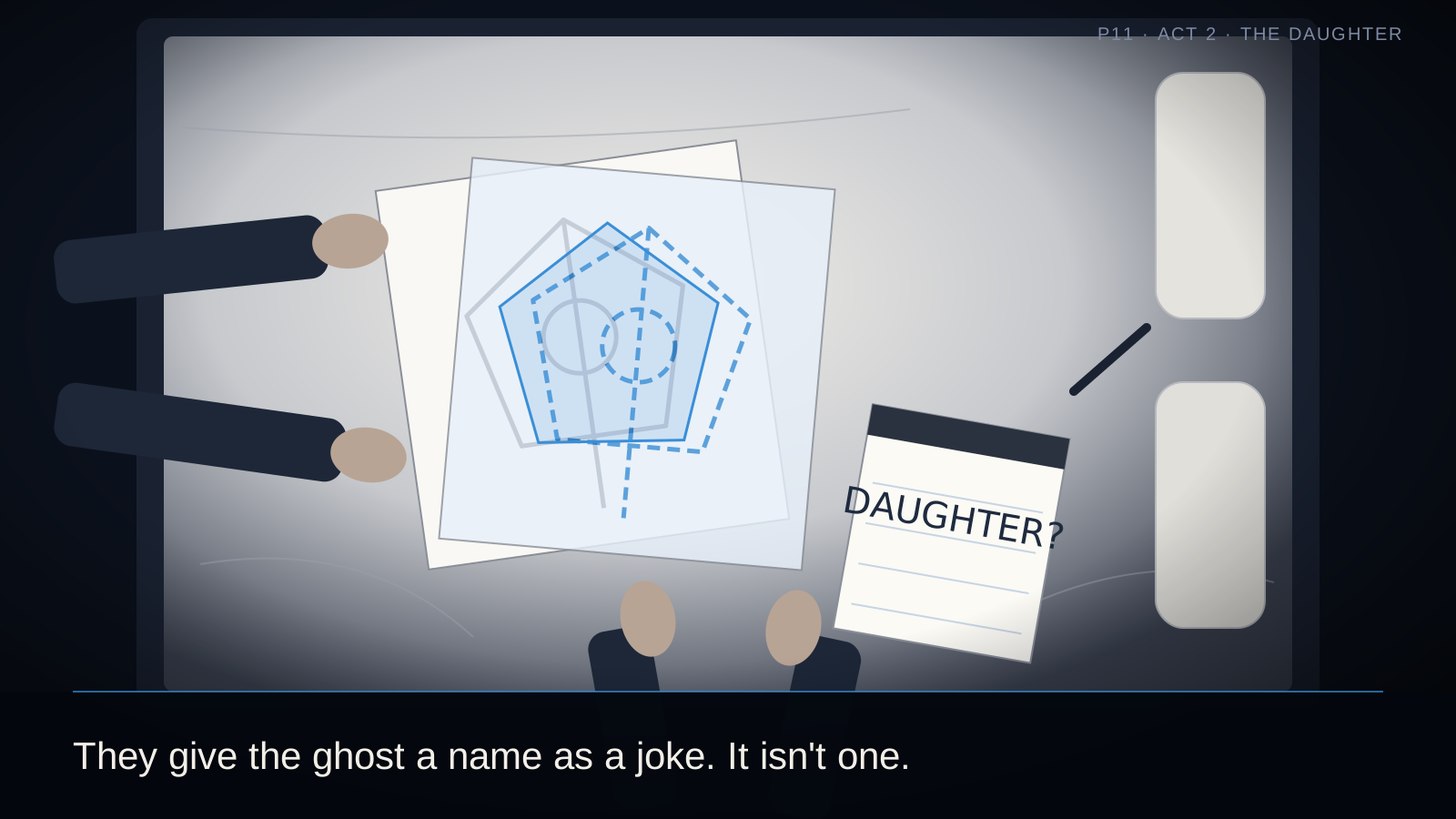
The core idea: a blind spot shaped like a woman
- Every surveillance system has edges: what it was told to collect, and what it was told to ignore.
- In Year 20, when Brannock "stood up" SUDDENDEATH on her word, she shaped its edges. The program was aimed outward, at the powerful.
- It had one deliberate blind spot from the start: a single ordinary woman's life, so dull no analyst would ever pull it, in a place the machine was told never to look.
- Story level only: the reader learns that she built it and why, never the mechanics. In her chapters it reads like a room in a house nobody else knows is there.
Year 14 — Oxford: the seed of the other life
- At Oxford she meets the British circle again: future MPs, Foreign Office hopefuls, Palace hangers-on, Mallory.
- Quietly, a second person starts to exist in Britain: a library card, a small-town bank account, a postal address, a doctor's registration.
- For years Elena does almost nothing. That's the point. A life with no story is a life nobody looks at.
Years 15–26 — feeding the other life
- Money: her own, from her mother's Ashby side and her own work, moved slowly and legally over years into Elena's ordinary accounts. Never a lump. Never from the program's budget. She won't leave owing the machine a cent.
- A face that ages with hers: Elena's record renews itself every few years, quietly, on time.
- A trade: Elena translates Italian and French for small publishers. Real work, real invoices. Ari does it on nights she can't sleep.
- The Swiss room: one safe deposit box in a small Swiss bank, rented in Year 10, the year she left Montclair. No gold, no guns. Paper for Elena, a letter for her mother, and the cheap folding chess set from the beach, the board folded on the unfinished game. (The knight stays in her pocket.)
Years 19–23 — the plan she didn't admit she was changing
- She marries Julian in Year 19. She tells herself the escape is shelved: a habit, a fire exit she'll never use.
- She keeps feeding Elena anyway.
- Maeve is born in Year 21. That spring, without telling herself why, she gives Elena's quiet life room for more than one person. Elena's record starts to allow for a past: a marriage abroad, a child or two, nothing anyone would check.
- Dec is born in Year 23. She names him for her brother and watches Conrad Vail say the name aloud at the christening. She doesn't read his face. She doesn't know yet that she should.
- The joke she makes to herself, and doesn't laugh at: the most careful mind of her generation built a lifeboat with extra seats and pretended it was for luggage.
Year 26 — the night the happiness ends
- Topping out. Vane's film. Sterling's hands, Conrad's headlights, Eleanor's coat.
- The escape stops being a fire exit and becomes the plan again, the same night. She goes home and makes Julian laugh at dinner, and lies awake doing arithmetic: how many seats, and who goes in them.
Year 27, winter — the rehearsal (Chapter 26)
- When: the winter after the boat. Three Vails dead, an accident at sea, a eulogy her father gave with his voice breaking. Julian sleeps badly. So does she, for different reasons and the same one.
- She goes to Porto Santa Margherita off season, alone, on a trip that sits on her public calendar as a private rest after a family tragedy. Nobody questions a grieving daughter-in-law needing the sea.
- Shuttered hotels. Wind off the lagoon. The beach empty.
- She sits at the café where she and Declan played chess and sets up a game against the empty chair. She plays both sides. She loses to him on purpose, the way he used to let her win.
- Then she sets the board up again, and this time she plays it with three pieces in mind she's never had to move before: a husband, a daughter, a son. Every line she tries ends somewhere she doesn't like. She plays until the café closes.
What she decides about the people she leaves
- Her mother: a letter, held in Switzerland, delivered months later. No address.
- Reyes: keep him clean. Give him an order he can follow and an alibi he doesn't know he has.
- Brannock: nothing. He gets the whole program with his name on it, and a tape he'll fear for the rest of his life that no longer exists.
- Callum: nothing. She ended the friendship in Year 26. She still has his condolence note.
- Inès: a single postcard, years later, from a town Inès will never find on a map.
3. The father: the ribbon, and what it buys her
The moment (default: leave him knowing)
- The Crown lobby at dusk, early January, the last week of his term. Every living name on the list in the building. The President with the big scissors.
- On her phone, through Lanternwell, the search she set running in Year 26 resolves, timed to the ribbon, and the last file opens: a carrier-log line, one call, 1:41 a.m., the Vail phone to Patrick's Washington line, 4 min 12 s. No. 22.
- The ribbon falls. Cameras up. She steps in to kiss her father's cheek for the photograph.
- At his ear, under the applause: "One forty-one, Dad."
- She feels it land. For the first time since Milan she has the time to read his face all the way down, and it's all there: the call, the career, the best friend's living son, the eulogy he gave last summer for a man she knows he'd have died for.
- She smiles for the cameras, squeezes his hand, and walks away. She doesn't look back. She will never stand that close to him again.
- The joke, hers alone: he spent 28 years making sure no one would ever have power over his family again. His daughter just walked off with it, in four words, on live television, and he had to smile.
What his file does to the escape
- She takes the file with her. It's the one thing from the machine she keeps. Not to use. To exist.
- So the President calls off his own dogs. Officially the White House hunts for her with everything it has. Quietly, the man at the top makes sure it never hunts too hard. He can't risk anyone finding her and what she carries.
- "Safe and in private seclusion" is his statement. He writes the lie that protects her, as he once said the yes that protected Sterling. She counted on that. It's the one joke in the book she finds least funny and most fitting.
- The leash on the leash: if anyone ever reopens the Vails' boat, the trail runs through his best friend's family and his own daughter. He'll close it himself. He did it once.
4. Opening night: the misdirection
The reveal has landed. The boathouse film is on every screen in three towers and on Vane's network feed. The files are falling. Hartley's security plan locks the Crown down. Every eye in the country is on the top 22 floors: nineteen lit, three dark.
Ari has just walked away from her father at the ribbon. By her count she has about forty minutes in which nobody will ask where she is.
The first joke: the lockdown is the exit
- Hartley's plan for a national special security event has one priority: get the President and his family out safely if anything goes wrong.
- Something has gone very wrong. The plan does exactly what it was written to do. It moves the protectees down and out along their designated path.
- Ari leaves inside that plan, surrounded by agents there to protect her, not watch her.
- The joke: Vivian Hartley, No. 20, who stood silent in the boathouse, writes the route that carries Declan's sister out of the building.
The second joke: Reyes is somewhere else, on her orders
- Vivian Hartley's Act 2 re-tasking already put Reyes on Cate's detail for opening day; that order is Hartley's, on her own authority, in her own logs. Weeks earlier Ari gave him the same order in her own words: "Whatever happens on opening day, stay with my mother."
- When the alarms go, Reyes is with Cate, by the book, on camera, in front of a dozen colleagues.
- Nobody will ever be able to say he let her go. That was the whole point of the order. He doesn't know it yet.
- He's also the man who watched her come home before sunrise the night of the boat and asked nothing (canon default). She hasn't forgotten. This order is her paying him back with the only thing she has: a night he can account for, minute by minute.
The third joke: the building swears she went up
- Lanternwell, Ivo Brandt's system, runs every door and lift in the towers. Brandt, No. 12, wiped the party's messages before dawn.
- Tonight his system keeps a perfect record of the President's daughter riding a lift up, to floor 229, Owen Kilbride's floor, the man who pulled her brother out of the water.
- She's going down. The building is lying beautifully, and the first agents sent to find her go up to the one floor in the Crown with no guilt on it.
The fourth joke: the machine finds her twenty-two times
- Within the hour, someone in the White House asks SUDDENDEATH where she is. The program does what it does.
- It comes back with twenty-two sightings at once, each an address owned by one of the 22.
- Penhale's bank. Fenwick's office at the Fed. The bishop's residence. A Lords committee room. Hale's headquarters.
- Three of them are dead men's houses. Agents knock on the Vails' Beacon Hill door at 2 a.m. and nobody answers, because nobody has lived there since the fog. She didn't plan for that to sting. It does, a little.
- One of them is the White House. Agents report back to the building they were sent from. Somebody senior laughs, once, and then doesn't.
- The analysts spend the night knocking on guilty doors. The people behind them, already ruined on live television, now have federal agents on the step asking about the President's daughter.
The fifth joke: the plane that isn't hers
- A late flight is filed from the city to Boston on the jet owned by Lyle Brannock's blind trust.
- It leaves on time. It lands in Boston. She isn't on it. It was never filed in her name, only in a way that makes everyone assume it was hers.
- It points the search at Brannock, No. 3, the man who called Vail instead of 911. He spends the first night of his ruin explaining a flight he didn't book.
- What he thinks, sweating in the interview room: that she's finally pulled the tape. He waits all night for it to arrive. It never does. He'll wait for the rest of his life.
The sixth joke: the phone goes to the hunters
- Her phone, the one every agency could always find, ends the night in the Harbor tower press center.
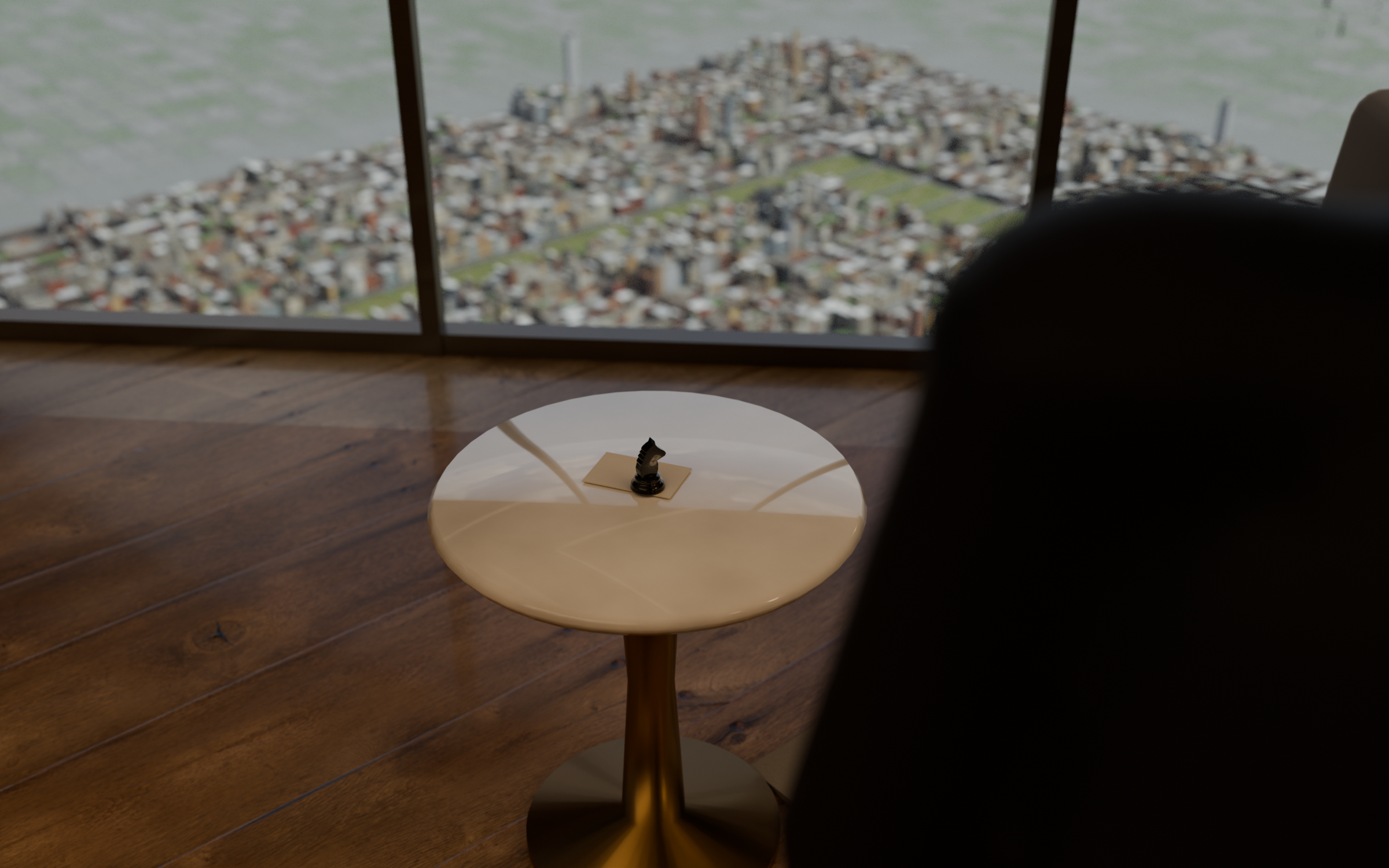
- It sits on a table beside two press passes and a chess knight, waiting for Nadia Kerrigan and Callum Rees (Beat 38).
- The last place her device ever reports is the room where the two people who nearly caught her finally understand what they were chasing.
The seventh joke, the big one: she deletes the woman, not the files
- She doesn't destroy SUDDENDEATH. It's already exposed, with Brannock's name on every page. It's evidence now, and evidence should survive.
- What she removes is herself: every trace of her hand in it, every door she built, every record that showed her shape. The test with the 475 on it. The years at MIT. The nights.
- The tape goes with her. One copy, offline, never in the machine. Off-page, never described. She destroys it on her way out, the way she deletes the rest of herself, without ceremony. The one lie she told that could ever be checked is gone, and the man it held will never know he's free. He'd never have tried to leave anyway. That's what makes it the cleanest control she ever built, and the coldest thing she ever did.
- The boat stays sunk. Nothing in the program ever pointed at the summer house; the machine never touched that night. She checks it once more anyway, the way you check the stove before a long trip.
- When investigators open the program they find what everyone will believe: a machine one ambitious man built and ran. Brannock knows he didn't build it, and will never say who did. It buries him anyway.
- The last thing she closes is the blind spot. Elena Marsh's quiet room goes dark from the inside. Even the machine forgets there was ever anything to forget.
The moment she leaves the frame
- Somewhere on the protectees' route down, on a landing between floors, there's a single unwatched minute, and a service stair that drops one flight further than the logs admit: to the level under the lobby that exists on Rowan's plans as mechanical space and nowhere in Lanternwell's logs.
- She uses it. One moment she's the President's daughter in a blue coat. The next she's a tired woman in a grey one with a canvas bag, walking out with the crowd evacuating the Harbor tower.
- Nobody stops her. Nobody has ever really looked at her. She made sure of that for 28 years.
5. The last look back, and the road south
The water
- She leaves the city on an ordinary late ferry crowded with evacuated guests, staff and press, all on their phones, all watching the 22.
- She stands at the stern rail.
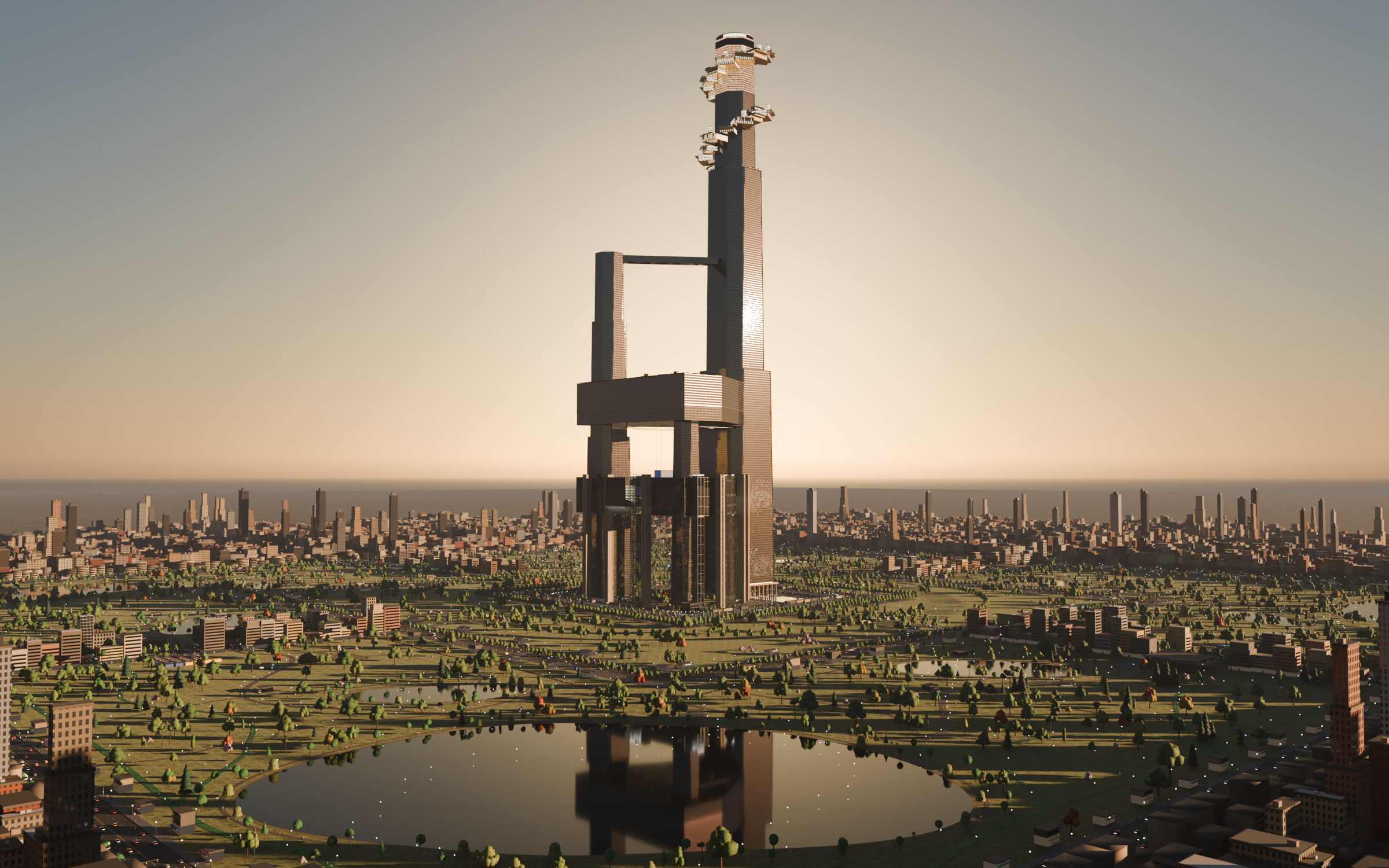
- Harbor and Meridian fully lit. Crown rising a kilometer into the dark.
- Its top floors go dark one by one as the owners are taken out of them. 247, 248 and 249 have been dark since last summer. The light drops floor by floor beneath them, the way water closes over a head.
- 250 stays lit. White. Her father's floor, the only one the building doesn't name. She left it on. It will stay on for the rest of his term.
- Below it, only two stay lit: 229 and 230. Kilbride and Rowan, the two who tried, alone at their windows, free.
- She lets herself see the airport goodbye one last time. Declan's wave. The bag on his shoulder. The way he looked back and grinned.
- For the first time in 28 years, the memory doesn't end in red.
- And one more she didn't plan: Julian, at twenty-four, the summer after Harvard, in Maine, laughing so hard at something she said that he fell off the dock. The happiest she's ever been. It lasted nine years. She lets herself have the whole memory, start to finish, and then she lets it go.
- She turns her back on the towers and doesn't look again.
She had looked back at everything for twenty-eight years. She was done looking back.
Why Britain
- The seam: the Five Eyes partnership means both governments share a great deal, and each assumes the other is watching certain things. In the first days of a crisis that assumption is a gap, and she knows exactly where it sits.
- The noise: in London, the ISC is about to explode over Baron Mallory, GCHQ product read by an American program, and a Palace name in the files. Every British eye is on Westminster.
- Elena's home: Elena Marsh has lived quietly in Britain for fourteen years. It's the one country where the new woman already has a past.
- The irony she enjoys: the British angle was where her enemies hid. Now it's where she hides.
The crossing: slow on purpose
- The hunt looks for speed: private jets, sudden flights, border alarms.
- She goes slowly, over several days, the way a translator on a modest budget travels.
- No step is dramatic. Nothing is forged in a back room on the page. The reader sees only that Elena Marsh is a real, boring person going home.
- On the crossing she reads the news like everyone else. Her own face appears once, in an old campaign photo: President's daughter "safe and in private seclusion" with her family, White House says. She knows who wrote that sentence. She smiles at it, and it hurts.
London: one week
- A small rented room in a part of London none of her old circle would ever visit.
- Ordinary things on purpose: a kettle, a library card, a translation job that was due anyway.
- The pub scene: on a pub television she watches the ISC's emergency session. Behind the chair, taking notes, is Callum Rees. Thinner. Right. She finishes her drink and leaves before the story moves on to the Palace.
- The Palace: the House of Carrow distances itself from Baron Mallory. Far down the same front page, a short item about Princess Seraphina, living quietly abroad. Ari feels nothing for either. That chapter closed at fourteen.
Across the Channel and south
- The train: London to Paris, then through the Alps. She doesn't stop in Switzerland. The box was emptied months ago, and the letter to her mother is already on its slow way.
- Milan: one morning. The café where, at five, she read her father's other life in one look.
- Across the square, a woman of about thirty walks a small child to school: Chiara Benedetti, her half-sister.
- Ari reads her in a glance: kind, tired, happy enough. Chiara will never know. That's the gift.
- New in rev. B: she watches Chiara's child for a moment longer than she means to. He's about Dec's age.
- She leaves money for her coffee and a large tip, and goes.
- Venice and the lagoon: the last leg by water, the way she and Declan went on day trips. Then the coast road to Caorle.
Arrival: Porto Santa Margherita
- Weeks after opening day, early summer. The hotels opening. Children on the beach. The same café, the same tables.
The constraint in every version: the Vails' boat has to stay sunk. Julian is the last Vail, the heir to everything, and the only living person who knows what happened at the summer house apart from her. Where he is decides whether anyone ever looks again.
Option A — All four, together
- How it works: the official story already has her "in private seclusion with her family." Julian makes it true, then makes it vanish. Three weeks after opening day he takes the children to Maine "for privacy." A month later the Maine house is closed for the season. The Vail family office gets instructions it doesn't question. Julian and the children travel slowly, the way she did, on Elena's family paperwork, the seats she built in Year 21.
- Arrival: an evening in July. She's at the café. A boy runs down the promenade ahead of his father and sister, and she knows his run before she sees his face.
- The happiness, back? No. Something next to it. They're together, and they're kind to each other, and they still make each other laugh. But she can read him now, and he knows it. Every time she looks at him she sees the summer house. Every time he looks at her he sees the woman who cleaned it up before sunrise and was good at it. They love each other across that, every day, on purpose. The children grow up by the sea and never know.
- The last scene: two places at the chess table, both filled. Julian is terrible at chess. She lets him win anyway, the way Declan used to let her.
- What it says: the fleeting thing was the happiness, and it went. What's left is the marriage, which turns out to be a different and harder thing, and theirs.
- Why he stays: if the last Vail vanishes too, someone eventually asks why, and the question goes straight to the summer house. Somebody has to stay and be the grieving son who inherited everything and has nothing to hide. He's the only one who can.
- How it works: Julian brings the children to Maine "for privacy," then on "a long trip abroad to grieve." He delivers them to Porto Santa Margherita himself. He stays three days.
- The three days: the funniest chapter in the back half. She makes him laugh on purpose, every hour, because it's the last time. They take the children to Venice. Dec gets lost for four minutes in a glass shop and she isn't afraid, for once, because she can see every exit. They don't talk about the summer house. They don't talk about the boathouse. On the last night he asks if she'd have told him, if his family hadn't found out she knew. She tells him the truth, which is that she doesn't know. It's the first time in her life she's said those words and meant them.
- The goodbye: dawn, the ferry dock. He kisses the children and tells them he'll come at Christmas. He does, every year, as a man visiting his wife abroad, quietly, on a schedule only the two of them know. It's a marriage by visits. It's more than most people get. It isn't what they had.
- Back home: Julian Vail becomes the face of the family: the foundation, the Eleanor Vail sky garden, the dark floors he never sells. He tells every interviewer his wife is resting abroad with the children, and he's a terrible liar, and everyone believes him because of what he's lost.
- What it says: he killed for her once, and now he stays for her, which is harder. He covers her the way she covered him. Each of them is the other's sunrise.
Option C — Alone; Julian and the children stay
- Why she goes alone: the President's grandchildren cannot vanish without a hunt no statement will stop. The children need one parent nobody is looking for. And she is the thing that gets hunted. Their safest life is the one without her in it.
- What it costs: Dec is five. She was five. She leaves him at exactly the age she lost Declan, and she knows it, and she does it anyway. She becomes the empty chair. Her father's empty chair at every dinner, at the beach, at the funeral. That was the thing she swore she'd never be.
- How it works: Julian knows. They decided it together, the winter after the boat, at the kitchen table at 4 a.m., the hour of the call she remembers. He takes the children home from the Crown with Dec's stomach ache, and that's the last time she sees the three of them together.
- The letters: none. Nothing that can be traced. Once a year, on Maeve's birthday, a translated children's book arrives from a small Italian publisher, Elena Marsh credited in tiny type on the copyright page. Maeve keeps all of them. She never looks at the translator's name. Julian always does.
- The last scene: the chess set on the café table. Two places, one empty. She plays both sides. The empty chair is Declan's. It's also Dec's now, and she lets herself know it.
- What it says: love is still the weakness, and the weakness wins: she leaves because she loves them. Classical tragedy, finished. The thing she wanted most, the answer, cost her the brother, the father, the husband and the children, in that order.
How each option changes the rest of the file
| A: all four | B: children only (lean) | C: alone | |
|---|---|---|---|
| Flat at the beach | three bedrooms | two bedrooms | one bedroom |
| Phone box in London | yes | yes | no |
| Who holds the lie at home | the President | Julian | Julian and the President |
| Risk to the boat | highest | lowest | low |
| Last image | two players, both chairs filled | children on the beach, one chair empty till Christmas | one player, both sides |
| Reyes's note says | "Stand down, Marine." | "Semper Fi. Stay with her." (Cate) | "Semper Fi. Watch my kids." |
7. After: the hunt that finds nothing
The White House
- Within hours the President's staff face a question nobody can answer: where is his daughter?
- They can't say they lost her. Not on the night the boathouse film aired and SUDDENDEATH was exposed. Not with Congress, the press and London all watching.
- So the old machinery does what it did for Declan: lawyers, careful statements, safe, private, requesting privacy.
- The final irony: the instinct that buried her brother's death now buries her disappearance. Under the default, it's literally the same man saying yes.
Patrick Halloran
- He asks for his daughter in front of his staff, because he has to be seen asking.
- Alone, he doesn't ask. He knows why she left. He knows what she's carrying. He gave the eulogy for Conrad last summer and wondered then; he doesn't wonder now.
- He sits at the head of an empty table in the residence and understands, at last, what it is to have someone missing, and to have done it to yourself.
- He never sees her again. He serves out his term. He cuts more ribbons. He smiles. Every time a reporter asks about his daughter, he says she's well and private, and four words go off in his ear.
Cate Halloran
- Months later, a letter with no return address. Three lines: I'm safe. I'm free. I'm with him in the only way I can be. ("Him" is Declan. Under Option A or B, Cate may read it differently, and that's fine.)
- She reads it alone, folds it small, and keeps it in her coat. She tells no one, not even Reyes.
- For the first time in 28 years she sleeps through the night.
Matt Reyes
- He comes off shift and finds a folded note in his jacket pocket in her handwriting, slipped in sometime that day.
- He reads it twice and puts it in his wallet. In every interview afterward he tells the plain truth: he was with the First Lady, as ordered, all night. He never says what he suspects about opening day. He never says what he saw before sunrise last summer either.
- He's a Marine. He followed the order. He kept her safe the only way she'd let him.
Lyle Brannock
- Indicted for SUDDENDEATH. All of it, alone.
- In every interview he waits for the tape to surface. It never does. He thinks it's her last mercy. He's grateful, and ashamed, and he never once says her name to investigators, because he still believes the moment on that tape was real and his own fault.
- He never learns the tape is gone, or that it was never what he thought. He never breaks free. He was never going to.
Nadia Kerrigan
- In the press center she and Callum find the phone, the passes and the knight. They know. They can't prove it. Neither wants to.
- Months later, at home, an envelope with no return address. A single card, one chess move.
- It answers the last move she played against a stranger online years ago, one she never knew was Ari. She laughs out loud, alone in her kitchen, and tells no one.
Callum Rees
- He gets nothing. Deliberate, and the cruelest kindness in the book.
- He keeps wondering whether he was a friend or a file. He was both. He never learns the friendship was real anyway.
The investigators
- The FBI, the inspectors general, congressional committees and the ISC all open SUDDENDEATH. They find Brannock everywhere and nobody else.
- They find the 22's files, the money, the pressure, the tower deals. They prosecute what they can.
- Nobody reopens the boat. It was an accident at sea, ruled within weeks, and every file about it that ever existed says so.
- They never find a door they can't explain, because there isn't one any more.
8. What the world never learns
- That she was the hand behind SUDDENDEATH. History records it as Lyle Brannock's program.
- That she planned the tower. Strand believes the idea was his. Conrad Vail believed he chose the site. The record agrees with them.
- That she bound the 22 to the building. Every deal looks like ordinary greed, because every one was.
- That she built the reveal. The film, the screens, the files are blamed on a leaker inside the 22, or on Brannock's collapse.
- What happened at the summer house. Three Vails lost in fog off the point. Julian's night stays the fog's. Her sunrise stays hers.
- What the President did at 1:41 a.m. (default). Two people know. One of them is by the Adriatic.
- The tape. It's gone. The only man who knew it existed will believe in it until he dies.
- Her real mind. The 220 on record stays the legend. The 475 is gone, even from the machine.
- About Chiara. Her father's secret family stays secret.
- That the President's daughter is gone. Officially she lives a private life abroad. Nobody in power will ever admit otherwise.
- Where she is. Elena Marsh, translator, by the Adriatic, pays her taxes, plays chess at a café in the evenings, and is very funny when she's in the mood. The café owner thinks she's the funniest woman he's ever met. He has no idea what she's laughing at.
The machine that watched everyone lost the one person it was built around, and never noticed she was gone.
- The new name: Elena Marsh is working. Alternatives: a quiet nod to Declan, or to the Adriatic summer.
- Kerrigan's chess move: a game she once played against Ari unknowingly, or tied to her own drawings of "the shape."
- The Milan stop: keep Chiara as a silent sighting, or cut it.
10. Continuity checklist
- Ages at opening day (Year 28): Ari 33, Julian 34, Maeve 7, Dec 5, Patrick 72.
- The boat: an accident at sea, late summer Year 27, fog off the point. Nothing in the escape points back at it.
- The tape: off-page and non-explicit, always. Its effect on Brannock only. Deleted with her traces; never described.
- Never on page: keystrokes, real techniques for evading surveillance, or how documents are obtained. Show the result and her reasons.
- Marines: Reyes is a former Marine sergeant. Always "Marine."
- The Academy: only ever "the Academy." The night is Headmaster's Homecoming; the dare is the Crossing; there is no Society.