SUDDENDEATH

A novel in development · story bible

SUDDENDEATH

The President's genius daughter, the funniest person in any room, spends 28 years hunting the 22 people who buried her brother's death in one night, while falling in love with the boy next door to all of it. The search ends at her own dinner table, and the last name on the list is her father's.

Storyboard Read the bible

Storyboard

The key frames, in story order. Frames marked Tower are set at the WorldTowers building and will be rendered in Blender.

Act 1 THE MARRIAGE AND THE MACHINE

p01 — The Last Light

p01

The Last Light

"Next summer we come back. Same beach. Rematch."

Scene and shot
Scene
Porto Santa Margherita beach, last evening of August, Year 0. Ari (5) and Declan (16) over a cheap folding chessboard in the sand; chipped black king. Declan's hand rests on his chest pocket, where a gold-edged card sits: his invitation to the Headmaster's Homecoming weekend, sent by his godfather, Conrad Vail, chair of the trustees. Cate under a blue umbrella in the background, Aperol in the sand.
Shot
low wide at sand level, board in the foreground. Sun setting behind them over the land; the sea in front turns shell-pink to lilac. Warm gold, soft grain.
Beat
1, 6 · Art: keep. The gold sliver under his hand, drawn as the old Society envelope, now reads as the Homecoming card. (Working plant, J: the Vails are in the first frame.)
p02 — The Gate

p02

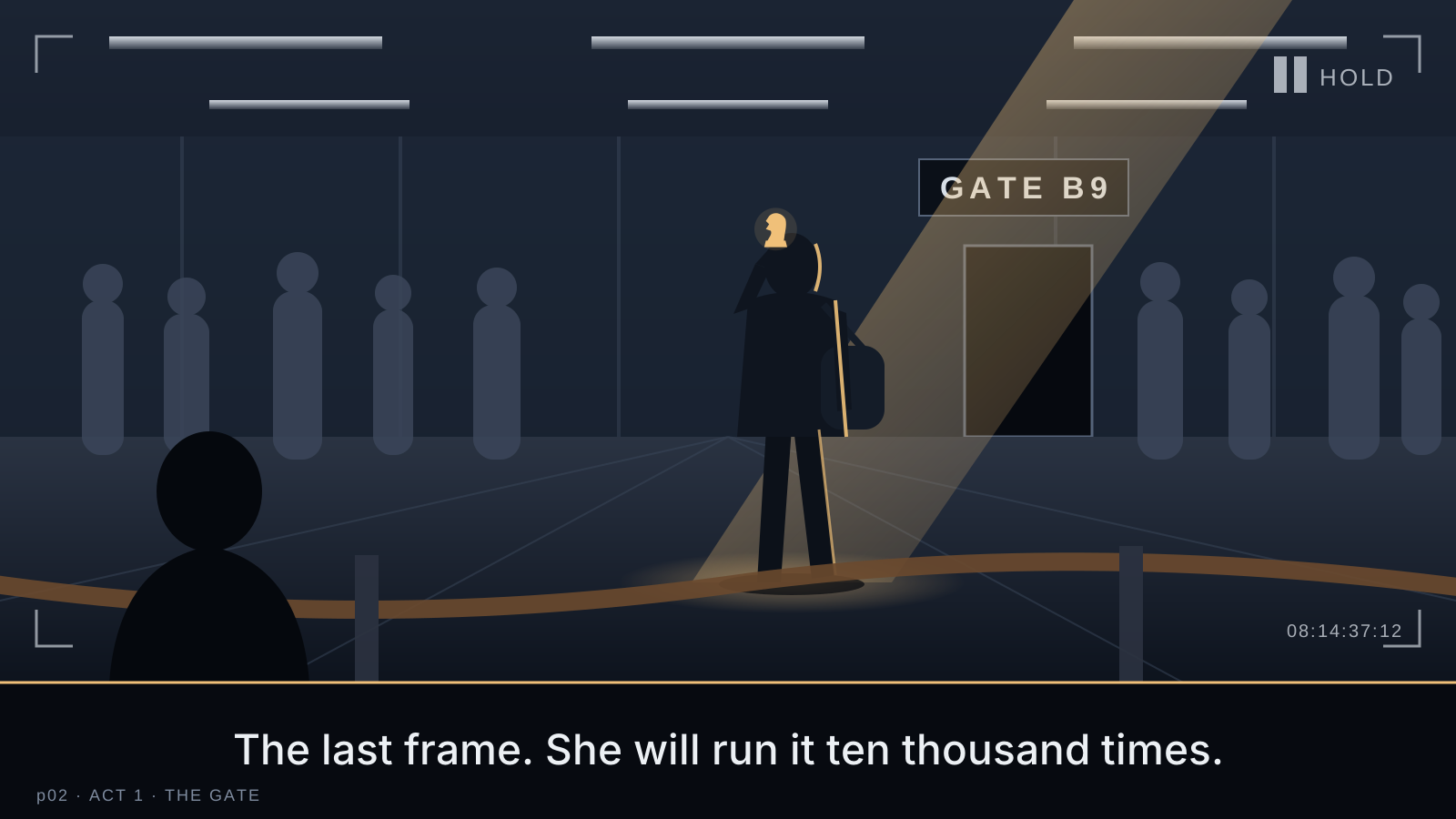
The Gate

The last frame. She will run it ten thousand times.

Scene and shot
Scene
Logan Airport, late August, Year 0. Declan walks backwards toward the gate and salutes Ari with a chess knight from their board, then pockets it. She stands small at the rope line.
Shot
Ari's eye level, long lens; Declan sharp, crowd blurred. Flat airport fluorescent white with one warm window of morning sun on him. Freeze-frame feel: the frame she replays for 28 years, and replays again on her wedding day.
Beat
1 · Art: keep.
p03 — Headmaster's Homecoming

p03

Headmaster's Homecoming

Upstairs, the band plays on. Downstairs, the story is decided before anything else.

Scene and shot
Scene
mid-October, Year 0, after midnight. Split vertically by a wet fence line.
Shot
wide from the river looking up: boathouse low in frame, the lit hall high on the hill above it. The ladder of the image is the theme: the party above never hears what happens below. Black water, cold flashlight white, warm gala gold far off. No identifiable faces.
Beat
backstory for 7, 22, 30 · the night 12:15–1:00 a.m. · Art: redraw (replaces the lantern-and-pledge rite).
p04 — Every Face But Two

p04

Every Face But Two

Guilt has a look. She memorizes every one, except grief she believes and the man who isn't in the room.

Scene and shot
Scene
the funeral, Boston, Year 0. Ari (5) by the casket in a black dress, looking up at the receiving line. Bennett Thorpe cannot meet her eyes. Daisy Fenwick's lips move, counting. Conrad Vail, Declan's godfather, holds Cate's hand in both of his and weeps; real grief, so she files him under family. Far behind, blurred, at the back of the church: Patrick, turned away, phone to his ear, half out the door.
Shot
child's-height close-up on Ari's face, adults cut off at the chest above her. Cold gray church light, muted color. The father is the one figure she isn't looking at.
Beat
7 · Art: redraw (Conrad's hands move from Patrick's sleeve to Cate's hand; Patrick moves out of the line to the back door, on the phone; add Fenwick).
Frame Not drawn yet

p19

The Wedding *(new)*

The one place she isn't working.

Scene and shot
Scene
Year 19, late summer, the dock of the Vail summer house. Ari (24) in her wedding dress and Julian Vail doubled over laughing at something she just said, her face deadpan, his forehead on her shoulder. Behind them under the tent: Conrad on his feet mid-toast, glass raised ("We were always one family. Now it's on paper."); Eleanor dabbing her eyes; Sterling charming a waiter. At the very back of the tent, Patrick on the phone.
Shot
mid-wide from the water, the couple sharp at the end of the dock, the tent glowing soft behind. Golden hour, string lights coming on. The same dock reappears in p22; frame it so the two rhyme.
Beat
1–3 · Art: new.
p05 — The Girl in the Corner

p05

The Girl in the Corner

Cameras slide past her. She reads everyone they miss.

Scene and shot
Scene
Inauguration Day, Year 20. Patrick Halloran takes the oath; Cate beside him in name only. Ari (25) at the edge of the stand, plain and forgettable. Matt Reyes, a former Marine sergeant, at her shoulder, eyes on the crowd. Press cameras all turned the other way.
Shot
over-the-shoulder from behind Reyes; Ari soft at frame edge, the President sharp and far. Cold January daylight, white marble, flags.
Beat
4, 5, 9 · Art: keep.
p06 — The Nineteen Minutes

p06

The Nineteen Minutes

Declan did not slip. Someone waited.

Scene and shot
Scene
night, Year 20. Ari alone in a dark room, her face lit only by a screen. On it, one line from a twenty-year-old message in Lyle Brannock's private archive, sender scrubbed: "Remember the nineteen minutes. Remember who you called." Story level only: what she found, never how.
Shot
tight close-up, three-quarter profile. Pale blue screen light on her face, the rest black. The text reflected backwards in her eyes.
Beat
9 (inciting incident) · Art: keep (the drawn text never named a sender).
Frame Not drawn yet

p20

Christmas Eve *(new)*

The warmest room she has ever been in. Mark it.

Scene and shot
Scene
Year 21, Christmas Eve at the Vails'. Conrad in an armchair with newborn Maeve on his knee; Eleanor at the piano; Sterling refilling glasses; Cate laughing for once. Julian has just made a joke at his own expense and Ari is laughing so hard she has to hold the mantel. Every adult hand in this room is on the boathouse film; the frame is built to be reread after p10.
Shot
wide from the doorway, fire and tree lights, everyone in one warm pool. Hearth amber, deep green, gold. The happiest image in the book.
Beat
13 (the fleeting thing is the happiness) · Art: new.
p07 — The Knight in the Pour

p07

The Knight in the Pour

Every known name is bound in. The guilty chose their own floors.

Scene and shot
Scene
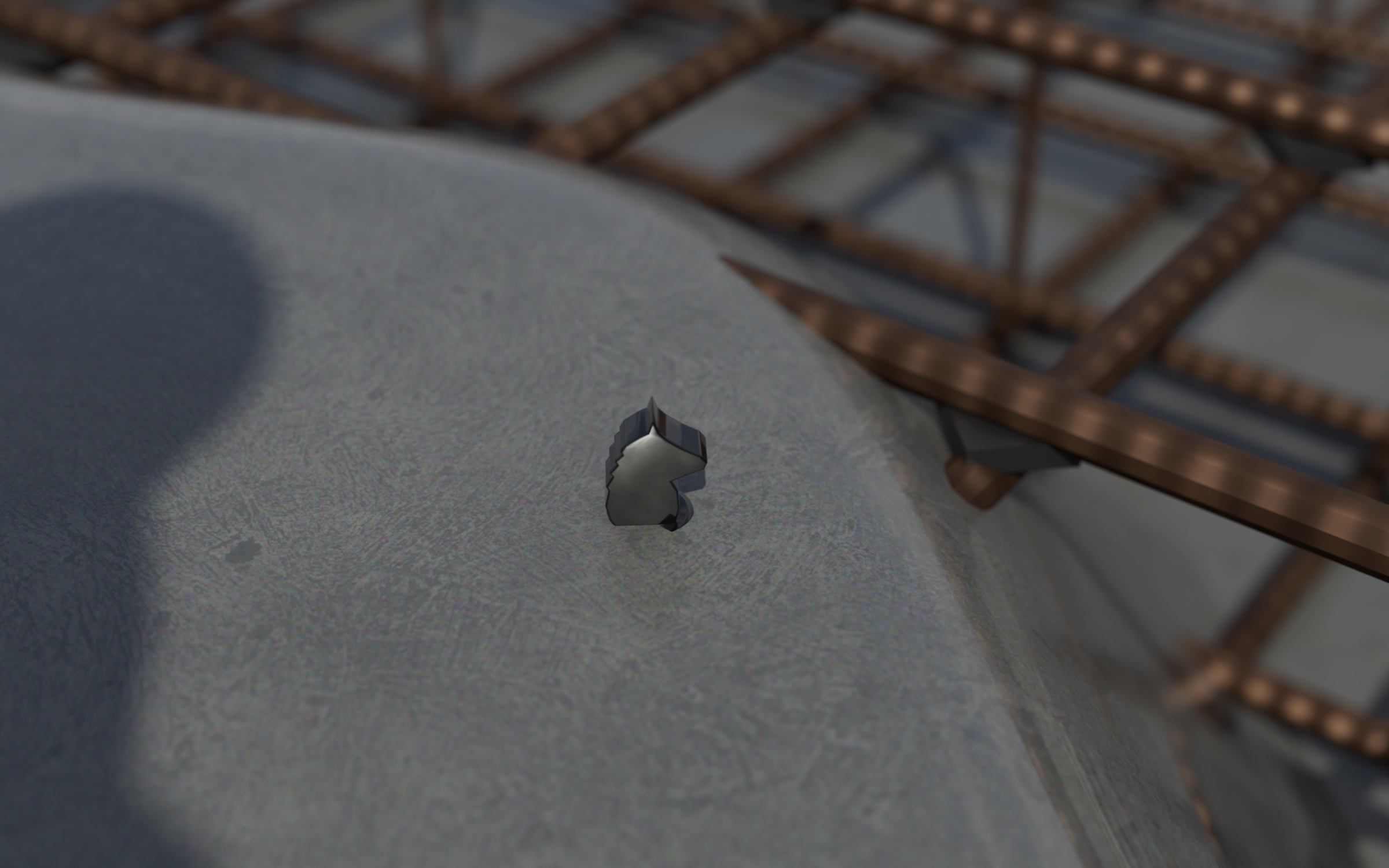
groundbreaking, Year 21, at the WorldTowers waterfront site. The President at the podium. Ari in the second row, Maeve on her hip, Julian's hand on her back; Conrad beside them, pleased, having just taken the top four floors "for my family and my oldest friend." Later, alone at the edge of the foundation pour, she lets a chess knight drop into the wet concrete.
Shot
overhead down into the pour: grey concrete, rebar grid, the small knight sinking. Inset context: the empty site, the river, the three tower footprints staked out. Hard midday light.
Beat
14 (lock-in) · Tower: yes.

Act 2 THE ANSWER

p08 — Two Drawings

p08

Two Drawings

Two exiles, one shape.

Scene and shot
Scene
split frame. Left: Nadia Kerrigan, NSA analyst, Fort Meade, Year 23, sketching the program's errors into a shape like a hand behind a curtain. Right: Callum Rees, clerk to Parliament's Intelligence and Security Committee, London, Year 24, alone late in a basement office with a dead file, circling one name that is missing: Mallory.
Shot
matched mid-shots, same angle, same pose, two continents. Left in fluorescent government green; right in lamp-lit amber with rain on the window.
Beat
16–17 · Art: keep.
Frame Not drawn yet

p21

The Leash *(new)*

He thanks her. The leash tightens, and she never touches it.

Scene and shot
Scene
Year 25, the West Wing, late. The Chief of Staff's office, door half-open, one desk lamp. Lyle Brannock sits behind his desk, gray, unable to lift his eyes from his hands. Ari stands at the door, one hand on the frame, kind and quiet, mid-sentence: "I've never told anyone. I never will." He is thanking her. The tape is never shown and never described; the frame is about his fear and her calm.
Shot
from the corridor through the half-open door: her in soft focus in the foreground, him sharp and small behind the desk, boxed in by the door frame like a cell. Cold institutional white with one warm lamp; flag in the corner of the office.
Beat
8 (off-page backstory), 20 · Art: new. (Off-page and non-explicit, per J.)
p11 — The Daughter

p11

The Daughter

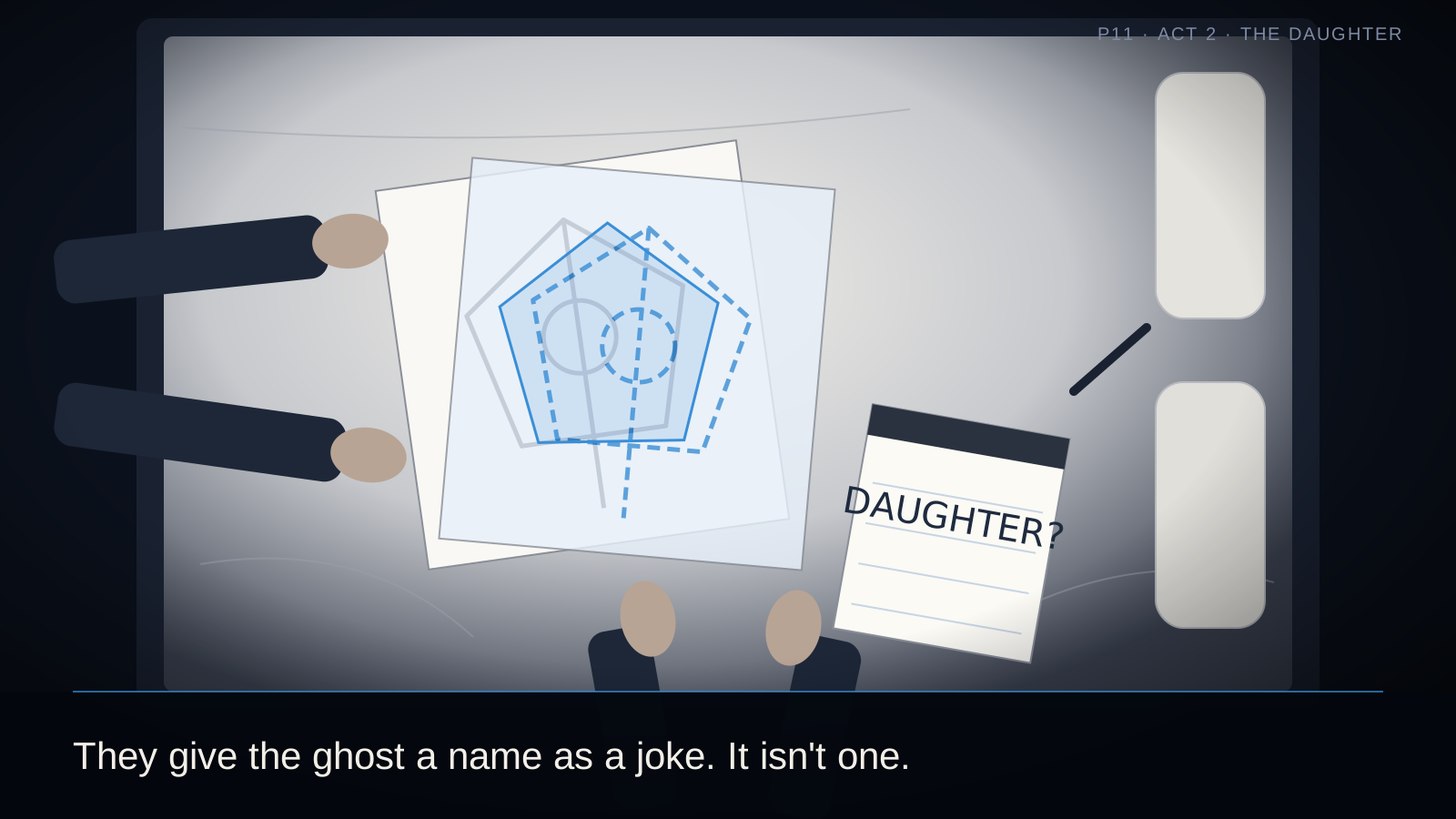
They give the ghost a name as a joke. It isn't one.

Scene and shot
Scene
Year 25, a Washington hotel room. Kerrigan and Rees meet for the first time and lay their two drawings on top of each other on a bed. The shapes match. A hotel notepad with one word in Rees's hand: "DAUGHTER?"
Shot
overhead straight down on the bed and the overlapping papers, four hands at the edges. Neutral hotel white with a hard desk lamp.
Beat
21 · Art: keep.
p10 — Topping Out

p10

Topping Out

That night, the answer to who? will have carved every Thanksgiving turkey of her life.

Scene and shot
Scene
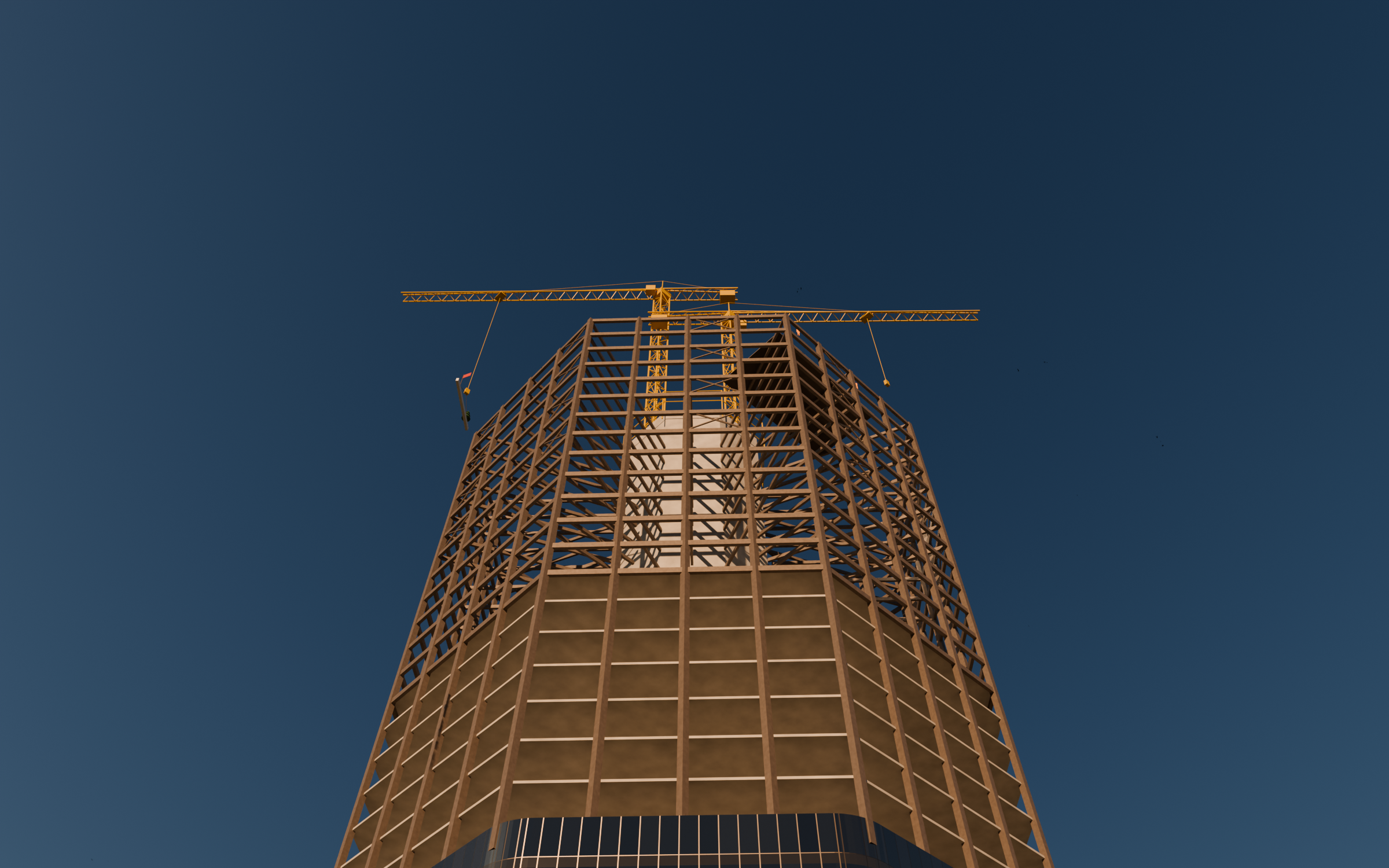
Year 26, autumn. The last beam goes up on the Crown tower, 250 floors, about a kilometer high, a small flag and an evergreen on it. Ironworkers on the steel; Owen Kilbride among them. On the roof deck the Vails pose for photographs: Conrad, Eleanor, Sterling, Julian, Maeve and Dec in hard hats. Ari stands a step apart. In her coat pocket a phone has just lit: Prescott Vane's offline film has been reached. She won't watch it until the kids are asleep. She smiles for the camera.
Shot
extreme wide from below up the full height of the Crown, cranes against the sky, then hold on the family as a small group at the top, Ari slightly apart. Late-afternoon steel-blue sky, orange safety vests.
Beat
22 (midpoint) · Tower: yes.
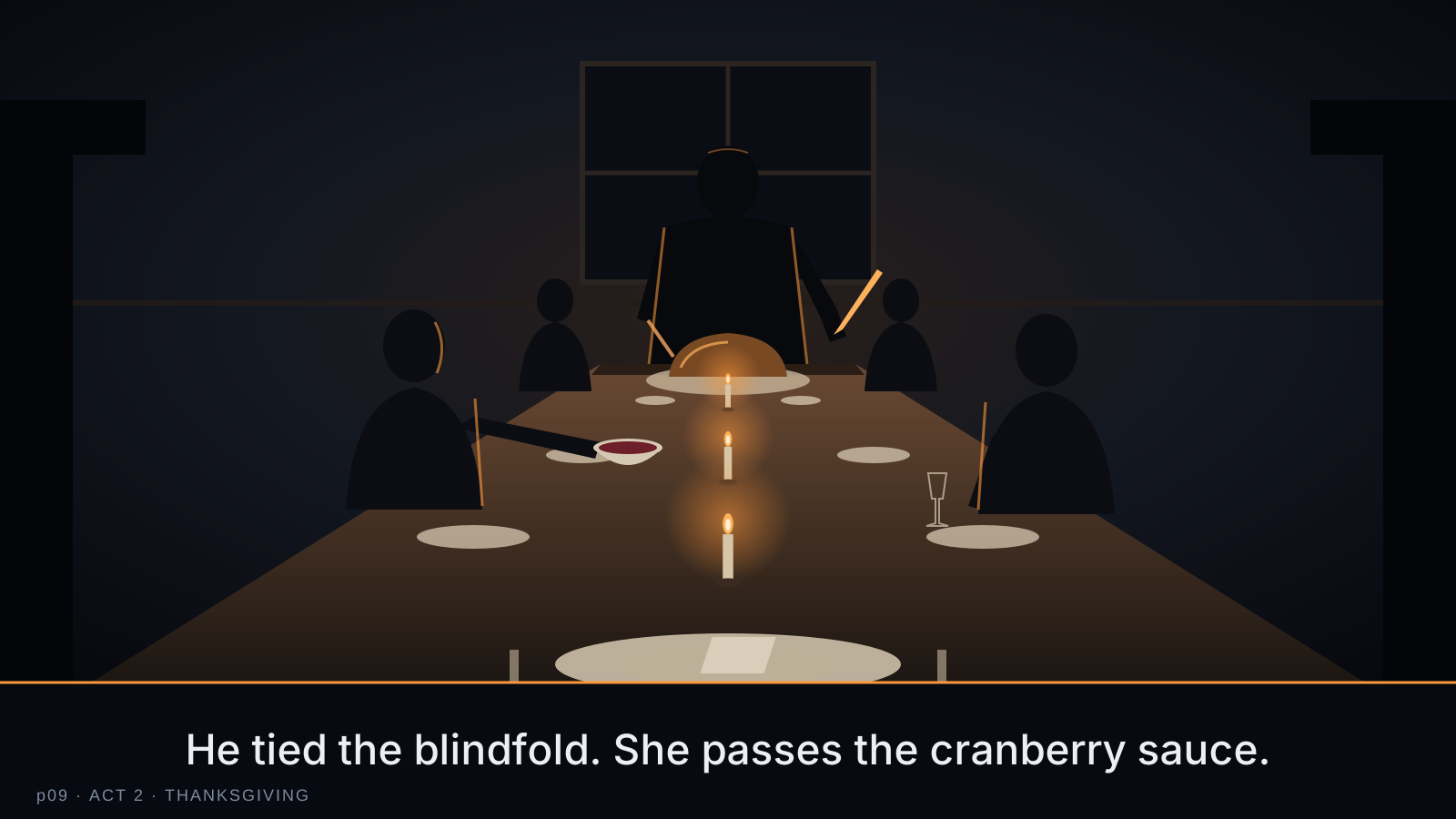
p09 — Sunday Dinner

p09

Sunday Dinner

She's never been funnier. He's never been more afraid of a joke.

Scene and shot
Scene
Year 26, the Sunday after the film, the Vails' dining room. Conrad stands at the head of the table carving and says grace. Sterling teases Maeve. Eleanor leans toward Ari to ask if she's sleeping enough. Ari has the whole table crying with laughter; it's the best performance of her life. Only Julian, beside her, isn't laughing: he's looking at her, noticing the edge in the jokes.
Shot
wide down the table from the foot, Conrad standing at the far end with the knife. Warm candle orange, deep shadow behind. Ari mid-punchline, the one sharp face; Julian's turned head the second.
Beat
23 · Art: redraw (was the retired Strand Thanksgiving; keep the composition, carving man at the far end, but the room is full and laughing, and Patrick's empty chair goes).
Frame Not drawn yet

p22

The Dock *(new)*

He chose her.

Scene and shot
Scene
Year 27, late summer, after midnight, the Vail summer house. The house behind is lit in every window and utterly still. Julian sits at the end of the same dock as p19, in the dark, shoulders down, the chess knight she gave him years ago in his closed fist. Ari has just come down the lawn and stopped at the top of the dock. No bodies, no weapon, no blood: the horror is the quiet house.
Shot
from behind Ari at the top of the dock, long lens, her silhouette in the foreground, Julian small at the far end; the lit, silent house reflected in the black water between them. Moonlight blue, the windows a sick yellow. Rhymes with p19 exactly: same dock, same angle reversed.
Beat
29 (aftermath only, per J) · Art: new.
Frame Not drawn yet

p23

Before Sunrise *(new)*

By sunrise there is a story. She learned how from them.

Scene and shot
Scene
Year 27, just before dawn. Fog on the point. The Vails' boat is gone from its mooring. Ari walks back up from the water alone, dry, composed, checking her watch. At the corner of the house, on post, Matt Reyes watches her come. He doesn't move and doesn't ask. Story level only: what she decided, never how.
Shot
wide, low, from the edge of the lawn: Ari coming up out of the fog toward camera, Reyes a dark vertical at frame right. Fog gray, first blue light, one porch lamp still burning. Rhymes with p03: an adult walking away from the water with a story ready.
Beat
30 · Art: new. (Open, J: where Reyes was that night. Default as drawn.)
p12 — The Truman Balcony

p12

The Truman Balcony

She lies to the one person she never lies to.

Scene and shot
Scene
3 a.m., the White House, Year 27, after the triple funeral. The net is closing. Ari alone at the balustrade; Matt Reyes in the doorway behind her, asking for the first time: "Are you in trouble?"
Shot
over Reyes's shoulder from inside, Ari in silhouette against the floodlit Washington Monument. Deep night navy, one warm light from the room behind.
Beat
31 (dark moment) · Art: keep.

Act 3 THE LAST FILE

p13 — Opening Day

p13

Opening Day

Every living name under one roof for the first time since the boathouse.

Scene and shot
Scene
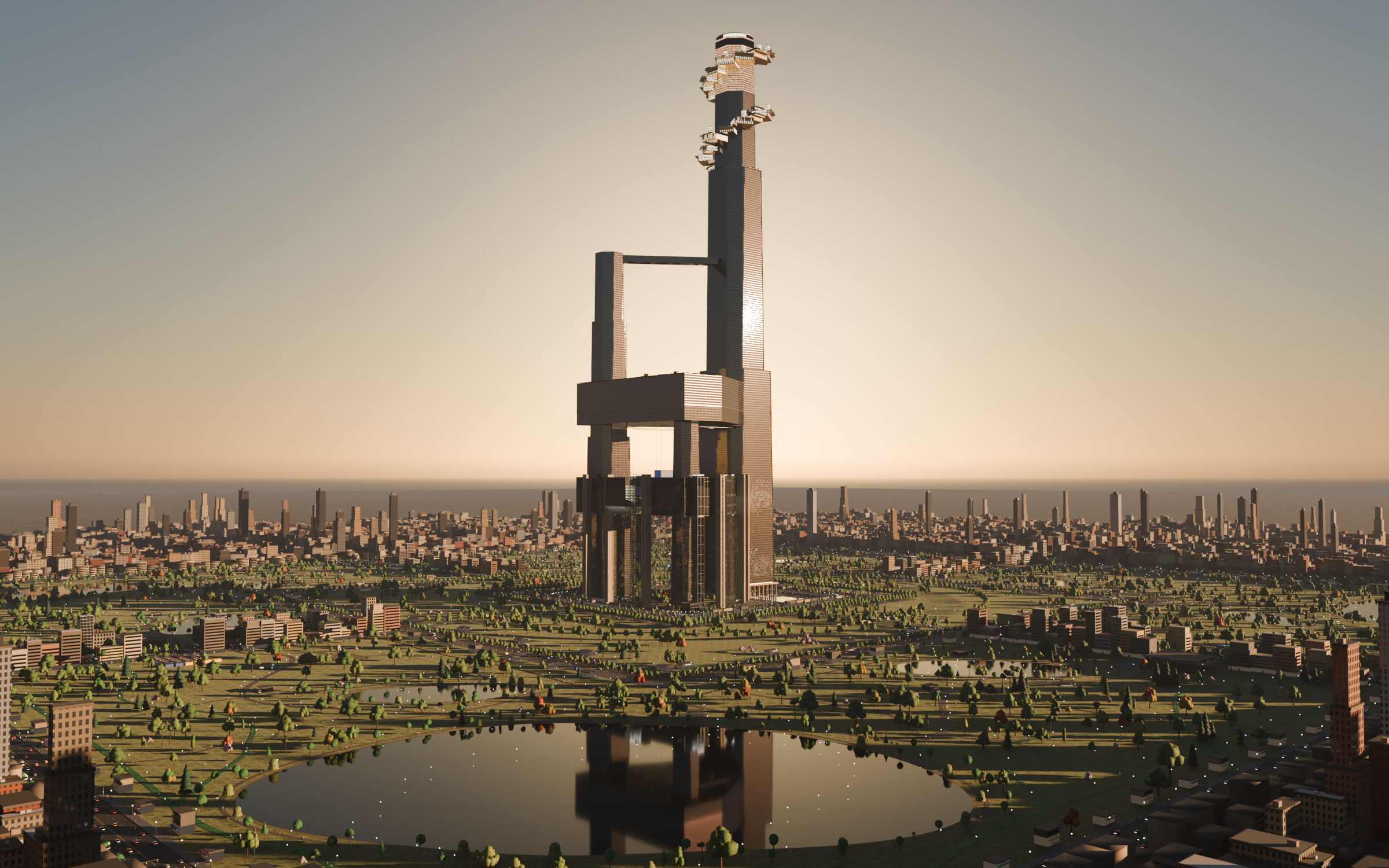
Year 28, spring. The three towers on the water: Harbor (75), Meridian (150), Crown (250). Security boats in the harbor, motorcade on the causeway, broadcast trucks, crowds. A national special security event.
Shot
aerial wide, early morning, low sun raking across the glass curtain walls. Three floors near the Crown's crown are dark. Silver and pale gold, water mirror-flat.
Beat
36 · Tower: yes.
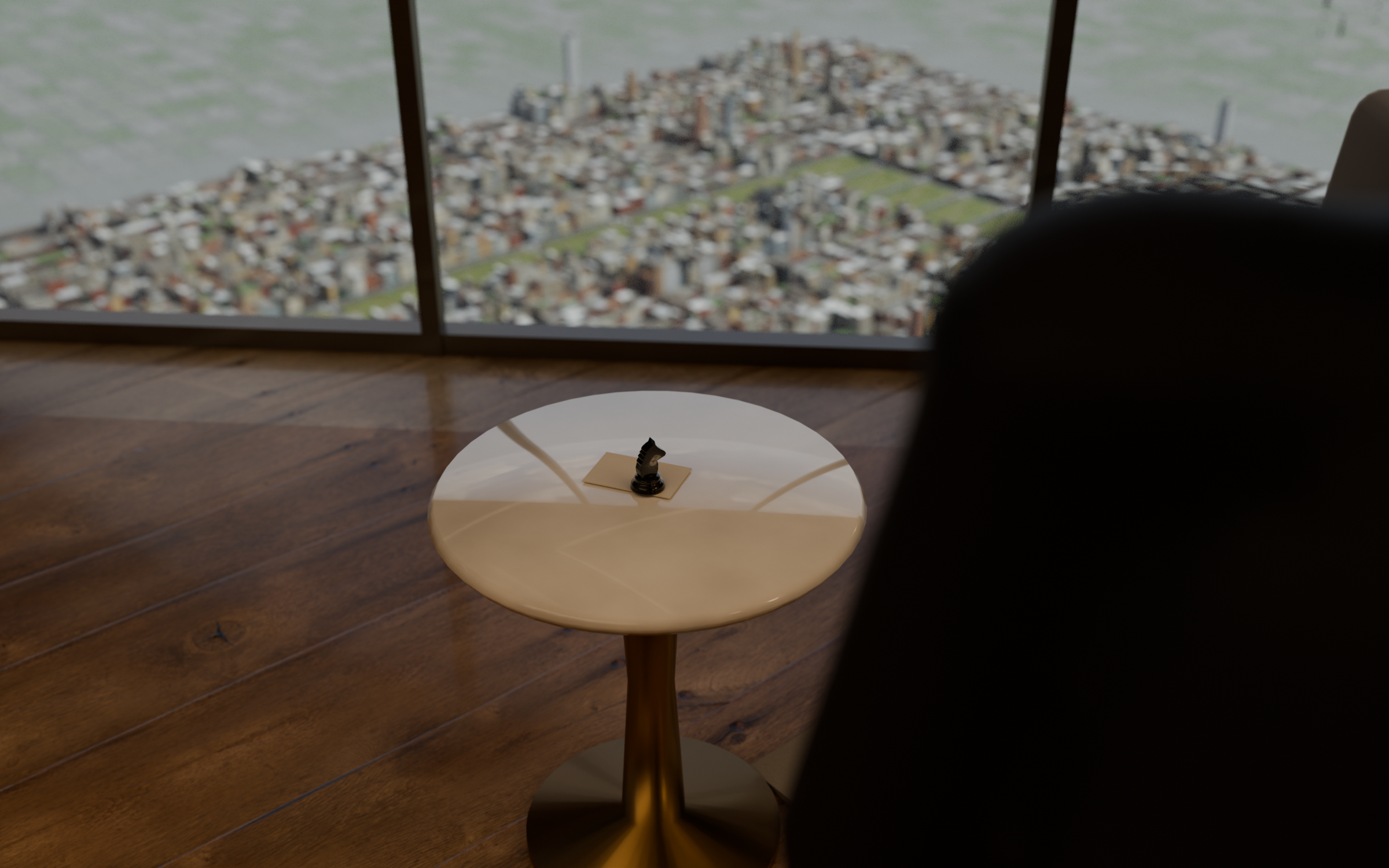
p14 — Floor 246

p14

Floor 246

Every floor below him has a note too. So do the three dark ones above.

Scene and shot
Scene
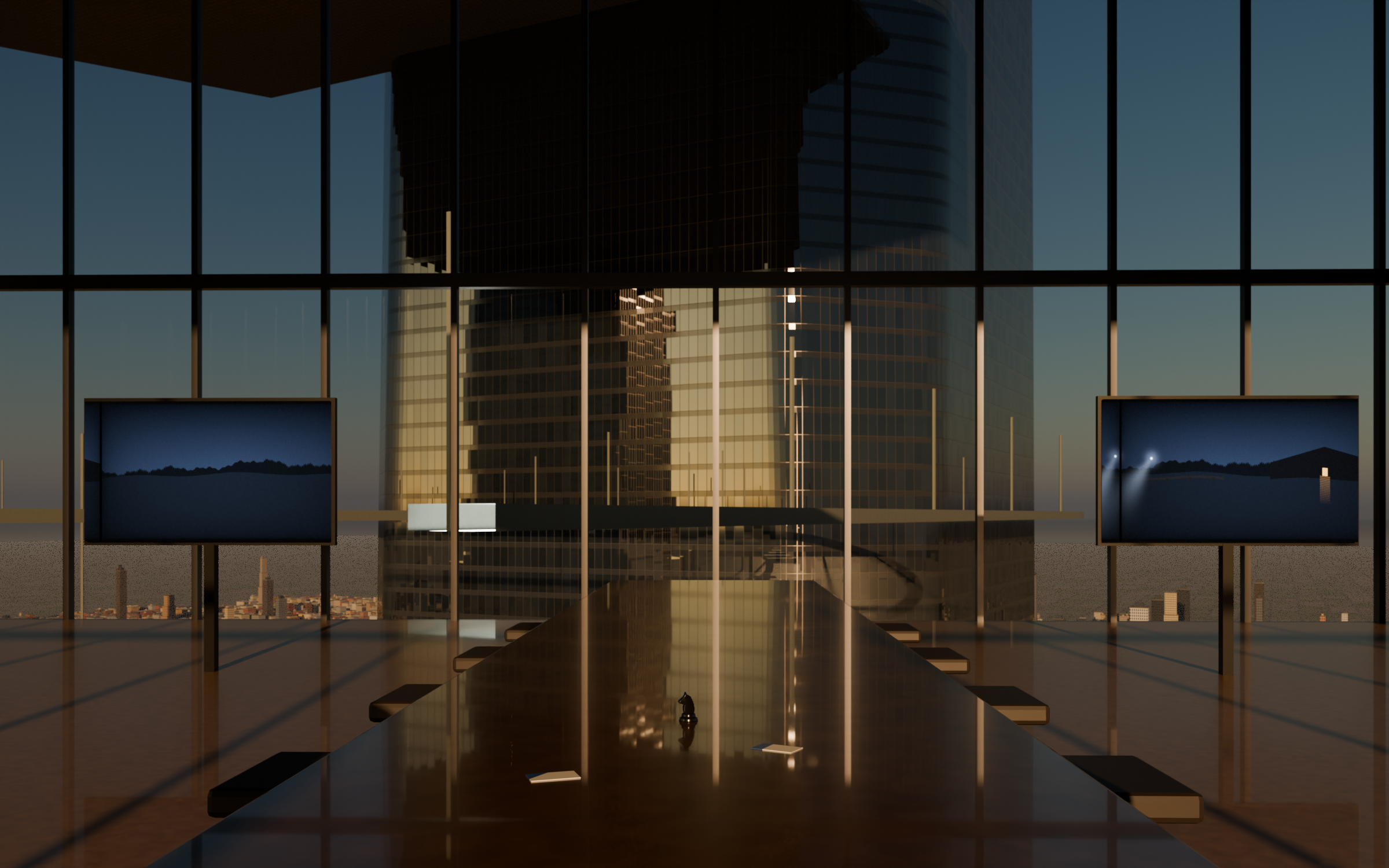
Baron Mallory's penthouse, Crown floor 246, the highest occupied guest floor. A chess knight on a side table by the floor-to-ceiling window. A folded note under it: "No. 11. You held his arms." Mallory, back to camera, looking straight down a kilometer. Through the ceiling glass of the atrium above, three dark floors (247–249).
Shot
over-the-shoulder past the knight to the window, the city tiny below. Cold white morning, the knight in sharp focus, Mallory soft.
Beat
37 · Tower: yes. (Was Floor 250 / Sterling; Sterling is dead and 250 is the President's.)
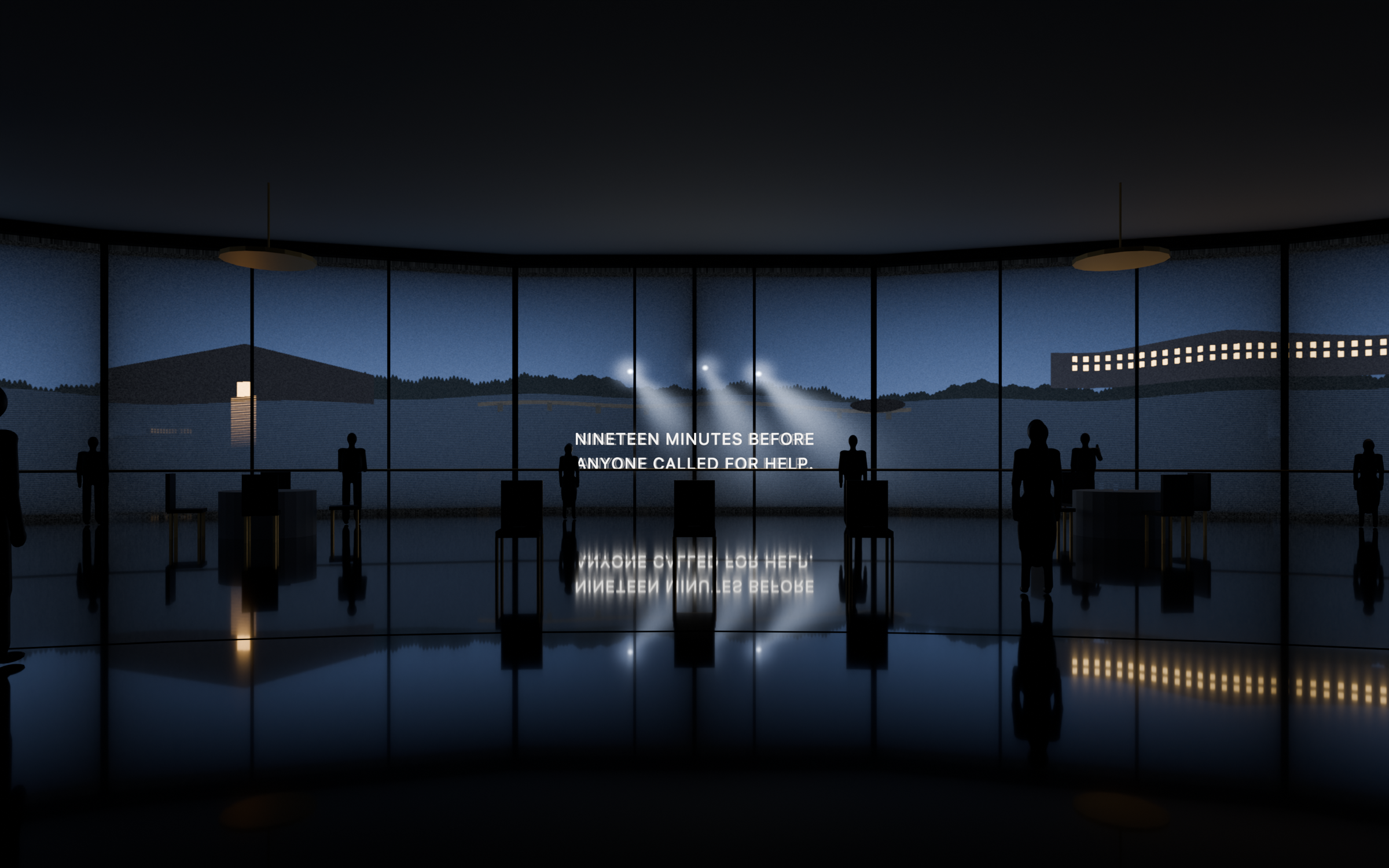
p15 — The Glass Ring

p15

The Glass Ring

He had it. Now everyone does.

Scene and shot
Scene
sky lobby, Crown floor 228, 11:20. The two-story glass ring becomes one continuous screen showing Vane's film: the boathouse, black water, the dock, the phone call instead of 911, then the Vails' car arriving in the dark, every face named with the name it wears today. Under it: "NINETEEN MINUTES BEFORE ANYONE CALLED FOR HELP." In the room: Mallory gripping the rail, Brannock stabbing a dead phone, Vane watching his insurance air on his own network, Kilbride with his hat in his hands, Rowan's palm flat on the glass. Three reserved chairs, empty, with the Vail name cards.
Shot
wide 360-degree ring view from the center, the guests in silhouette against the screen glow. Dark room, the film's flicker on every face.
Beat
38 · Tower: yes.
p24 — One Forty-One *(new)*

p24

One Forty-One *(new)*

The last file. The 22nd name.

Scene and shot
Scene
Year 28, Crown lobby, the ribbon. The scissors have just closed; the ribbon is falling; flashbulbs. Ari has stepped in to kiss her father's cheek for the photograph and is speaking into his ear under the applause: "One forty-one, Dad." His smile holds. His eyes don't. For the first time in her life she is reading his face, and it's all there.
Shot
tight two-shot, his face toward camera over her shoulder, the falling ribbon and the press wall soft behind. Steel and glass silver, flash white. The one face she never had time to read, finally read.
Beat
41 · Tower: yes. (Open, J: expose / spare / leave him knowing she knows. Drawn as the default: leave him knowing. The expose version cuts to the call text on every screen; the spare version has her walk away without speaking.)
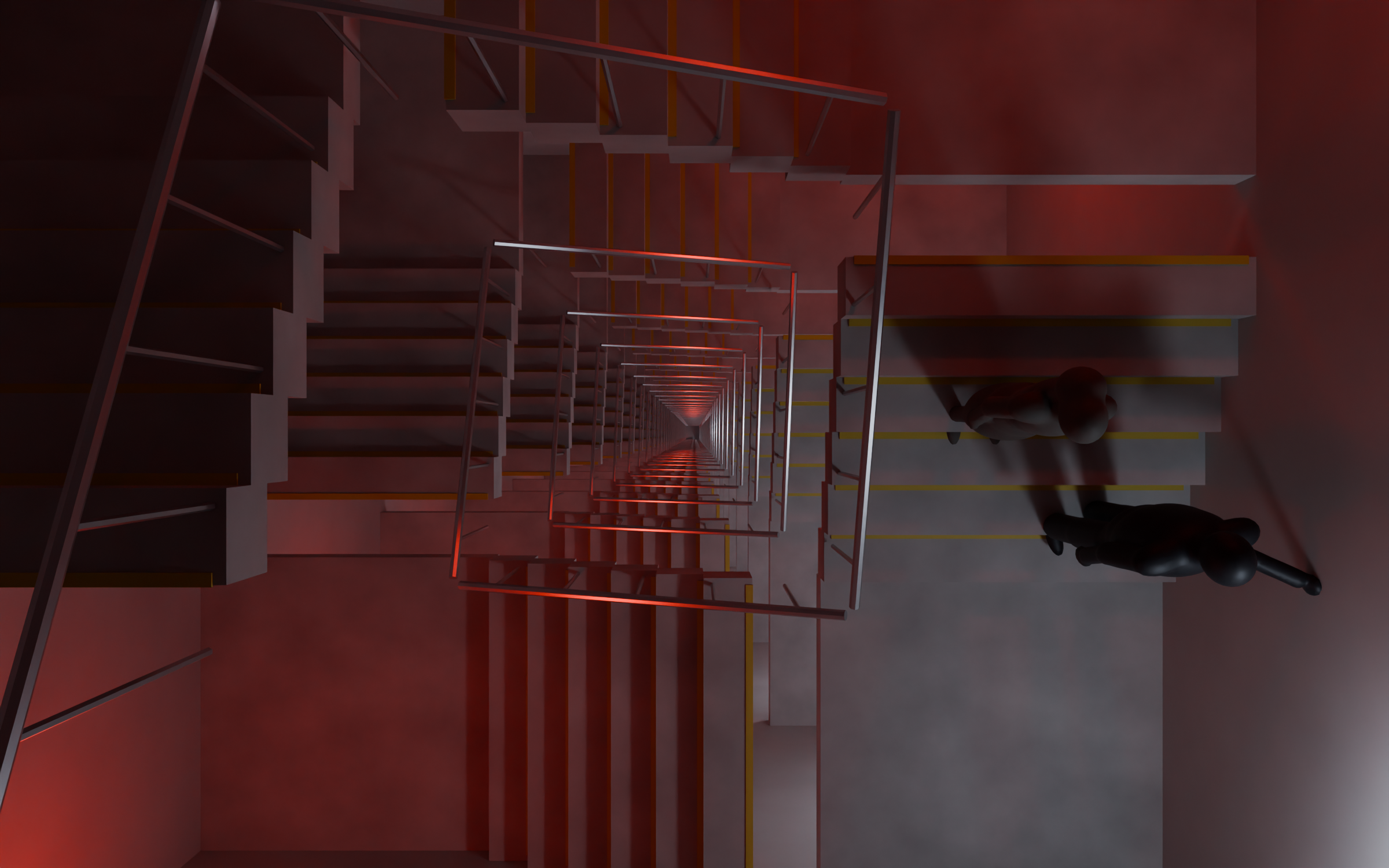
p16 — The Stair

p16

The Stair

"One. Two. Three." She does not stop counting.

Scene and shot
Scene
the north stair of the Crown, minutes later. Reyes steers Ari down, his body between her and the chaos, scanning for threats. He does not see the one beside him. She is calm, counting steps.
Shot
overhead down the square stairwell spiral, two small figures descending, floors falling away into the dark. Emergency-light red and concrete grey.
Beat
42 · Tower: yes.
p17 — Two Passes and a Knight

p17

Two Passes and a Knight

They know. They will never prove it. Neither wants to.

Scene and shot
Scene
the press center, top floor of the Harbor tower. Empty chairs, dead monitors replaying the film. Kerrigan and Rees at a table: two press passes and a chess knight. The Crown fills the window behind them. Every gap in their drawings is closed.
Shot
close on the table, the two hunters' faces soft above it, the Crown sharp through the glass. Late-afternoon gold coming in low over the water.
Beat
43 · Tower: yes.
p18 — Rematch

p18

Rematch

Same beach. Rematch. She is never caught.

Scene and shot
Scene
weeks later, Porto Santa Margherita, the Adriatic by Caorle. A café table on the waterfront. A woman with a new name sets up a chessboard with two places, one empty. Behind her on the sand, Maeve and Dec are building something. The empty chair is Declan's.
Shot
wide, the same low angle and sunset as p01, the frame rhymed exactly. Lagoon light, warm gold returning, lights coming on along the breakwater.
Blender notes and open questions

Notes for the Blender pass (tower = yes)

  • p07: construction-site state of the WorldTowers model (foundation slab, rebar, staked footprints).
  • p10: Crown with steel topped out and cladding incomplete; cranes; a small group on the roof deck.
  • p13: finished three-tower skyline from the air; floors 247–249 dark.
  • p14, p15: interiors on the Crown's upper floors (246 penthouse with the dark floors above; 228 sky lobby glass ring).
  • p24: Crown ground-floor lobby, ribbon line, press wall.
  • p16: Crown north stair core.
  • p17: Harbor top floor, looking across to the Crown.

Open for J (affects these frames)

  • p01: the Homecoming card as a first-frame plant for the Vails (working).
  • p23: where Reyes was the night of the killings (drawn: on post, sees her, asks nothing).
  • p24: expose, spare, or leave him knowing (drawn: leave him knowing).
  • p18: alone, with the children, or with Julian and the children (drawn: with the children).
  • p15: what the reveal does to the 18 (drawn as exposure).
  • Names (working): Julian Vail, Maeve, Dec, the Academy, "Headmaster's Homecoming".
  • The tower's city: unnamed; frames avoid identifiable real skylines.

Retired in rev. B

  • p09 Thanksgiving at the Strands' (the stepbrother twist carries no beat) → Sunday dinner at the Vails'.
  • p14 Floor 250 / Sterling Ashcombe → Floor 246 / Mallory (Sterling is now Sterling Vail, dead in Year 27).
  • p04 Conrad holding Patrick's hand in the receiving line → Patrick was never in the room.

The Bible

Contents · 24 files

Bible 18_themes_and_tone.md edited Tue 3 Nov 2026, 2:19 pm

SuddenDeath — Themes, Tone and Rules of the World

  • For: every writer, artist, game designer or collaborator who touches the story.
  • Every person in this story is fictional. Agencies appear only as their public structure.

1. What the story is about, in one breath

A girl watched someone steal the best summer of her life. Twenty-eight years later she owns the machine that watches the most powerful people on earth, and she uses it to make twenty-two of them answer for one night in a boathouse and the cover-up the adults ran before sunrise. She married into the answer, and the last name on the list is her father's. Then she disappears.

Underneath the thriller, it is a story about what grief does when it is given unlimited power, and whether a person can be free of a machine without becoming one.


2. The four themes

2.1 Power without oversight

  • The idea: when nobody is watching the watchers, the law becomes a menu. SUDDENDEATH has presidential authority, an unlimited cyber budget and no congressional eye. Own the Fed, the IRS and the courts, and you can get away with murder.
  • Where it lives:
    • The world will believe the program was Lyle Brannock's. He knows it wasn't, and he will never say whose it was. It was hers from the start. Power without oversight is power nobody can see the real owner of.
    • The 22 are themselves a small, private system of unchecked power. They covered up a death in one night with lawyers, a cleaned dock and a written story. Ari is not fighting a different machine; she is fighting the same one at a smaller scale.
  • The cost: every chapter should ask, quietly, at what cost? Ari uses the very thing she hates. The story never fully forgives her for it, and neither does she.
  • The risk is always there: the first mistake ends it (the meaning of "sudden death"). No scene should let the reader relax into "she can't lose." Kerrigan and Rees exist to keep the floor visible.

2.2 Grief

  • The idea: grief is not sadness. For Ari it is a replay that never stops and a red heat that never cools. She was five. She did not get to grow up past that summer; she just got taller around it.
  • How it shows:
    • She replays the last days with Declan (the Duomo rooftop, the lagoon light at Porto Santa Margherita, the chess games, the airport goodbye) in perfect detail. Her memory is a gift that will not let her heal.
    • Grief took most of her mother. Grief turned her father into a man who kept working because stopping meant feeling. Grief, in this family, is a private room nobody shares.
  • Rule: grief is never cured. The ending is not closure. It is a door she finally walks through.

2.3 Love as weakness

  • The idea: love is the only thing that can make her careless. She knows it, so she rations it. Every crack is sealed, except one: Julian Vail, the boy from every Christmas Eve, the one person who never wanted anything from her. She marries him. The answer to who? is his family.
  • How it shows:
    • She lets people near (Inès, Matt Reyes, Callum Rees as a friend) and then quietly seals the gap before it can be used against her. Julian is the crack she never seals.
    • The people she loves never find out how much she did for them. That is the point, and that is the cost.
    • The 22 used love as a weapon once: Bennett Thorpe, Declan's best friend, brought him to the boathouse. Ari learned at five that love is where the knife goes in.

2.4 The watcher watched

  • The idea: everyone in this story believes they are the one doing the watching. Brannock watches the powerful. The 22 watch each other. The hunters watch the program. Ari watches all of them, and her whole aim is to stop being watched herself.
  • How it shows:
    • Kerrigan notices that the program's "luck" has a shape. Rees notices that GCHQ product is read outside the agreed chain. The watchers start to feel watched.
    • The tower is a building whose entire nervous system (Lanternwell, Ivo Brandt's company) sees everything. On opening day, the building watches its owners.
    • Ari captures the machine that watches everyone so she can erase herself from it. Freedom, in this story, means being unseen.
  • Rule: at least one scene in every act should flip the camera: the hunter becomes the hunted, the reader realizes who was looking.

3. Tone

3.1 The feel

  • Cold surface, hot core. The prose is controlled, precise and calm. Underneath, there is a five-year-old seeing red. Let the reader feel the heat through the control, never through shouting.
  • Elegant menace. Think a grandmaster who is smiling. The danger is in what she doesn't say.
  • Sunlight and black water. The story swings between the golden summer (Milan, the Adriatic, Venice) and the cold October creek. Those two palettes are the emotional poles of the book.
  • Fun, at the end. She plans her escape and enjoys making it happen. The final act should have a lift, almost play, after so much weight.

3.2 What it is not

  • Not a techno-manual. No keystrokes, no tools, no step-by-step.
  • Not a superhero story. Her intelligence is vast, but her body is ordinary, her heart is breakable, and the risk is real.
  • Not a political screed. No real parties, no real politicians, no real-world score-settling.

3.3 Voice and point of view

  • Default: close third person on Ari, with chapters from the hunters (Kerrigan, Rees) and occasionally one of the 22.
  • Her chapters: short sentences, exact observations, the occasional flash of dry humor. She reads a room in one look; the prose should too.
  • The 22's chapters: let them sound reasonable. Each has a story that makes them the hero of their own life. The horror is how sensible they sound.
  • The hunters' chapters: procedural, patient, slightly tired. They are good at their jobs and underpaid for them.
  • Matt Reyes: plain and warm. He is the one honest note in a room full of chords.

4. Style guide

4.1 Prose

  • Plain, vivid English. Concrete nouns, strong verbs. "She counted the steps to the door" beats "she was hyper-aware of her surroundings."
  • Short paragraphs. Two to five sentences. White space is tension.
  • Show the read. When Ari reads a person, show the tell she saw (a hand, a pause, a glance at a watch), then the conclusion. Never just announce that she knows.
  • No filler. Cut "suddenly", "very", "she realized that". Cut any sentence that only repeats the one before.
  • Dialogue does work. Every line either hides something, reveals something or moves something.

4.2 Her intelligence on the page

  • Show it through results and choices, not through numbers. The IQ figures (220 on record, 475 hidden) are mentioned rarely, and never by her.
  • She is often bored, sometimes lonely, and occasionally wrong about feelings, never about facts.
  • She plays it down in public: the deliberate B+ at MIT, the ordinary public face at Harvard. The reader should enjoy the gap between what people see and what she is.

4.3 Her cyber work

  • Story level only: what she takes, from whom, and why it matters. Never how, step by step.
  • Good: "By morning, every message Fenwick had sent in five years was sitting in a folder named after a beach."
  • Not allowed: software names used as instructions, commands, exploit methods, real vulnerabilities.
  • Cyber scenes are character scenes. The interest is in her choice and the consequence, not the technique.

4.4 Agencies and institutions

  • Use only public structure and publicly known facts: what the NSA, GCHQ, the Intelligence and Security Committee, the Secret Service or the Fed do, as any newspaper reader could learn.
  • Every officeholder is invented, including heads of real agencies (e.g. Vivian Hartley as an invented Director of the Secret Service).
  • No real officer, agent or official identities, ever.

4.5 Words and conventions

  • Marines are "Marines", never "soldiers". Matt Reyes is a former Marine sergeant.
  • The school: in prose, "the Academy"; its town is "the town". Never the real names.
  • The night is "Headmaster's Homecoming" (working). The dare is "the Crossing" (the party's own dare; there is no group or society). The program is "SUDDENDEATH" (all caps).
  • The 22: write the number as "22" in headings and lists, "twenty-two" in prose.
  • Timeline: "Year 0" is the death. Ari's age is Year + 5. Check the canon table before stating an age or a date.

5. Rules of the world

  1. The first mistake ends it. No do-overs, no second chances for anyone, including Ari.
  2. Nobody knows the whole picture but her. Investigators will think SUDDENDEATH was Brannock's; he knows it wasn't, and never says. Strand thinks the tower was his idea. Each of the 22 thinks their penthouse was their own choice. None of the 22 knows why the others are there.
  3. She is never caught. The hunters get close; they never get her. Their near misses are where the suspense lives.
  4. Even her family never knows. Not her mother, not her father, not her half-sister Chiara, not Julian. The secret of Patrick's Milan life is hers and Conrad Vail's (he found Giulia the flat); Castelvetri's Milan circle may suspect. She has never told anyone.
  5. Leverage is the currency. The 22 hold power because they hold secrets on each other. Ari wins by holding all of them at once.
  6. Power protects itself. Institutions close ranks; the cover-up of Year 0 is how the world normally works, not an exception. Any victory against that must cost something.
  7. Love leaves marks only on her. She can protect the people she loves; she can't keep them.
  8. The innocent stay innocent. Cordelia Rowan and Owen Kilbride are not punished alongside the guilty. Owen is the one who would tell the truth if anyone asked. Honor that.
  9. Her abilities are mental, not magical. She can read anyone and plan anything, but she still needs time, access and luck, and she can still be hurt.
  10. Story level for tech, public level for agencies, invented level for people. Always.

6. Motifs

Recurring images that carry the themes. Use them deliberately, not decoratively.

6.1 Chess

  • Origin: Ari and Declan played chess at Porto Santa Margherita that summer. It is the last game they ever played.
  • Meaning: foresight, sacrifice, the board as the world. The 22 are pieces who believe they are players.
  • Use it:
    • Her plans read like long combinations: quiet moves years apart that only make sense at the end.
    • "Sudden death" itself is a game term. The story is played in overtime.
  • Avoid: turning every scene into a chess metaphor. Two or three strong uses per act.

6.2 The replay

  • Origin: her perfect memory of the last weeks with Declan, ending at the airport goodbye in late August, Year 0.
  • Meaning: grief as a loop; the past that won't stay past.
  • Use it:
    • Fragments of the summer cut into present scenes, triggered by a smell, a color, a sound of water.
    • Each replay reveals one new detail she missed at five (Lorenzo Castelvetri with Declan by the lake, for instance), so the loop becomes an investigation.
    • The last replay, near the end, should play differently, because she finally knows what happened.

6.3 Red

  • Origin: she sees red that someone stole him.
  • Meaning: rage, blood, the warning light, the line not to cross.
  • Use it:
    • Literal red in key scenes: the candle flames on the boathouse racks, a red light on a camera, a red dress at the opening gala, the tower's aircraft-warning lights.
    • Physical tell: when she sees red, the prose goes very still and very precise. The angrier she is, the calmer she reads.
  • Avoid: overusing the word itself. Let objects carry it.

6.4 The tower

  • Meaning: power made visible, height as guilt. The more guilt, the higher the floor, and the longer the way down.
  • Use it:
    • She grows the tower the way she grew SUDDENDEATH: a whisper at Oxford that Strand thinks is his.
    • Every stage (site purchase, groundbreaking, topping out, opening day) is a milestone in her plan and a chapter marker in the book.
    • The building that sees everything (Lanternwell) is the machine in concrete and glass.
    • Opening day is the first time every living name on the list has been under one roof since that night. The tower is the boathouse, rebuilt a kilometer high.

6.5 Supporting images

  • Water: the lagoon light of summer vs. the black October creek. Clean water and drowning water.
  • Glass: the curtain wall (Castelvetri) — everyone visible, nobody touchable.
  • The empty chair: Patrick's place at every dinner, even at the beach. Absence as a presence.
  • The count: the timer who stopped counting aloud. Countdowns, clocks, held breath.

7. The "no real people" rule, explained for collaborators

7.1 The rule

Every person in SuddenDeath is invented. No real living person appears as a character, perpetrator, victim or target. This includes presidents, royals, billionaires, MPs, judges, journalists, clergy, agency heads, officers and agents.

7.2 Why it exists

  • Fairness: the story accuses its characters of murder, cover-up, blackmail and corruption. Putting a real person's name on those acts would be unfair to them, and it would be defamation.
  • Freedom: invented people can be as guilty, as complicated and as damned as the story needs. Real people would force us to hold back.
  • Longevity: real figures date fast and drag real-world politics into the book. Invented ones stay fresh and keep the reader inside the story.
  • Safety for the project: it keeps the book, the screenplay and the game publishable and adaptable.

7.3 How to apply it

  • Need a famous type? Invent one. An invented tech billionaire (Ivo Brandt), an invented hedge-fund king (Sterling Vail), an invented royal house (House of Carrow), an invented Baltic republic (Vessaria) and its invented Prime Minister (Mikkel Rask).
  • Real offices, invented holders. The Fed, the IRS, the Secret Service, the House of Lords and the Foreign Intelligence Surveillance Court are real institutions described at public level. The person in the chair is always invented.
  • No thin disguises. Do not build a character that is obviously a real person under a new name (same biography, same scandal, same face). If a reader could point at a real person, change it.
  • Real places are fine. Boston, Milan, Lake Como, Venice, Caorle, Porto Santa Margherita, Oxford, Cambridge, Fort Meade and Westminster may appear as settings. The Academy's town is not named; write "the town."
  • The Academy (the rule, restated for rev. C):
    • The party building is off campus and is not Academy property: the condemned boathouse of a defunct private rowing club on a creek upstream of town.
    • The Academy is deceived, never complicit. No Academy official, dean, coach or employee helps the cover-up, hears the truth, or alters a record. Headmaster's Homecoming, the gala, the trustees, the guests and the Crossing are invented; the Crossing is the kids' own dare, never an Academy tradition.
    • The gala's security is a private contractor; the town police are lied to and stretched thin, never complicit.
  • Agencies at public level. Describe what they publicly do, never invented operational secrets presented as real, and never real officer identities.

7.4 Quick check before you hand anything in

  • Could anyone mistake a character for a real living person?
  • Does any scene attribute wrongdoing to a real institution's actual staff, property or traditions?
  • Does any cyber passage explain how rather than what and why?
  • Did you write "Marines", "the Academy" and the canon names correctly?

  • How dark the ending is: does Ari stay on the right side of her own line, or cross it on opening day?
  • The unfinished chess game: who was winning, and does it pay off?
  • How much humor in her voice: dry and rare, or a steady thread?
  • Whether any chapters are told from inside the 22 (and which ones).