






05 — The Brother and the Summer
- What this file is: the memories Ari replays. She keeps every frame perfectly, so these must be exact.
1. Declan Halloran, as a person
The basics
- Age: 16 that summer. Born Year −16, Boston.
- School: boarding at the Academy, going back for his third year.
- Place in the family: the heir after the heir. Grandfather Edmund already talks about "Declan's seat."
What he was like
- Funny first. He did voices: the gondolier, the waiter who hated Americans, their father on the phone ("Yes. Yes. No. Have Jim call me."). Ari laughed until she hiccupped.
- Kind without making a show of it. He tipped the beach boys more than their mother did and slipped the old man selling coconut slices his last coins.
- Patient with her, and with nobody else. He was quick-tempered with waiters who were slow and teachers who were dull, but never with her.
- A swimmer. Every morning at Porto Santa Margherita he swam out past the buoy line and back before breakfast, hard and clean, like he was racing someone. This matters later: Ari never believed he drowned by accident. He swam like a seal.
- Restless. He hated sitting still at dinners where adults talked about polls. He wanted to be somewhere else, doing something real.
- Honest to a fault. He could not lie to her face. He'd look away, rub his ear, and laugh. She read it every time, and he knew she did.
What he was to her
- The one person who saw her. Everyone else thought she was a quiet, odd little girl. Declan talked to her like she was his age. Sometimes like she was older.
- The parent in the room. Their father was always away; their mother was there but drifting, on the phone to Boston, on her third spritz. Declan put sunscreen on Ari's shoulders, cut her food, and checked her for jellyfish stings.
- Her first mirror. He was the first person to say it out loud: "You know what people are thinking, don't you?" She nodded. He said, "Don't let them know you know." She never has.
The line she keeps
On the last night at the beach, out of nowhere, he said:
"Don't ever let anybody own you, Ari. Not Grandpa, not Dad, not anybody. You stay yours."
She didn't understand why he said it then. She does now. It's the root of everything she becomes: the reason she wants to be free, and the reason he died.
2. Milan (early July to late July)
Why they were there
- The official reason: their father "had meetings in Europe" and the family should "see something of the world."
The apartment
- A rented top-floor flat behind Corso Venezia: tall shutters, terrazzo floors that were cold under bare feet, a courtyard with a fig tree and a fountain that dripped all night.
- Ari's room faced the courtyard. Declan's was next door. Through the wall she could hear him play music low and talk on the phone to friends in America at strange hours.
2.1 The Duomo rooftop at dusk
- The memory she replays most often from Milan.
- They climbed instead of taking the lift, because Declan said lifts were for "senators and cowards." She counted the steps out loud and he pretended to lose count, every time, so she'd correct him.
- On the roof: warm marble under her hands, still holding the day's heat. A forest of spires, every one with a saint on top. Swifts screaming in loops overhead.
- He lifted her onto his shoulders so she could see the golden Madonnina at the very top, catching the last light.
- He pointed north at the haze. "Mountains. Switzerland's over there." (She'll go to school there one day. The memory knows it before she does.)
- The light went from gold to pink to blue, and the city switched on below them, street by street.
- What she keeps: the smell of hot stone and his sunscreen, his hands around her ankles, the bells starting up under their feet so loud she felt them in her teeth.
2.2 The Vespa
- Declan rented a Vespa without asking anyone. Their mother found out on day three and said nothing, which was how she said yes.
- Ari rode in front of him, between his arms, in a helmet too big for her that kept sliding over her eyes.
- Early mornings, before the heat: the trams, the smell of espresso and bakery ovens from open doors, the cobbles drumming through the seat.
- He took her to a pasticceria where the old woman behind the counter called him "il principe" and gave Ari a tiny pastry with powdered sugar on the house, every time.
- What she keeps: the wind, his chin on top of her helmet at red lights, his voice over the engine: "Hold on, Ari. I've got you."
2.3 Lake Como
- Three weekends at a rented villa on the lake: a stone terrace, lemon trees in pots, a boathouse, a private landing with steps going down into green water.
- Days on the water in a hired wooden boat. Declan drove it badly and laughed about it. He taught her to tie a cleat hitch and let her steer, his hand over hers on the wheel.
- He swam off the landing in water so cold it made her gasp just watching. She stayed on the steps with her feet in it, counting how long he stayed under. He always came up before she got to twenty, grinning, hair flat over his eyes.
- She will remember the counting. Years later, when she learns what the Crossing was, this is the frame that hurts the most.
- Evenings: their mother on the terrace with friends from Boston who were "passing through," the lake going silver, then black, the lights of the villages coming on across the water like dropped coins.
2.4 The frame by the lake: Lorenzo Castelvetri
- On the second Como weekend, a boy Declan's age came by boat to the landing: Lorenzo Castelvetri, 17, heir to a Milan glass family, about to go to the Academy as an exchange student.
- Ari was on the terrace, supposedly napping. She watched from the railing.
- The two boys sat on the landing steps, feet in the water. Lorenzo did most of the talking. He gave Declan a cream envelope. Declan turned it over and over and didn't open it in front of anyone.
- Her read, at five, in one look:
- Declan: flattered, excited, and under that, a little afraid.
- Lorenzo: a messenger. Pleased with himself, and also afraid, of someone who wasn't there.
- That night Declan was quiet at dinner. When she asked what was in the envelope, he rubbed his ear and laughed and said, "Homework." It was the first lie he ever told her. She let it go.
- Why it matters: inside was a card from Sterling Vail, a pen sketch of the old boathouse and one line: "Homecoming. Bring nerve." It was the party's invitation. Lorenzo is No. 19 of the 22. Ari has never forgotten his face, and twenty-eight years later his company makes the glass for her tower.
2.5 The café: her father's other life
- A weekday afternoon, near the end of July. Their father was in Milan "for two days of meetings." The family sat at a café table near the Brera. He stepped away "to take a call."
- Through the café window Ari saw him greet a woman with dark hair pinned up (Giulia Benedetti) and a little girl about two (Chiara). His hand went to the child's hair. It lasted four seconds.
- Her mother, with her back to the window, saw nothing.
- What Ari read in one look: the way he held the child, the way the woman didn't need to touch him to be sure of him, the ease in his shoulders that he never had at home. He was not visiting. He was home.
- When he came back to the table she asked for gelato, loudly, so her mother would look at her and not at him. Her mother never knew. Ari has never told anyone. Not even Declan.
- That night he came back to the flat, kissed their mother, and said the meetings had run long. Ari watched him across the table and said nothing. She was five, and she had just learned her first secret worth keeping.
3. Porto Santa Margherita (two weeks, the second half of August)
The place
- A small beach resort on the Adriatic in the Veneto, by Caorle, about an hour east of Venice. Not Santa Margherita Ligure (that is the other coast; don't mix them up).
- Pine woods behind the beach. A marina full of sailboats, halyards clinking all night. The mouth of the river where it meets the sea. Wide, flat, golden sand going on forever, with rows and rows of identical umbrellas.
- Next door, Caorle: an old fishing town of narrow streets and walls painted pink, ochre, green and blue, a round bell tower, and a little white church right on the sea wall.
- Behind it all, the lagoon: flat, shining water, reed beds, fishing huts with thatched roofs, and light that Ari has never seen anywhere else, milky and gold at once.
The house
- A rented villa in the pines, ten minutes' walk from the sand. White walls, green shutters, a garden full of oleander, a ceiling fan that ticked.
- Ari and Declan shared a room. Two narrow beds, one window onto the pines. At night the cicadas stopped all at once, the way they do, and in the silence she could hear him breathing.
The empty chair
- Their father was supposed to come for the last weekend. He never came. A vote, then another; he called from Washington.
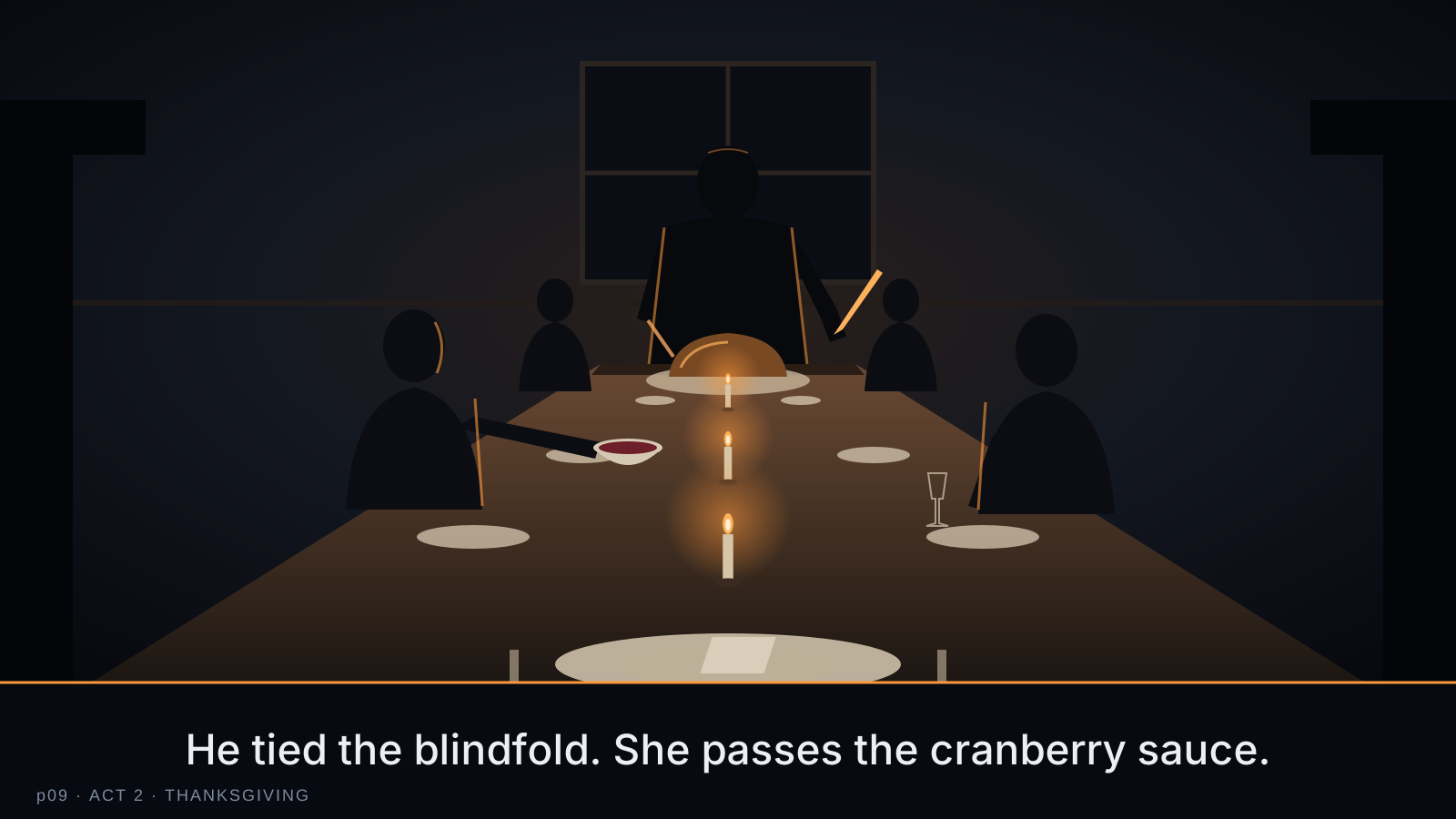
- Every dinner, the waiter set four places. Every dinner, one stayed empty, until the Vails came and Uncle Conrad sat in it. Their mother stopped explaining after the third night. Declan started putting his sunglasses on the empty plate, "so Dad has someone to eat with." Ari laughed. Their mother didn't.
The two weeks, day by day
Day 1 — Arrival.
- The drive from Milan, four hours, the flat plain going past, fields of corn and sunflowers. Ari asleep on Declan's arm for most of it.
- First sight of the sea at evening: flat as a plate, pink, enormous.
- Declan ran straight in with his clothes on. Their mother shouted. Ari ran in after him.
Day 2 — The beach routine starts.
- Their row of umbrellas, number 14, two sunbeds, a little cabin. The beach attendant, an old man with skin like a walnut, gave Ari a seashell "for luck."
- Declan's morning swim out past the buoys. Ari counting on the shore. He came back and shook his wet hair over her on purpose.
- He bought a cheap folding chess board from the tabacchi shop by the marina: plastic pieces, a little wooden box, the black king with a chip in his crown. "Time you learned something useful."
Day 3 — The first chess lesson.
- Under the umbrella, the board on a towel, sand getting in the holes.
- He taught her how each piece moves. She learned them all in one go, and he stared at her for a while.
- "The knight's the sneaky one," he said. "Goes around corners. Nobody sees it coming." It became her favorite piece. It still is.
Day 4 — Caorle town.
- An evening walk through the painted streets. Fritto misto in a paper cone, the oil soaking through, squid rings Declan pretended were "sea onion rings."
- The little white church on the sea wall. Declan lit a candle. When she asked who for, he said, "For whoever needs it." She thinks now about who needed it.
- Gelato on the rocks by the breakwater: her pistachio, his lemon, then they swapped.
Day 5 — The day he let her win.
- Their fourth game. He made a mistake no one makes, leaving his queen to her knight.
- She took it and won, and then she looked at his face and knew. He'd done it on purpose.
- She was furious, and she cried, the only time that summer. "Don't ever do that again." He looked at her for a long time, then said, "Okay. Deal." He shook her small sandy hand.
Day 6 — The lagoon.
- A hired boat with a local fisherman out into the lagoon at dawn. Mist on the water. Herons standing in the shallows like grey umbrellas folded up.
- The fishing huts, thatched, on stilts. The fisherman's dog asleep in the bow.
- The light: the memory she goes to when she needs to be calm. Water and sky the same color, no line between them, and Declan beside her with his arm around her shoulders, not saying anything.
Day 7 — The storm.
- Afternoon heat, then a wall of black cloud coming in off the sea. Lifeguard whistles. Everyone running, umbrellas folding up and down the beach like a wave.
- They didn't run. Declan grabbed her hand and they stood at the edge of the water and watched lightning walk across the sea.
- Soaked through, they ran home through the pines with the smell of hot resin and wet sand all around them. Their mother was on the phone and hadn't noticed they were gone.
Day 8 — Venice, first trip.
- The drive to the point, then the ferry across the lagoon. Venice coming up out of the water, domes and towers, like something imagined.
- Saint Mark's Square in the heat. The pigeons. Declan lifted her up on the edge of the square so she could see over the crowd.
- They got lost on purpose. Declan said, "The trick to Venice is you can't get lost, because you're already lost." Little bridges, green canals, laundry strung between windows, a cat asleep on a boat cover.
- She noticed that he kept checking his phone and frowning. She read it: someone in America wanted an answer from him. She didn't ask.
Day 9 — The day she beat him for real.
- On the beach, the board on the towel. He played properly, as agreed. It took an hour.
- She won with the knight. Around a corner. Nobody saw it coming.
- He sat back in the sand and laughed, a real laugh, surprised and proud and a little shaken. "Okay," he said. "Okay. I'm never letting you win again, because you don't need it."
- They played every day after that. She won about half. By the end she won most.
Day 10 — Their father doesn't come.
- A call from Washington at breakfast. "I'm sorry, sweetheart. There's a vote." Their mother put the phone down very gently.
- Ari thought of the café in Milan and the little girl's hair under his hand. She said nothing.
Day 11 — The Vails come instead.
- Uncle Conrad flew in from Boston with Aunt Eleanor, Sterling and little Julian, because, he said, somebody from that Stanford dormitory had to keep his word. At dinner he sat in the empty chair.
- Sterling walked Declan down the beach. From under the umbrella she watched them. Sterling talked; Declan listened, hands in his pockets, nodding. She couldn't hear it, but she read it: a test. Declan came back looking older.
- That night in their room, in the dark, Declan said, "Ari? You awake?" She was. He didn't say anything else for a long time. Then: "Nothing. Go to sleep." She can still hear the tone. He wanted to tell her something, and he chose not to.
Day 12 — Venice, second trip.
- Just the two of them, with Uncle Conrad driving. Their mother stayed behind with a headache.
- A gondola, his treat, with money he'd been saving. Ari trailed her hand in the water until the gondolier told her not to, and Declan did his gondolier voice until the real gondolier laughed.
- On a little bridge at sunset, he bought her a paper fan with a painting of the lagoon on it. She still has it, folded in a drawer, the paper soft as cloth.
Day 13 — The last full day.
- The perfect beach day: no wind, the sea like glass, the water so clear she could see her feet.
- His morning swim. She counted. He came back before twenty. He always came back before twenty.
- That night, the last night, on the sand after dark, the two of them alone, the lights of Caorle down the shore and the bell tower lit up gold. The line: "Don't ever let anybody own you, Ari."
- She fell asleep on the sand and he carried her home through the pines.
Day 14 — Leaving.
- Packing. She hid a seashell in his suitcase without telling him. (It came back to the Boston house in October in a box of his things, still in the inside pocket.)
- The drive back to Milan. She didn't sleep this time. She watched him the whole way.
4. The goodbye (late August, Milan Malpensa)
- Declan flew back to Boston alone to get ready for the fall term. The rest of the family would follow a week later.
- The terminal: cold air-conditioning after the heat, departure boards clicking, an announcement in Italian, then English.
- Their mother hugged him, quick, already looking at her phone. Their father had said goodbye the night before, on the phone from Washington, in thirty seconds.
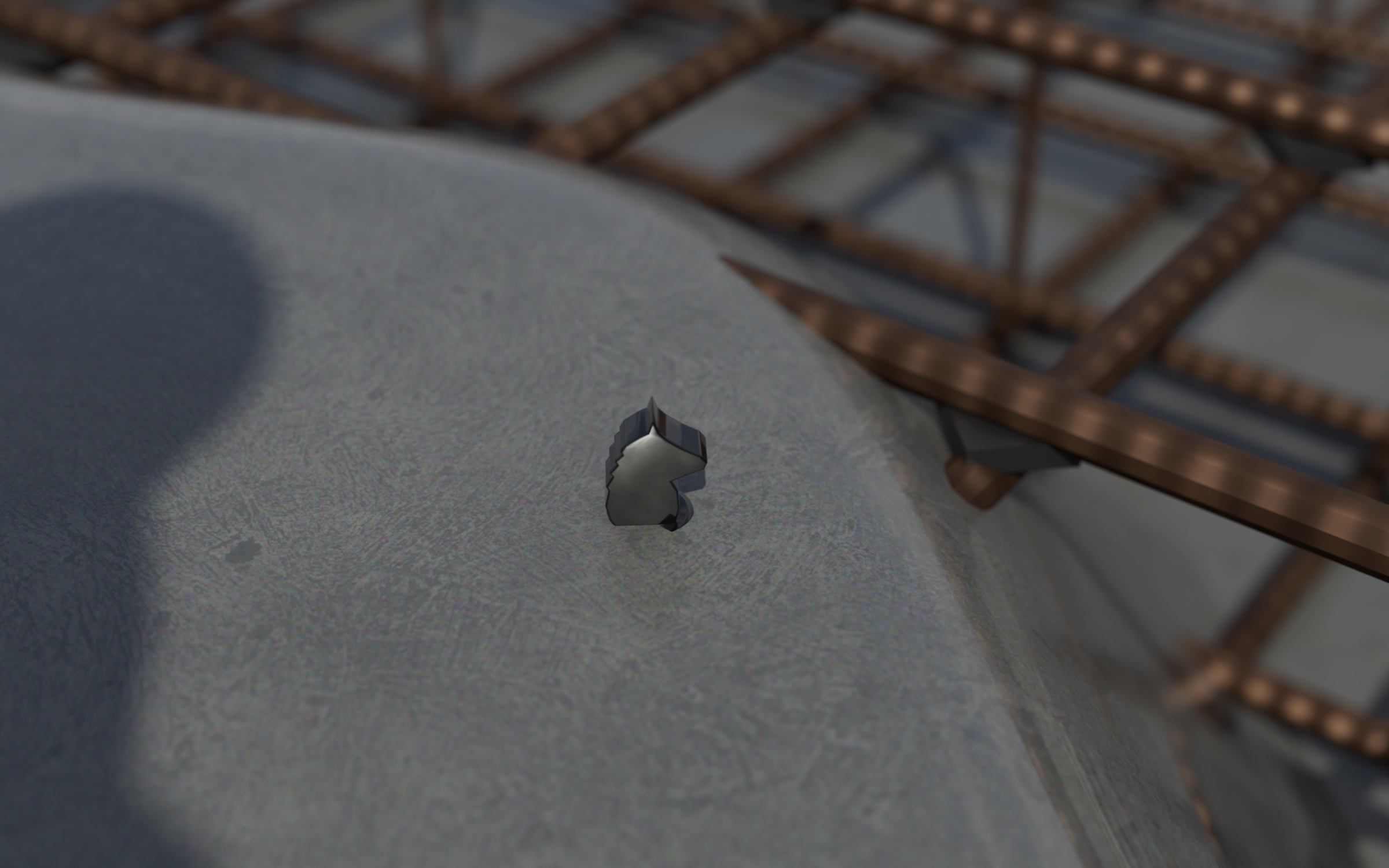
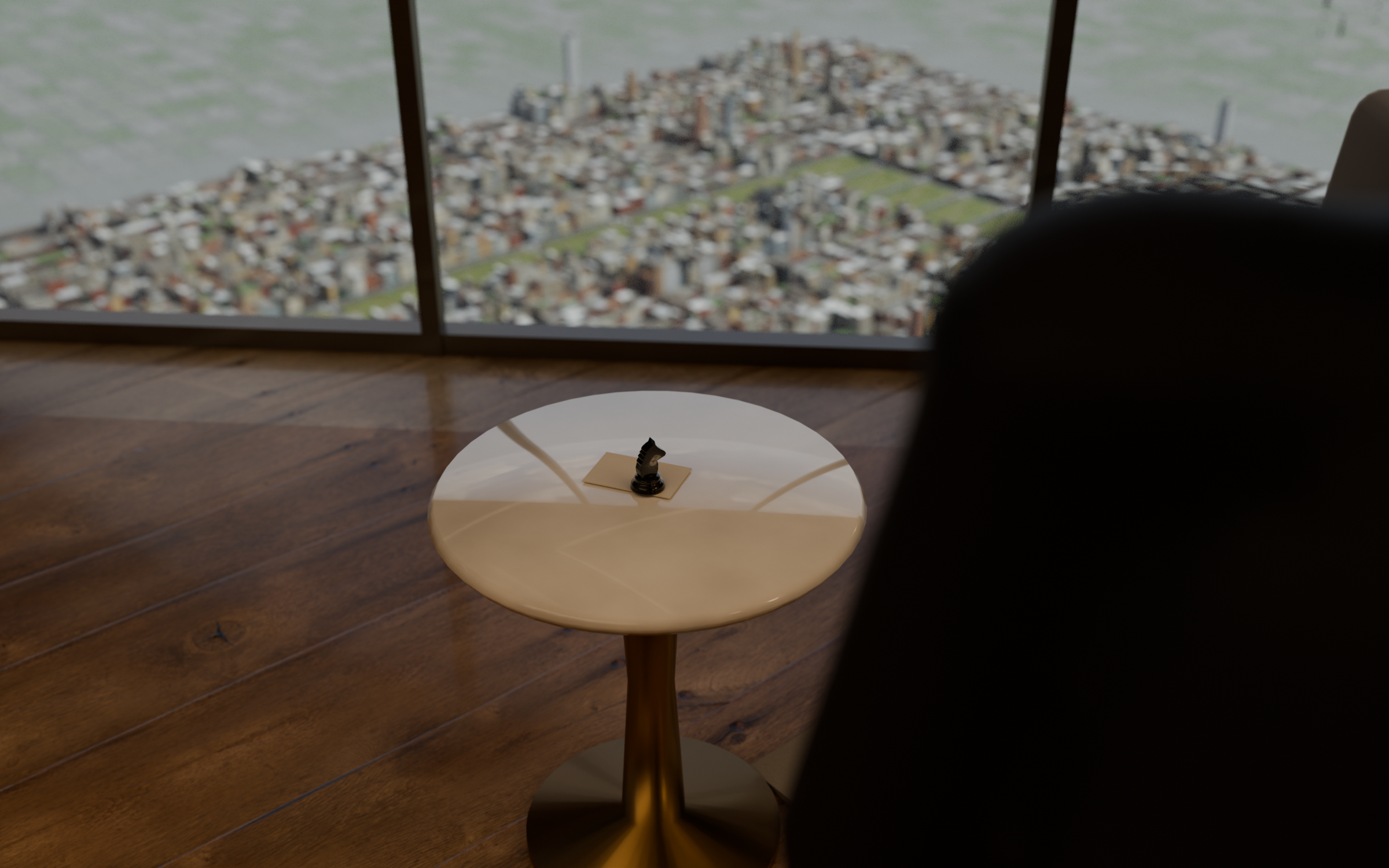
- Declan knelt down to Ari's level. He took the white knight out of his pocket, from the folding set.
- "Hang on to this for me. We can't finish the game without it, so I have to come back, right?"
- She held it so tight its ears left a mark on her palm.
- He hugged her. He smelled like sunscreen, airplane soap and the pines. He said, "Be good. Beat Dad at chess." Then he stood up, swung his bag over his shoulder and walked to security.
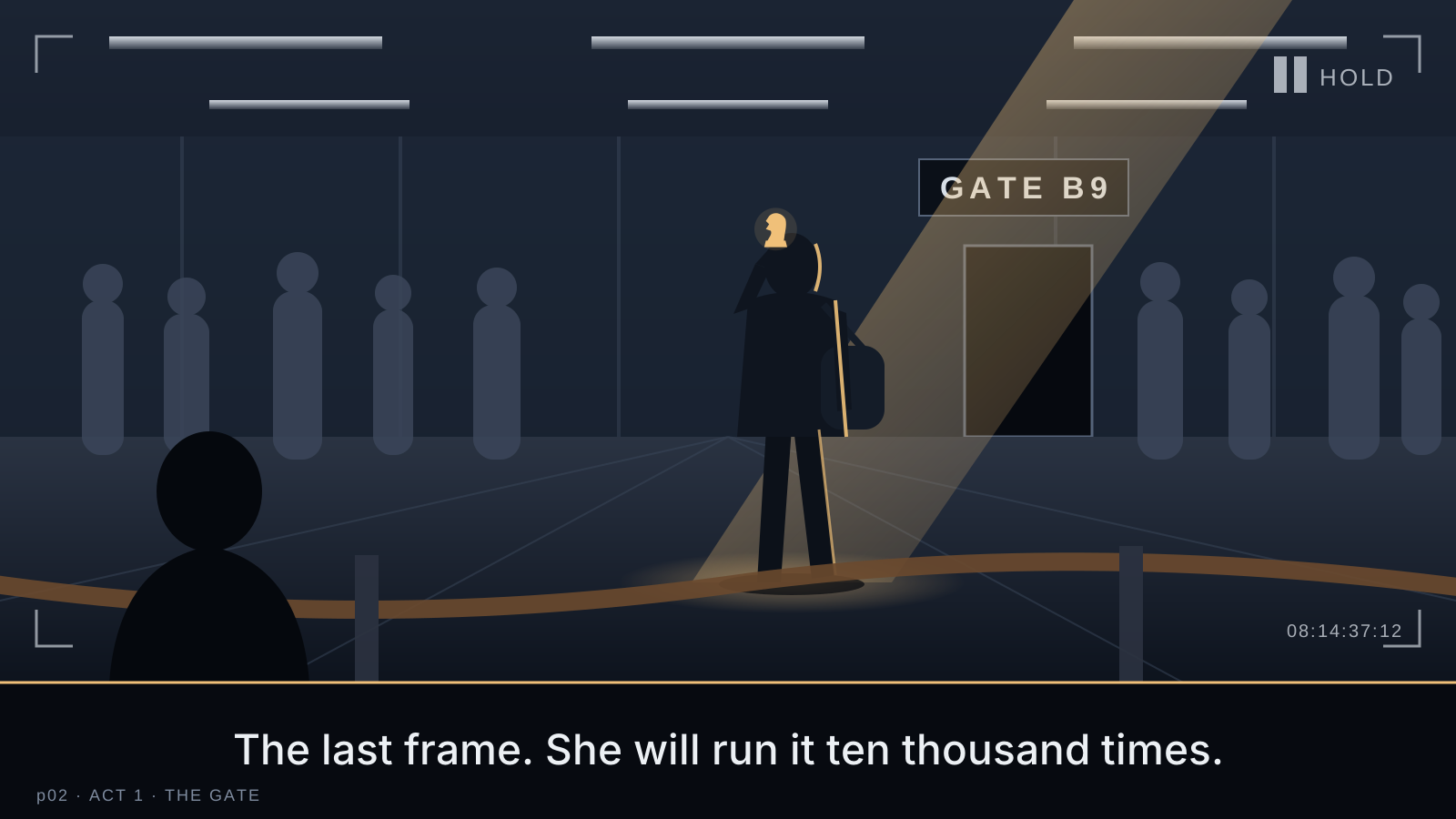
- The last frame: at the top of the escalator he turned around, found her in the crowd, and did the knight's move with his hand, two up and one across, around a corner. Then he was gone.
- She didn't cry. She was too busy memorizing.
After
- She still has the knight. It is in her pocket every day of her life. The rest of the set, the board folded on the unfinished game, ends up in a safe-deposit box in Switzerland. She has never finished the game.
5. The replay reel
The frames she plays over and over, in order. Writers can cut to any one of these as a flashback; each is a few seconds long and exact.
- The Duomo roof: hot marble, the golden Madonnina, bells in her teeth.
- The Vespa: his chin on her helmet at a red light. "I've got you."
- Como, the counting: feet in green water, counting while he's under. He always comes up before twenty.
- Como, the envelope: Lorenzo on the landing steps. Declan turning it over and over.
- The café in Milan: her father, the dark-haired woman, the little girl holding his tie.
- The first sight of the Adriatic: pink and flat, Declan running in with his clothes on.
- The let-win: the queen left hanging. "Don't ever do that again." "Deal."
- The lagoon at dawn: no line between water and sky.
- The real win: the knight around the corner. "You don't need it."
- The walk on the beach: Sterling talking, Declan listening, coming back older.
- "Ari? You awake?" The thing he didn't say.
- The last game: folded mid-game. "We finish at Thanksgiving."
- The last night: "Don't ever let anybody own you."
- The airport: the white knight, "Beat Dad at chess," the knight's move at the top of the escalator.
How the replay works on her
- It never fades. A mind like hers keeps every frame at full color. That's the curse: normal grief softens; hers doesn't.
- She reads it again every time. At five she saw fear in his face by the lake and didn't know what it meant. At fifteen she sees more. At twenty-five, with SUDDENDEATH in her hands, she sees more: the envelope, Sterling's walk on the beach, the phone he kept checking in Venice, the thing he almost told her.
- It turns red. Every replay ends at the escalator, and every time, something in her goes red: someone stole the rest of the reel.
6. Plants and payoffs
| Planted in the summer | Pays off later |
|---|---|
| Declan swims like a seal and always comes up before twenty | She never believes "drunk, slipped, drowned"; the Crossing's count is the thing that broke her heart |
| Lorenzo Castelvetri and the envelope at Como | No. 19; his glass is on her tower; he's the first of the 22 she ever saw |
| The café: Giulia and Chiara | The half-sister thread; Ari's first secret; proof her father's absence had an address |
| Sterling's walk with Declan on the beach | The test before the invitation. In Year 26, on the film, she knows the walk |
| "Ari? You awake?" | What Declan almost told her: that Sterling was selling to the younger kids, and he was going to say so |
| Conrad in the empty chair | The man who took her father's place at the table took her father's call at 1:41 |
| "Don't ever let anybody own you" | Her whole motive: freedom, and erasing herself from the machine |
| The knight, "goes around corners" | Her method for life: nobody sees her coming |
| The white knight | Opening day: she leaves it in the Harbor press center (see 21); she finishes the game later, on the Adriatic (see 04) |
| "Beat Dad at chess" | 1:41. She does |
| Mountains to the north from the Duomo | Institut Montclair, Switzerland |
- The airport: Milan Malpensa (as written) or Venice Marco Polo?
- "Ari? You awake?": did he ever start to tell her, in a letter or call before October? (A letter that never arrived would be a strong find for her later.)
- The knight: working as written in
21(left in the press center). Keep or change. - Did Declan know about the café? Written as no. If yes, it becomes a secret they shared, and maybe part of what he wanted to say.
- The summer phone: who in America kept texting him in Venice: Lorenzo, Thorpe (No. 5, his roommate), or Sterling (No. 1)?